

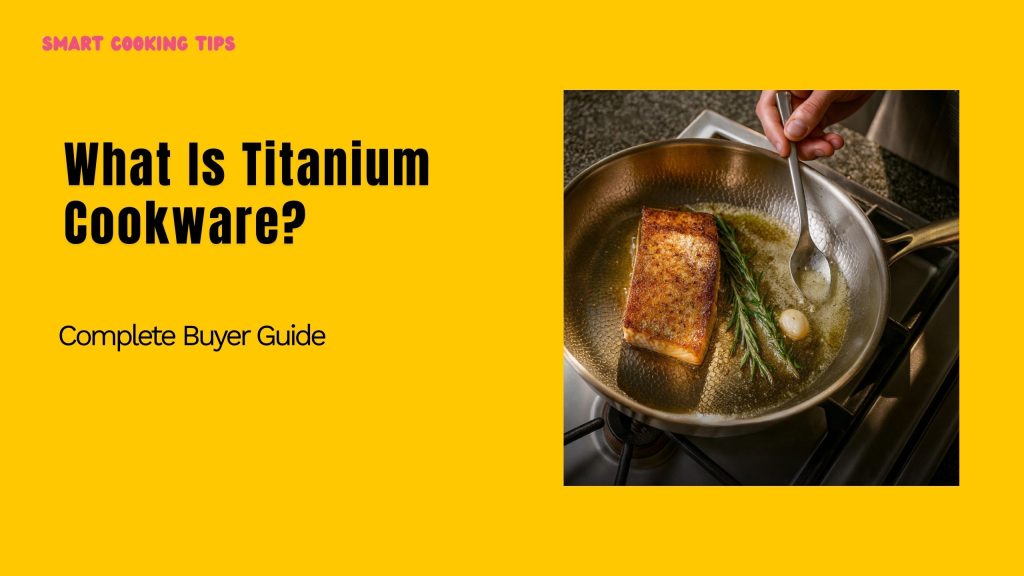
What is titanium cookware and why is it becoming a favorite in modern kitchens? It is cookware made fully or partially with titanium, known for durability, lightweight design, and resistance to corrosion.
In this guide, Smart Cooking Tips will explain what is titanium cookware, explore its benefits, compare performance, and help you choose the right titanium pan confidently.
Table of Contents
What Is a Titanium Cookware?
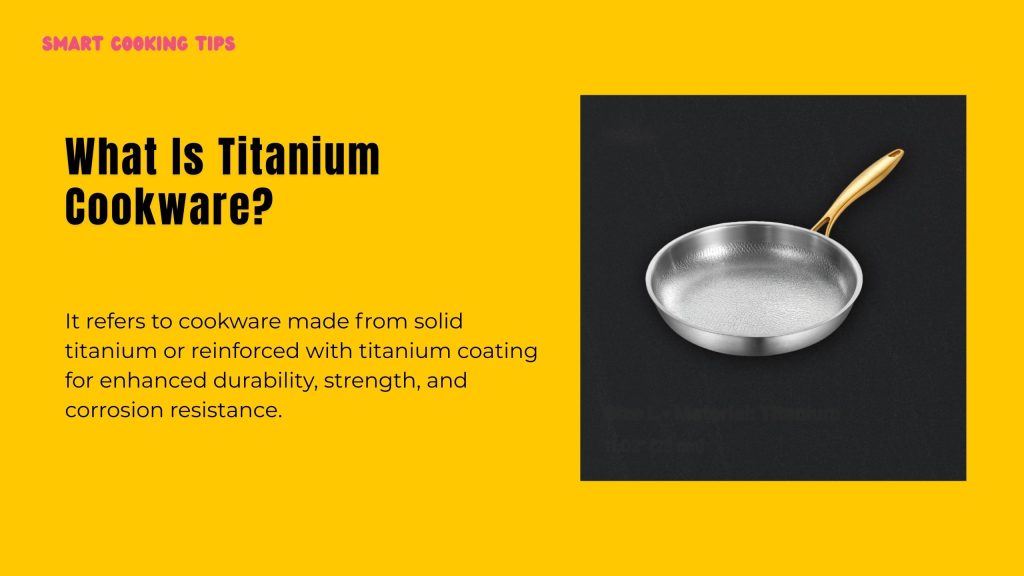
If you are wondering what is titanium cookware, the answer depends largely on how it is constructed and engineered. The term can refer to fully solid titanium cookware or pans that use titanium as a reinforcing component within a multi-layer design.
Solid Titanium Cookware
Solid titanium cookware is made primarily from pure titanium metal. It is exceptionally lightweight, highly resistant to corrosion, and extremely durable under normal cooking conditions. However, pure titanium does not conduct heat as efficiently as aluminum or copper, which can sometimes result in uneven heating without a bonded core. For this reason, some manufacturers integrate additional layers to improve thermal performance while maintaining titanium’s strength and rust resistance.
Titanium-Coated Cookware
Titanium-coated cookware features a base material, typically aluminum or stainless steel, covered with a titanium-reinforced nonstick surface. In this design, titanium particles are infused into the coating to enhance scratch resistance and overall durability. When asking what is titanium cookware, it is essential to distinguish this type from solid titanium, as performance depends more on the underlying core and coating technology than on titanium alone.
Unlike traditional nonstick pans, titanium surfaces are often marketed as more resilient and capable of tolerating higher cooking temperatures. However, real-world performance varies depending on manufacturing standards, bonding methods, and material quality.
Understanding what is titanium cookware helps you evaluate construction details carefully, avoid misleading marketing claims, and make informed decisions based on durability, heat distribution, and long-term cooking performance.
Benefits of Titanium Cookware
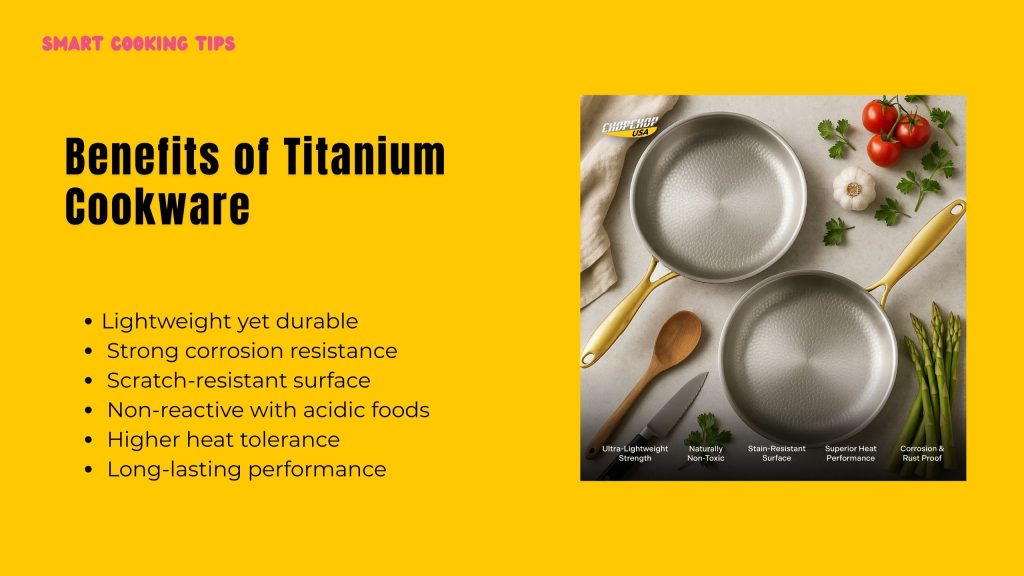
Now that you understand what is titanium cookware, let’s explore why it continues to gain popularity among home cooks and professional chefs seeking durability, convenience, and long-term kitchen performance.
Lightweight Yet Strong
Titanium is significantly lighter than cast iron and many stainless steel pans, yet it remains impressively strong and structurally stable. This combination makes titanium cookware easy to lift, flip, and control during cooking, reducing wrist strain while still delivering dependable durability for daily kitchen use.
Corrosion Resistance
One of titanium’s most valuable properties is its natural resistance to rust and corrosion. Even in humid climates or busy kitchens where cookware faces frequent washing, high-quality titanium pans maintain their structure, finish, and performance without developing oxidation or surface deterioration over time.
Scratch Resistance
Many titanium-coated pans are engineered with reinforced surfaces designed to resist scratches better than traditional nonstick coatings. This added durability allows for more versatile cooking, and in some cases, limited use of metal utensils, depending on manufacturer recommendations and overall construction quality.
Non-Reactive Surface
Titanium is a non-reactive metal, meaning it does not chemically interact with acidic ingredients like tomatoes, vinegar, or citrus. This helps preserve natural flavors, prevents metallic aftertastes, and ensures that food maintains its intended taste profile without contamination from the cooking surface.
High Heat Tolerance
Compared to conventional nonstick coatings, titanium-reinforced surfaces typically tolerate higher cooking temperatures before breaking down. This makes them suitable for searing and high-heat cooking techniques while maintaining structural stability, provided the pan is used according to recommended temperature guidelines.
When people ask what is titanium cookware, they often associate it with durability, advanced materials, and modern kitchen engineering — and that reputation is largely well-earned.
However, not all titanium pans deliver the same results. The quality of the base material, bonding technology, and coating thickness significantly influence overall performance, longevity, and cooking consistency.
How to Choose the Best Titanium Cookware
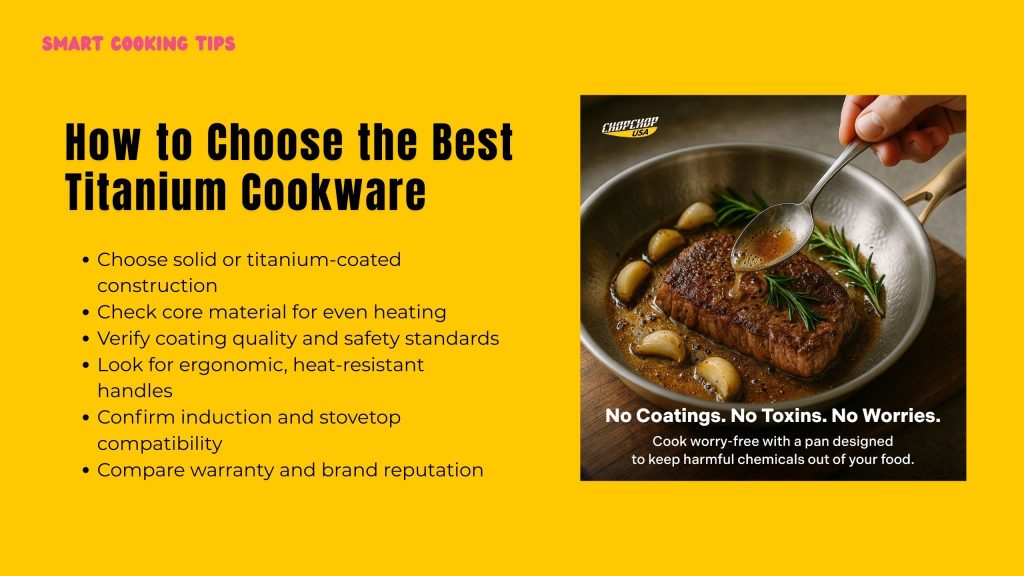
Choosing the right pan requires more than just knowing what is titanium cookware. Here are key factors to consider:
Construction Type
When selecting titanium cookware, first determine whether you prefer solid titanium or titanium-coated construction. Solid titanium is exceptionally lightweight and highly durable, but it may distribute heat less evenly. Titanium-coated aluminum cookware often provides better heat conductivity while maintaining enhanced surface strength and durability.
Core Material
Always check the core material beneath the titanium surface. Many high-quality pans feature aluminum or stainless steel cores designed to improve heat retention and distribution. A multi-layer or clad base enhances cooking consistency, reduces hot spots, and ensures more predictable performance during everyday meal preparation.
Coating Quality
Carefully evaluate the coating quality before purchasing. Reputable brands clearly disclose coating composition, bonding technology, and safety certifications. Avoid vague marketing phrases such as “titanium infused” without technical details, as transparency often reflects overall product reliability, durability, and long-term cooking performance standards.
Handle Design
Handle design plays a significant role in comfort and kitchen safety. Look for ergonomically shaped, heat-resistant handles that provide a secure grip during cooking. Riveted or securely welded handles improve long-term stability, especially when lifting heavier meals or transferring pans between stovetop and oven.
Compatibility
Before purchasing, confirm that the cookware is compatible with your stovetop type. Induction cooktops require a magnetic base layer, which not all titanium pans include. Checking compatibility ensures optimal heating efficiency and prevents inconvenience after bringing your new cookware home.
Understanding what is titanium cookware helps you evaluate real construction features rather than relying solely on marketing claims. Focusing on materials, layering, and engineering details leads to smarter buying decisions.
A high-quality titanium pan should feel well-balanced in your hand, distribute heat consistently across the surface, and maintain coating integrity even after repeated cooking sessions and regular cleaning.
How to Clean Titanium Cookware?
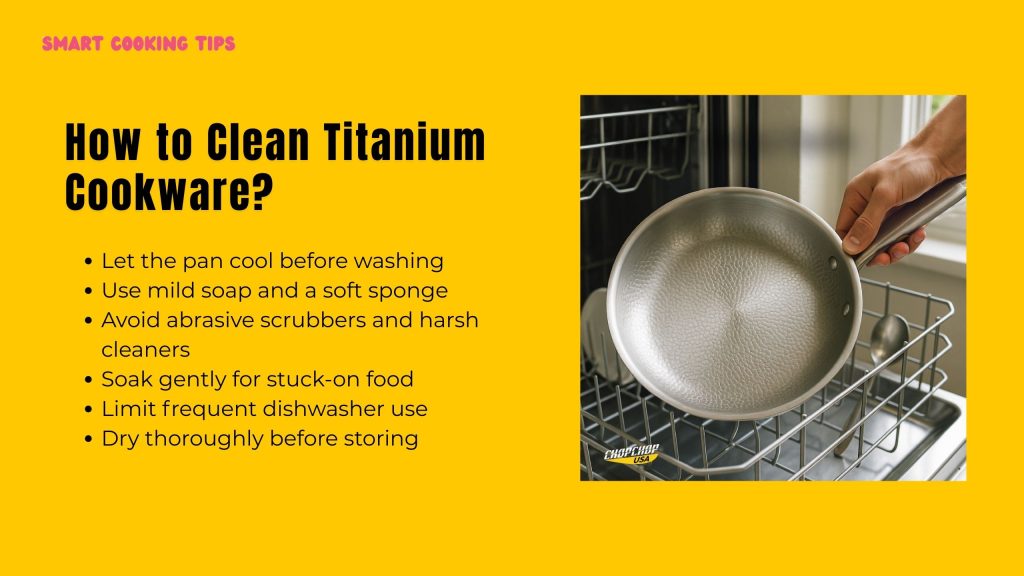
Proper care extends the lifespan of your pan and preserves its cooking performance. Once you understand what is titanium cookware, you will know that maintenance is simple, but consistent habits make a significant difference over time.
Allow The Pan To Cool Before Washing
Always let the cookware cool naturally before placing it under water. Sudden temperature changes can create thermal shock, which may gradually weaken bonded layers or reduce the longevity of titanium-reinforced coatings after repeated exposure.
Use Mild Soap And Soft Cleaning Tools
Clean the surface with warm water, gentle dish soap, and a soft sponge or cloth. This method effectively removes food residue without scratching the coating. Avoid steel wool, abrasive pads, or harsh chemical cleaners that may damage the finish.
Soak Gently For Stubborn Residue
If food sticks to the surface, soak the pan in warm soapy water for several minutes before wiping it clean. For tougher buildup, a mild baking soda paste can help loosen residue without harming the titanium surface.
Limit Dishwasher Use
Although some titanium pans are labeled dishwasher safe, frequent dishwasher cycles may reduce long-term durability due to strong detergents and high heat exposure. Hand washing is generally recommended to preserve coating integrity and cooking performance.
Dry Thoroughly Before Storing
After washing, dry the cookware completely using a soft towel. Proper drying prevents water spots, mineral buildup, and potential surface discoloration. Storing the pan fully dry helps maintain both appearance and structural quality for years.
With consistent cleaning and careful handling, titanium cookware can remain efficient, durable, and visually appealing through daily use.
How Long Do Titanium Pans Last?
A common question after learning what is titanium cookware is about durability.
High-quality titanium cookware can last 5 to 10 years or more, depending on usage and maintenance. Solid titanium models may last even longer due to their structural strength.
Titanium-coated nonstick pans typically last longer than traditional nonstick options because the reinforced surface resists scratching and peeling.
However, lifespan depends on cooking habits. Avoid overheating and use appropriate utensils to maximize durability.
When properly maintained, titanium cookware offers excellent long-term value compared to standard nonstick pans.
ChopChop USA – Upgrade Your Kitchen with the Titanium Pan Pro
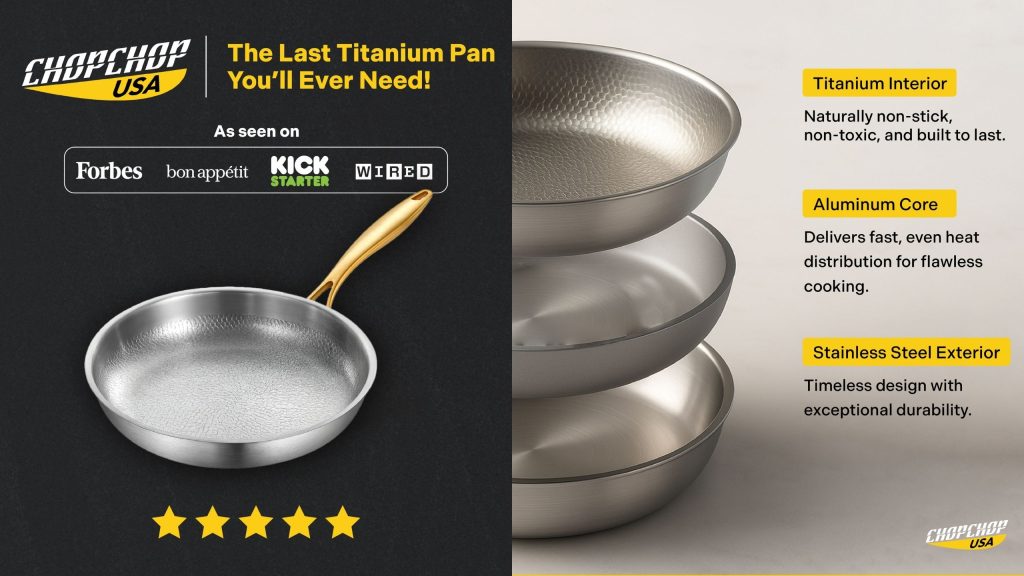
One standout example of modern titanium cookware innovation is the Titanium Pan Pro from ChopChop USA.
This pan combines a reinforced titanium surface with an optimized heat-conducting base, delivering balanced cooking performance and improved scratch resistance.
For home cooks who understand what is titanium cookware and want reliability, this model offers durability, easy cleaning, and sleek design.
Its lightweight construction makes daily cooking comfortable while maintaining strength for frequent use.
Upgrading to a quality titanium pan can transform your cooking experience with better heat control and reduced sticking.
Conclusion
Understanding what is titanium cookware helps you choose durable, lightweight, and corrosion-resistant cookware. High-quality models provide long-lasting performance and easy maintenance.
Brands like ChopChop USA offer advanced titanium solutions that combine strength and efficiency, making them a smart kitchen upgrade.
Frequently Asked Questions
1. What Is A Titanium Cookware Made Of?
Titanium cookware is made from solid titanium metal or aluminum/stainless steel coated with titanium-reinforced nonstick layers for added durability and corrosion resistance.
2. Is Titanium Cookware Safe For Health?
Yes, high-quality titanium cookware is non-reactive, corrosion-resistant, and generally safe when manufactured under proper safety standards and used within recommended temperatures.
3. Can You Use Metal Utensils On Titanium Pans?
Some titanium-coated pans allow limited metal utensil use due to scratch resistance, but always follow manufacturer instructions to prevent surface damage.
4. Does Titanium Cookware Heat Evenly?
Pure titanium may heat unevenly, but titanium cookware with aluminum cores distributes heat more consistently for balanced cooking performance.
5. Is Titanium Cookware Worth The Investment?
Titanium cookware offers durability, lightweight handling, and longer lifespan than traditional nonstick pans, making it a valuable long-term kitchen investment.