

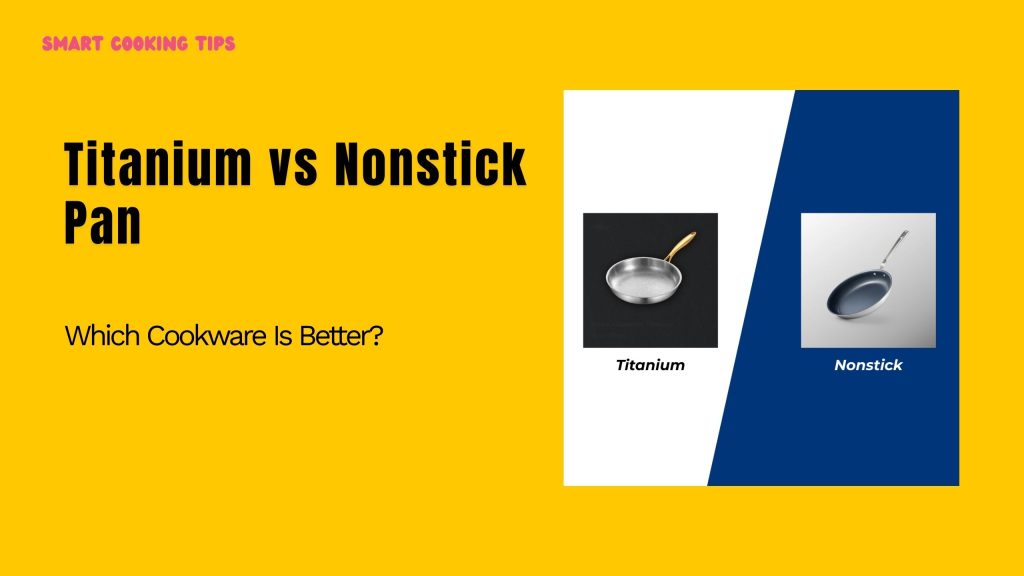
Is titanium vs nonstick pan the better choice for everyday cooking? The short answer: titanium offers durability and safety, while nonstick prioritizes convenience and easy food release for quick meals.
In this guide, Smart Cooking Tips will explain the key differences in the titanium vs nonstick pan debate, helping home cooks understand performance, durability, safety, and value before choosing cookware today.
Table of Contents
What Is a Titanium Pan?
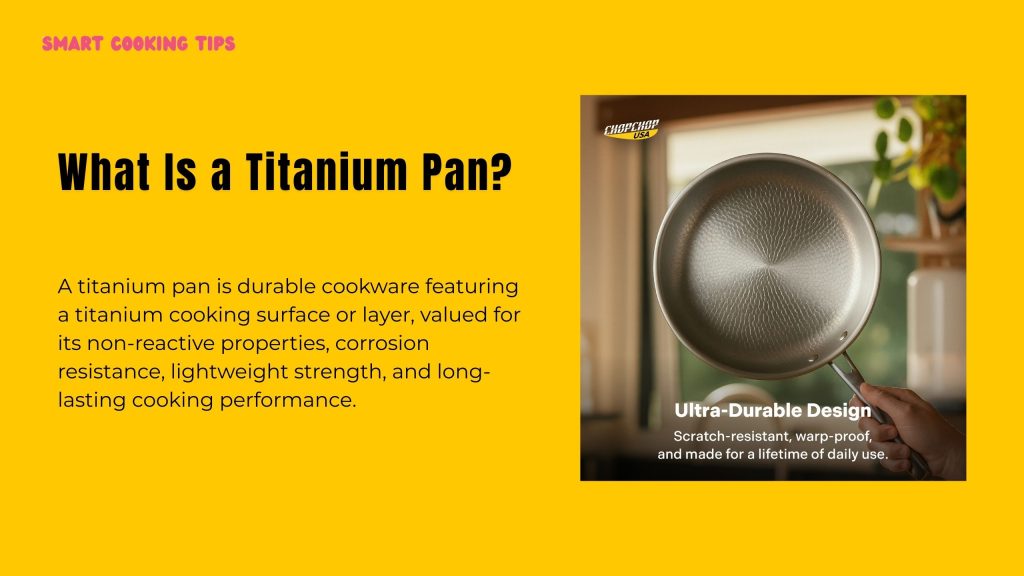
A titanium pan is cookware designed with a titanium cooking surface or reinforced titanium layer. Titanium itself is a strong, lightweight metal known for its corrosion resistance, durability, and non-reactive properties.
Unlike traditional cookware that relies heavily on chemical coatings, titanium cookware focuses on structural strength and long-term safety. Many modern titanium pans use multi-layer construction. Typically, they include a conductive aluminum core for heat distribution and a stainless steel exterior for durability and compatibility with different stovetops.
The interior titanium layer provides a naturally stable cooking surface. Titanium does not react with acidic foods such as tomatoes or citrus, and it does not leach chemicals during cooking. This makes titanium cookware appealing for people concerned about food safety.
Another advantage is durability. Titanium surfaces are highly scratch-resistant compared with coated cookware. Metal utensils are less likely to damage the cooking surface, making these pans suitable for daily cooking.
Because titanium itself is not the best heat conductor, manufacturers often combine it with aluminum cores to improve heating performance. The result is cookware that balances durability with efficient heat distribution.
Overall, titanium pans are designed for cooks who want long-lasting cookware with minimal maintenance and strong safety performance.
What Is a Nonstick Pan?
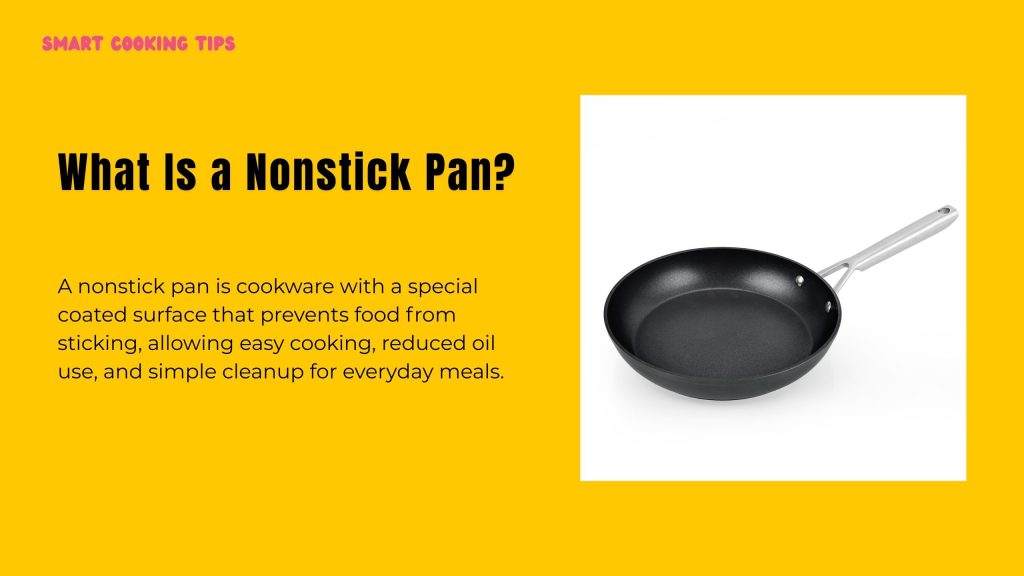
A nonstick pan is cookware designed with a special coating that prevents food from sticking to the surface during cooking. The most common coatings are PTFE-based materials, often known by the brand name Teflon, or ceramic coatings.
The main benefit of nonstick cookware is convenience. Food releases easily from the surface, which makes cooking delicate foods like eggs, pancakes, or fish much easier. Nonstick pans also require less oil or butter, which can support lower-fat cooking.
Cleaning a nonstick pan is typically simple. Because food rarely sticks, most residues can be wiped away with warm water and a soft sponge.
However, nonstick coatings can wear down over time. Scratches, overheating, and frequent use may reduce the effectiveness of the coating. Once the coating deteriorates, food may begin sticking again, and the pan may need replacement.
Another consideration is heat tolerance. Many nonstick coatings cannot handle extremely high temperatures. Overheating may damage the surface or reduce its lifespan.
Despite these limitations, nonstick pans remain extremely popular because they are affordable, easy to use, and convenient for everyday cooking.
Comparison Between Titanium and Nonstick Pan
When evaluating cookware, the titanium vs nonstick pan comparison often focuses on safety, durability, cooking performance, and maintenance. Each option offers unique advantages depending on how you cook and what you value most in your kitchen tools.
Health Safety
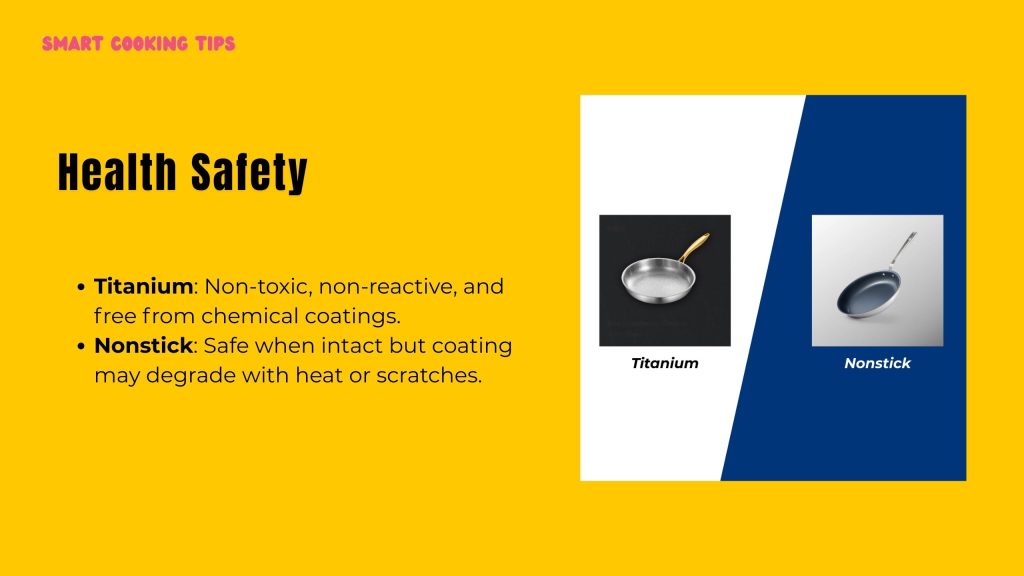
In the titanium vs nonstick pan discussion, health safety is often a top concern for many home cooks.
Titanium cookware is naturally non-toxic and non-reactive. It does not rely on synthetic coatings and does not release chemicals into food, even at higher cooking temperatures.
Nonstick pans are generally safe when used properly, but the coating can degrade over time. Scratches or excessive heat may compromise the surface, which raises concerns for some users.
For cooks prioritizing chemical-free cooking surfaces, titanium cookware often provides greater peace of mind.
Service Life
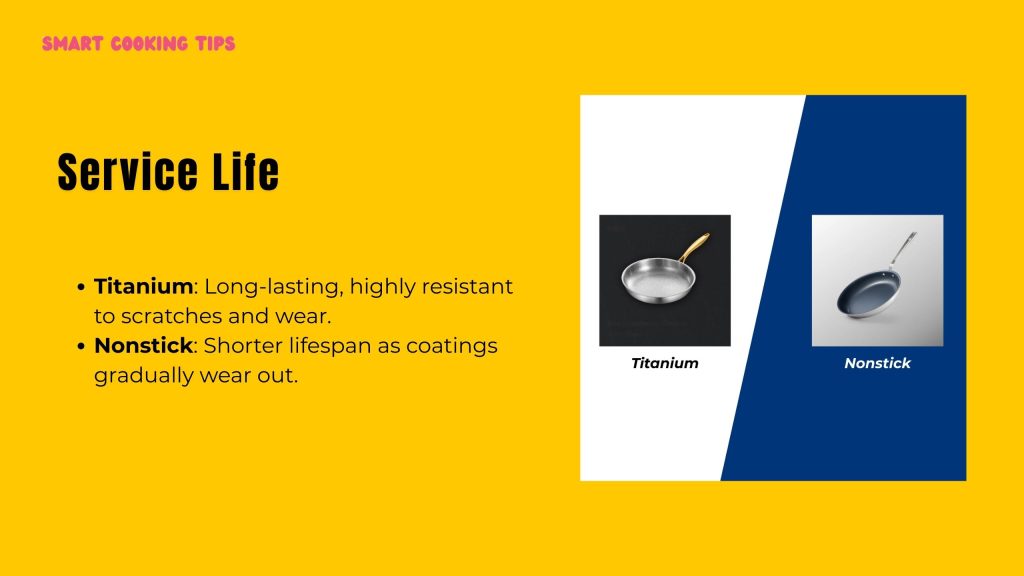
Another important factor in the titanium vs nonstick pan debate is durability.
Titanium cookware is designed for long-term use. The surface resists scratches, dents, and corrosion, allowing the pan to maintain its performance for many years.
Nonstick pans typically have a shorter lifespan because coatings gradually wear out. Even with careful use, many nonstick pans need replacement after several years.
For long-term value, titanium cookware often lasts significantly longer.
Heat Conductivity
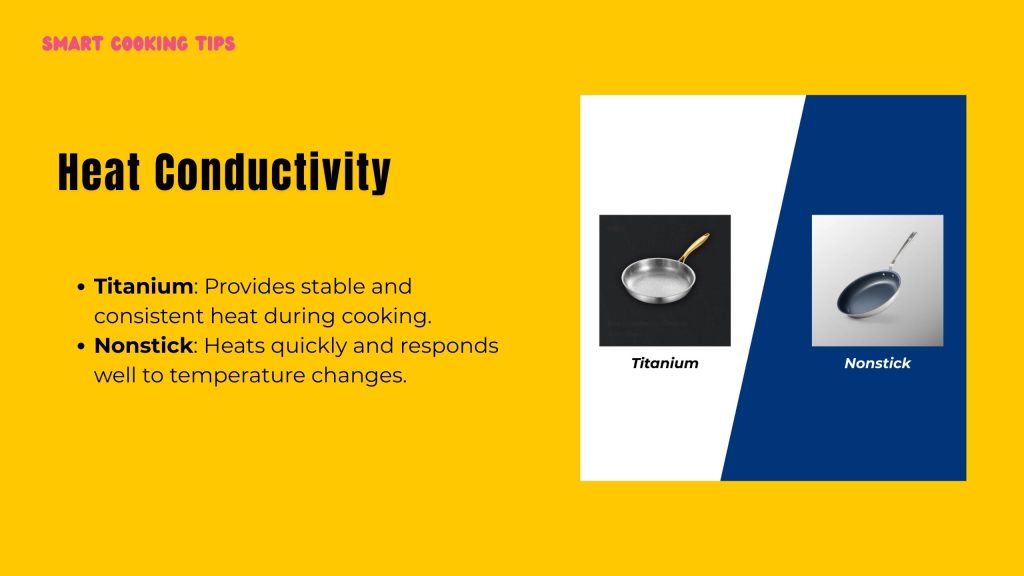
Heat performance plays a major role when comparing a titanium vs nonstick pan.
Titanium itself does not conduct heat as efficiently as aluminum or copper, so most titanium pans include an aluminum core. This layered construction ensures even heat distribution across the cooking surface.
Nonstick pans also often use aluminum bases, which heat quickly and evenly.
In practice, both cookware types can deliver good heat performance, depending on their construction quality.
Nonstick Performance
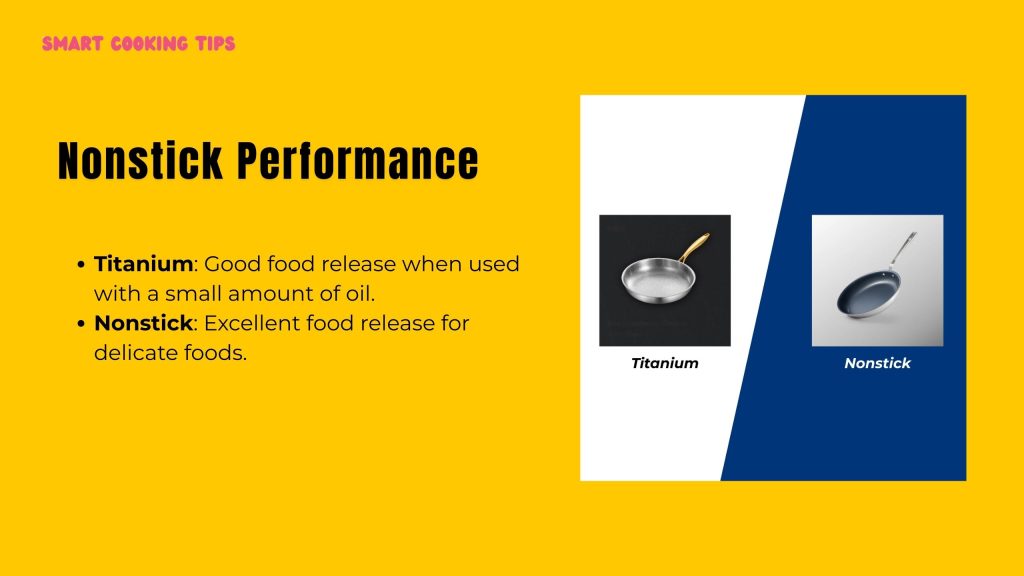
Food release is one of the biggest differences in the titanium vs nonstick pan comparison.
Nonstick cookware excels in this area. The coating allows delicate foods to slide off easily, making cooking eggs or pancakes simple.
Titanium pans may not be as slippery as traditional nonstick coatings, but high-quality titanium surfaces still offer good food release when used with proper cooking techniques and small amounts of oil.
For effortless cooking convenience, nonstick pans often have the advantage.
Cleaning
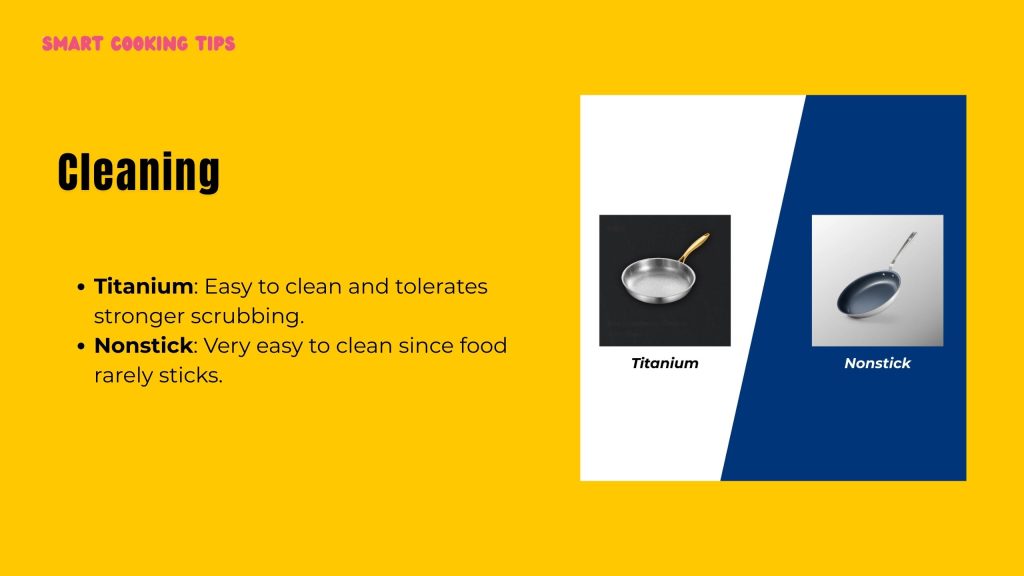
Ease of cleaning is another consideration in the titanium vs nonstick pan decision.
Nonstick pans are usually the easiest to clean because food rarely sticks to the surface.
Titanium pans may require slightly more effort if food residues stick, but their durable surface allows stronger scrubbing tools without damaging the pan.
Both options can be easy to maintain with proper cooking and cleaning habits.
Corrosion Resistance
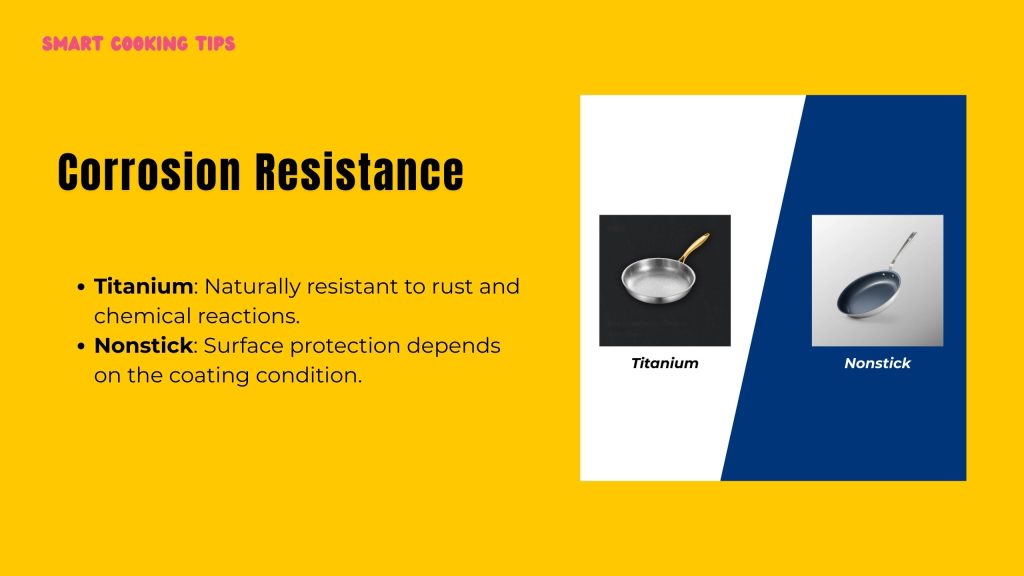
Corrosion resistance is another point in the titanium vs nonstick pan comparison.
Titanium is naturally resistant to rust and chemical reactions. It maintains its surface integrity even when exposed to acidic ingredients or moisture.
Nonstick pans rely on coatings to protect the metal underneath. Once the coating is damaged, the underlying material may be more vulnerable.
Because of this, titanium cookware often offers better long-term resistance to corrosion.
Weight
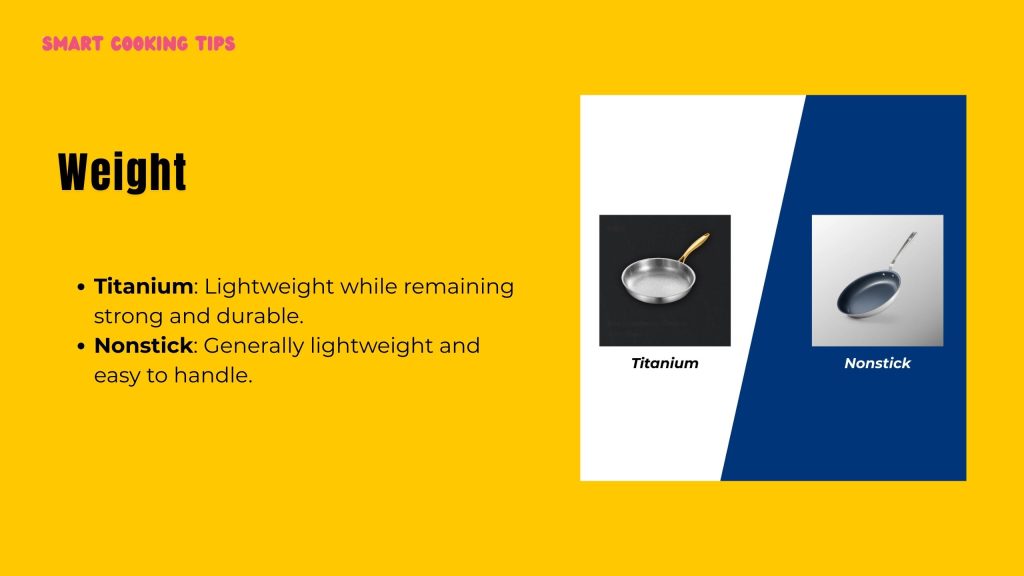
Weight can affect comfort during everyday cooking, especially when lifting or flipping food.
In the titanium vs nonstick pan debate, titanium pans are often surprisingly lightweight despite their strength.
Nonstick pans made with aluminum are also lightweight, making them easy to handle.
Both types can provide comfortable handling, although titanium offers strength without adding extra weight.
Price
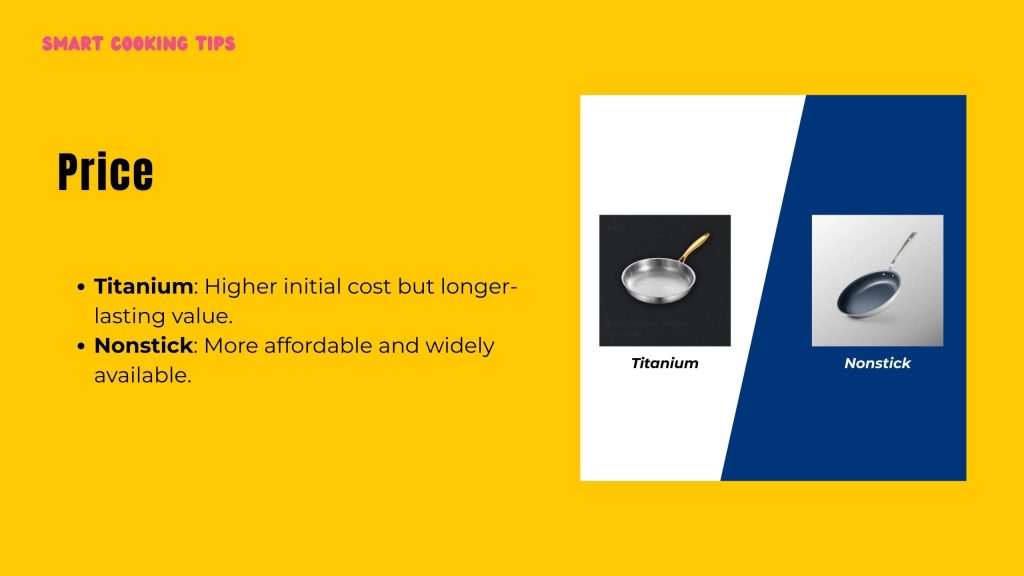
Price is a practical factor when considering a titanium vs nonstick pan purchase.
Nonstick cookware is generally more affordable and widely available in budget-friendly sets.
Titanium cookware usually costs more upfront due to premium materials and durable construction.
However, because titanium pans last longer, they can offer better long-term value for frequent cooks.
Titanium vs Nonstick Pan: Which Is Better for You?
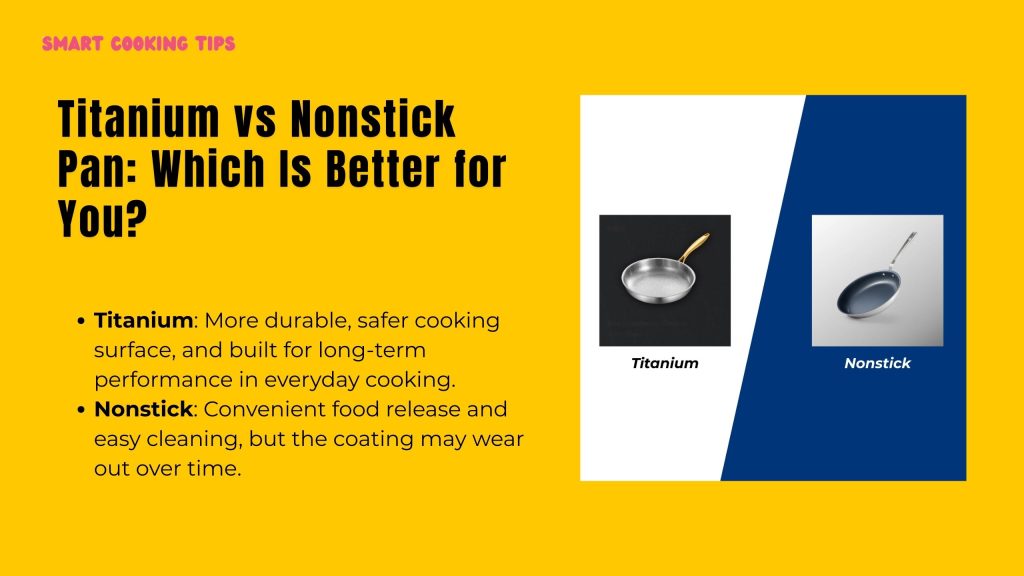
Choosing between a titanium vs nonstick pan ultimately depends on your cooking style, priorities, and budget.
If you cook delicate foods frequently and want effortless food release, a nonstick pan may be the most convenient option. It simplifies everyday cooking and cleaning, especially for quick meals.
However, if durability, safety, and long-term reliability matter most, titanium cookware may be the better investment. Titanium pans resist scratches, tolerate higher temperatures, and last significantly longer than coated cookware.
Many experienced home cooks eventually move toward titanium or stainless-based cookware for its strength and versatility.
Understanding the strengths of each option helps you make the right decision for your kitchen.
Discover the ChopChop USA Titanium Pan Pro
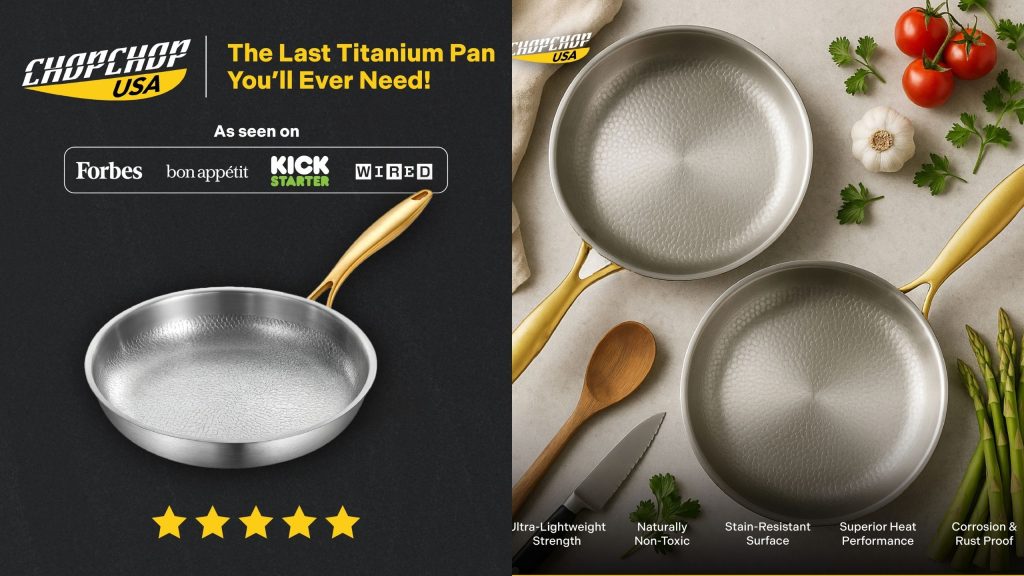
For cooks looking for a premium solution in the titanium vs nonstick pan comparison, the ChopChop USA Titanium Pan Pro offers a modern upgrade designed for safety, durability, and performance.
The ChopChop USA Titanium Pan Pro is built for cooks who want uncompromising safety, performance, and durability in everyday cooking. Featuring a premium tri-ply construction with a pure titanium interior, it delivers professional results without harmful coatings—lightweight, powerful, and made to last.
Key Features
- Pure titanium cooking surface that is non-toxic, non-reactive, and corrosion-resistant
- Advanced tri-ply design with aluminum core and stainless steel exterior
- Even heat distribution for consistent results and reduced hot spots
- Scratch-resistant titanium surface for long-term daily use
- Lightweight yet ultra-strong construction for easy handling
- Compatible with all stovetops, including induction, and oven-safe up to 500°F
Benefits
- Safer cooking with zero chemical leaching or harmful coatings
- Faster, more precise heating for reliable everyday and gourmet cooking
- Effortless food release and quick, stress-free cleanup
- Exceptional durability that resists warping, dents, and wear
- Minimal maintenance with professional-grade performance
- A long-term cookware investment built for confidence and consistency
Conclusion
When comparing titanium vs nonstick pan, the right choice depends on your priorities in the kitchen. Nonstick pans offer convenience and effortless food release, while titanium cookware stands out for durability, safety, and long-term reliability.
For cooks who want a stronger, healthier cookware option, the ChopChop USA Titanium Pan Pro is a smart upgrade. Its durable titanium surface, tri-ply construction, and professional performance make it a dependable choice for everyday cooking.
Frequently Asked Questions
1. Is Titanium Cookware Safer Than Nonstick Pans?
Titanium cookware is considered safer by many cooks because it contains no chemical coatings and remains stable at high temperatures without releasing substances into food.
2. How Long Does A Nonstick Pan Usually Last?
Most nonstick pans last between three and five years depending on usage, cleaning habits, and heat exposure. Scratches and worn coatings typically reduce performance.
3. Can Titanium Pans Be Used On All Stovetops?
High-quality titanium cookware with multi-layer construction usually works on gas, electric, ceramic, and induction stovetops, offering flexibility for many kitchen setups.
4. Do Titanium Pans Need Oil For Cooking?
Titanium pans generally perform best with a small amount of oil or butter, which helps improve food release and enhances cooking results.
5. Are Titanium Pans Worth The Higher Price?
Titanium pans often cost more initially but offer long service life, durability, and strong safety benefits, making them a worthwhile long-term cookware investment for serious home cooks.