

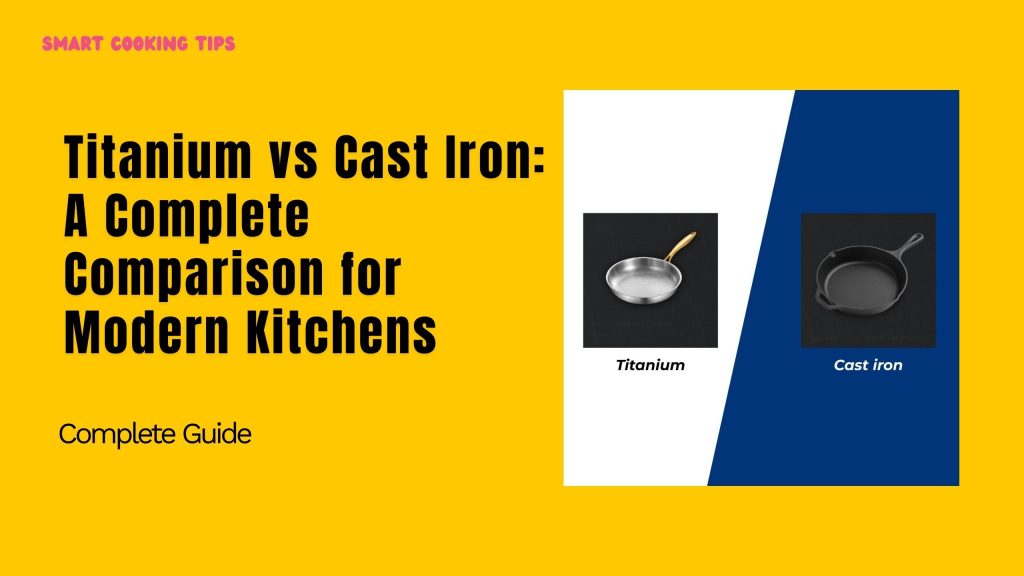
Titanium vs cast iron — which one truly belongs in your kitchen? Both materials are trusted for durability, performance, and long-term value, yet they support very different cooking styles and daily routines.
Smart Cooking Tips we’ll share help you understand how each performs in real kitchens — from heat control and maintenance to safety and versatility. Instead of choosing one over the other, this guide gives you a clear, balanced comparison so you can confidently use both where they shine most.
Table of Contents
What Is Titanium Cookware?
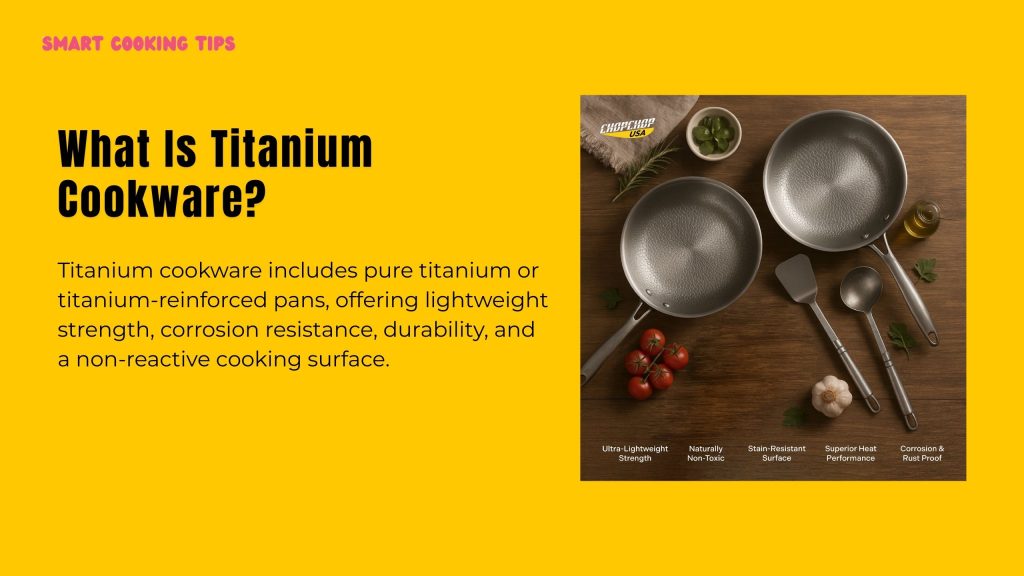
Titanium cookware can be made from pure titanium or feature a titanium-reinforced cooking surface layered with aluminum or stainless steel. Known for its lightweight strength, corrosion resistance, and non-reactive properties, titanium provides durable, stable performance while preserving food flavor and supporting safe, modern cooking.
Titanium is widely known for:
- Exceptional corrosion resistance
- Lightweight strength
- Chemical stability
- Non-reactive cooking surface
Because titanium does not react with acidic foods, it preserves flavor integrity and supports clean cooking. It is also naturally resistant to rust and surface degradation, making it appealing for modern, low-maintenance kitchens.
What Is Cast Iron Cookware?
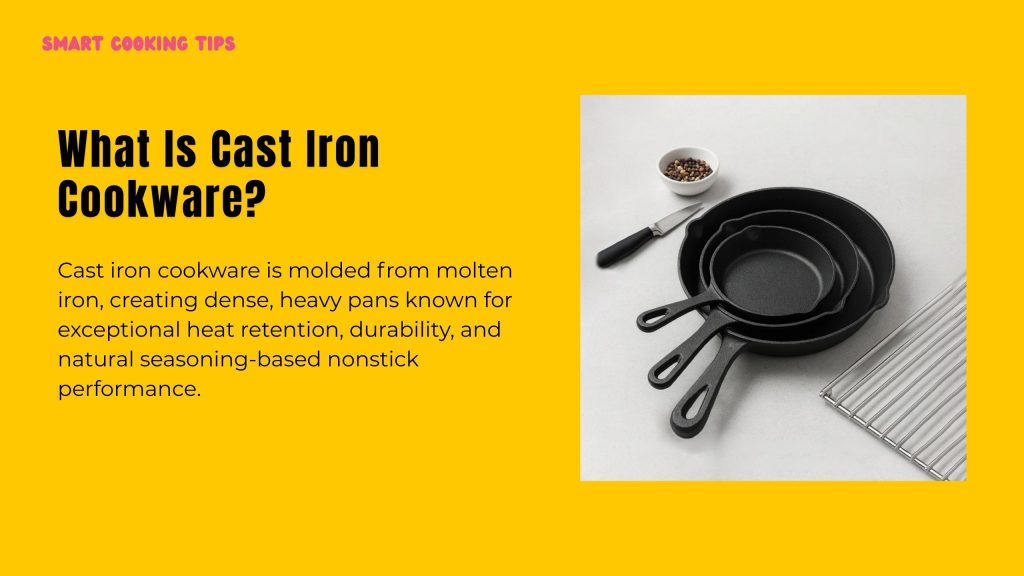
Cast iron cookware is made by pouring molten iron into molds to form thick, dense pans. This material has been used for centuries and remains one of the most trusted options in traditional cooking.
Cast iron is known for:
- Exceptional heat retention
- High-temperature performance
- Long lifespan
- Natural seasoning-based nonstick properties
Unlike titanium cookware, cast iron is typically made from a single, solid material. When seasoned properly with oil, it develops a protective layer that enhances cooking performance and prevents rust.
Titanium vs Cast Iron: Key Differences at a Glance
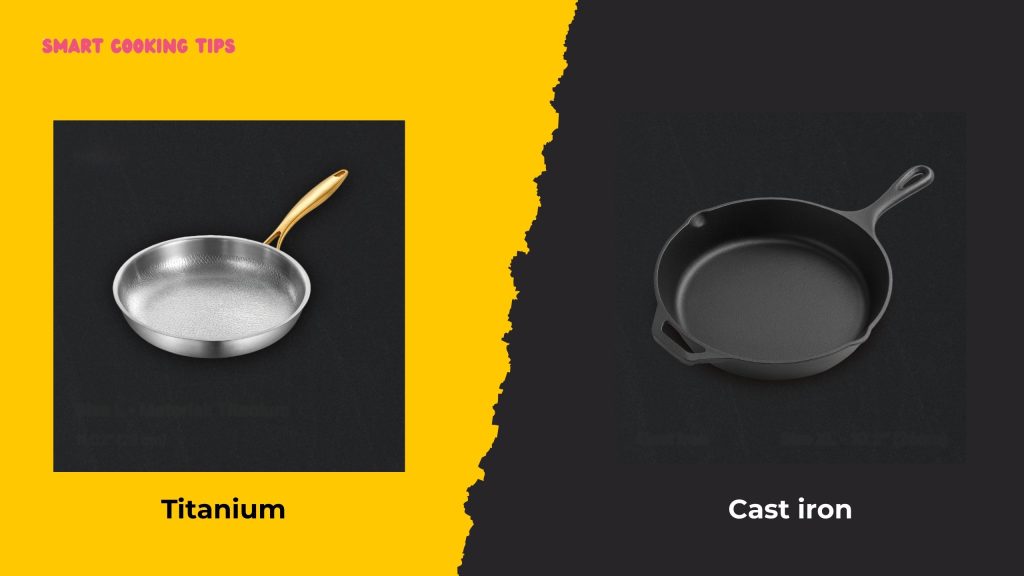
| Feature | Titanium | Cast Iron |
| Weight | Lightweight | Heavy |
| Heat Retention | Moderate | Excellent |
| Heat-Up Speed | Fast | Slow |
| Maintenance | Low | Requires seasoning |
| Rust Resistance | Naturally rust-proof | Prone to rust if not maintained |
| Reactivity | Non-reactive | Can react with acidic foods |
| Longevity | Highly durable | Can last generations |
| Ideal For | Everyday cooking | High-heat and traditional cooking |
Both materials offer impressive benefits — the right choice depends on how you cook.
Heat Performance: Speed vs Retention
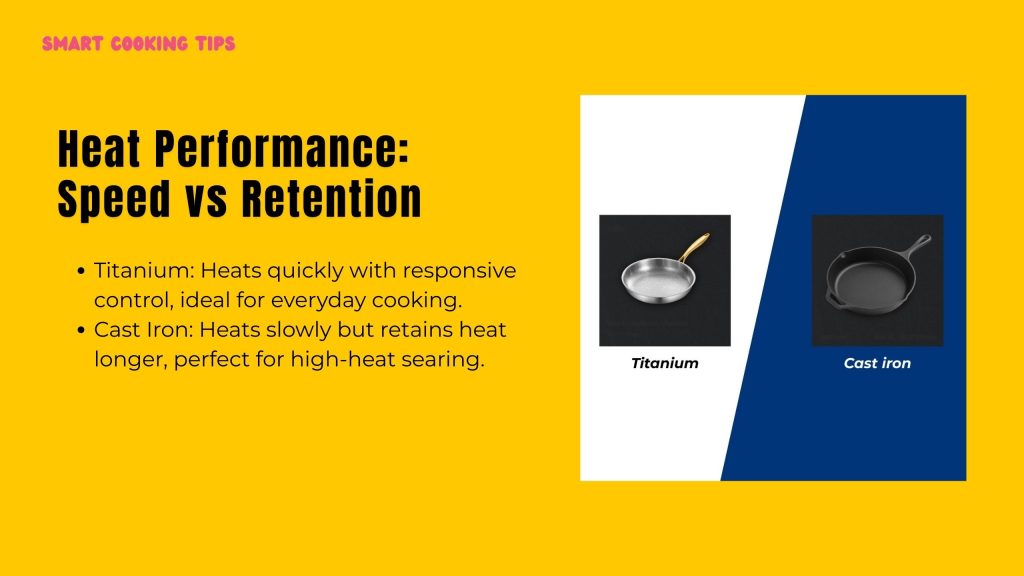
One of the biggest differences in the titanium vs cast iron comparison is how each material handles heat.
Titanium Heat Performance
Titanium cookware, especially when layered with an aluminum core, heats quickly and distributes heat evenly. This makes it ideal for:
- Sautéing vegetables
- Cooking eggs
- Quick weekday meals
- Stir-frying
- Controlled temperature cooking
Because it responds quickly to temperature adjustments, titanium cookware offers precision and efficiency.
Cast Iron Heat Performance
Cast iron heats more slowly but retains heat exceptionally well. Once hot, it stays hot — even after food is added.
This makes cast iron ideal for:
- Searing steak
- Frying chicken
- Baking cornbread
- Slow cooking
- Deep browning
The heavy mass of cast iron creates consistent cooking temperatures, which is especially useful for high-heat applications.
Bottom line: Titanium offers speed and responsiveness, while cast iron delivers unmatched heat retention.
Weight and Handling
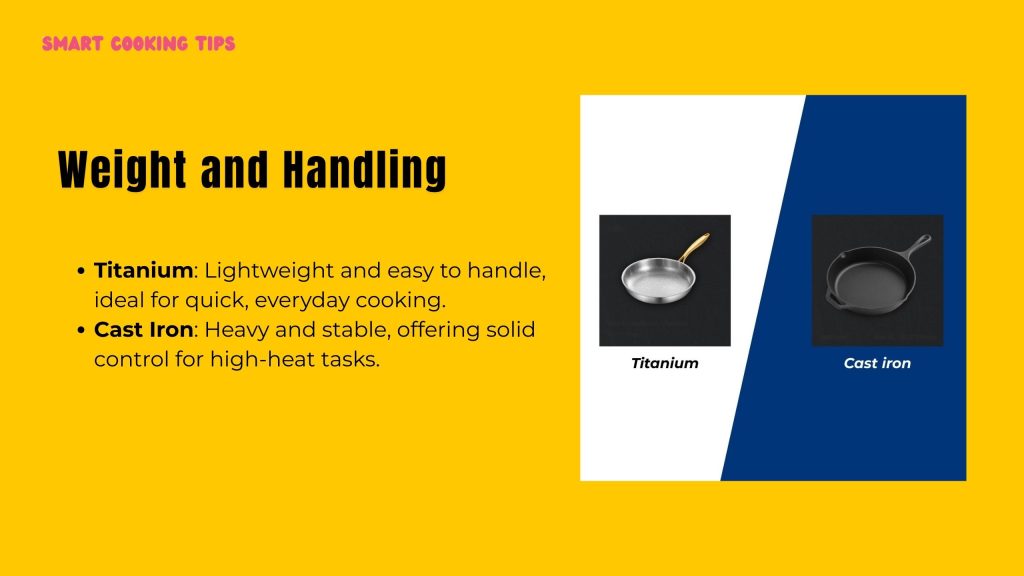
Another important factor in the titanium vs cast iron discussion is weight.
Titanium: Lightweight Convenience
Titanium cookware is significantly lighter than cast iron. This makes it:
- Easier to lift and flip
- More comfortable for daily cooking
- Better for users with limited wrist strength
- Easier to store
For busy kitchens or quick meal prep, lightweight handling is a major advantage.
Cast Iron: Solid and Stable
Cast iron pans are heavy and dense. While this may feel cumbersome for some, the weight offers:
- Stability on stovetops
- Strong heat consistency
- Durability under high heat
Many cooks appreciate the solid feel of cast iron, especially for searing and baking.
Maintenance and Cleaning
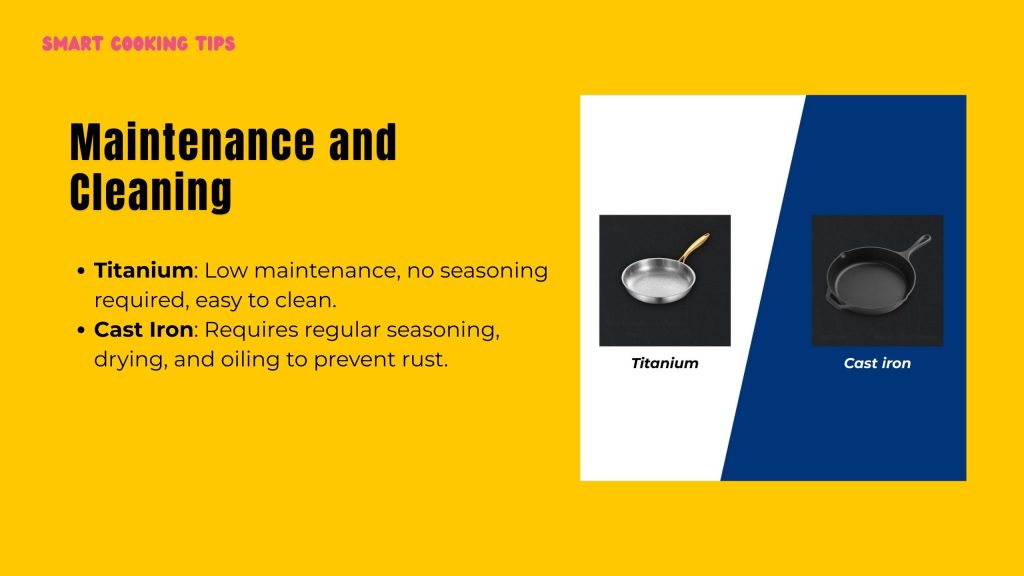
Maintenance plays a major role in long-term cookware satisfaction.
Titanium Maintenance
Titanium cookware is generally:
- Rust-resistant
- Easy to clean
- Non-reactive
- Low maintenance
It does not require seasoning. After cooking, simple handwashing with mild soap is usually enough. Because it resists corrosion naturally, there is little risk of damage from moisture.
Cast Iron Maintenance
Cast iron requires more attention. To maintain performance:
- It must be seasoned regularly
- It should be dried immediately after washing
- Oil should be applied to prevent rust
While the process is simple, it does require consistency. Many cooks enjoy this traditional care routine, but it may not suit everyone.
In the titanium vs cast iron comparison, titanium wins for convenience, while cast iron rewards those who value hands-on maintenance.
Durability and Lifespan
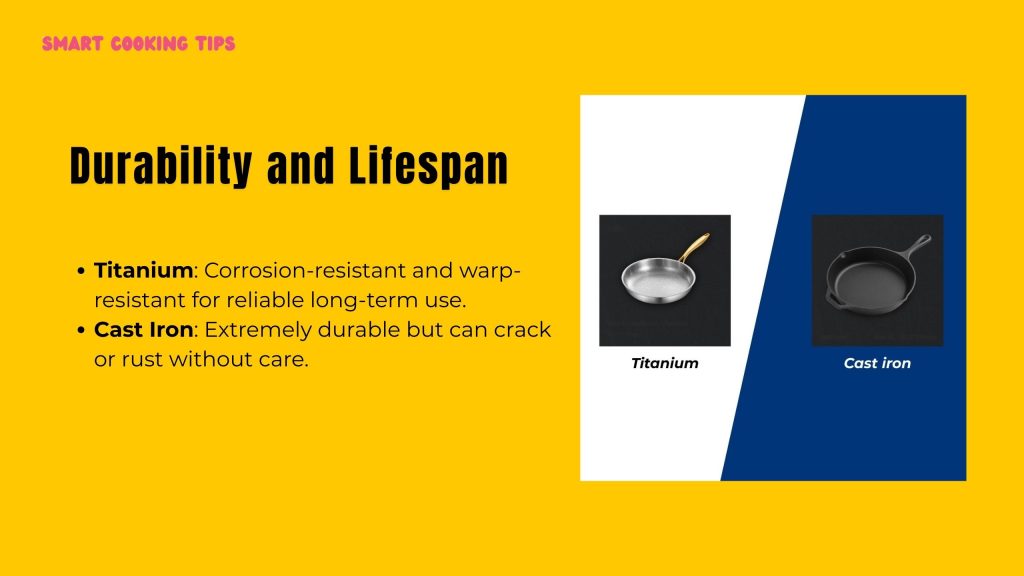
Both titanium and cast iron are known for longevity.
Titanium Durability
Titanium is:
- Corrosion-resistant
- Resistant to warping
- Stable under temperature changes
- Structurally strong despite being lightweight
It tolerates frequent use and rapid temperature shifts without cracking.
Cast Iron Durability
Cast iron can last for generations. However:
- It can crack if dropped
- Sudden temperature shock may cause damage
- Rust can form if neglected
When properly maintained, cast iron cookware can become a lifelong kitchen tool passed down through families.
Safety and Food Reactivity
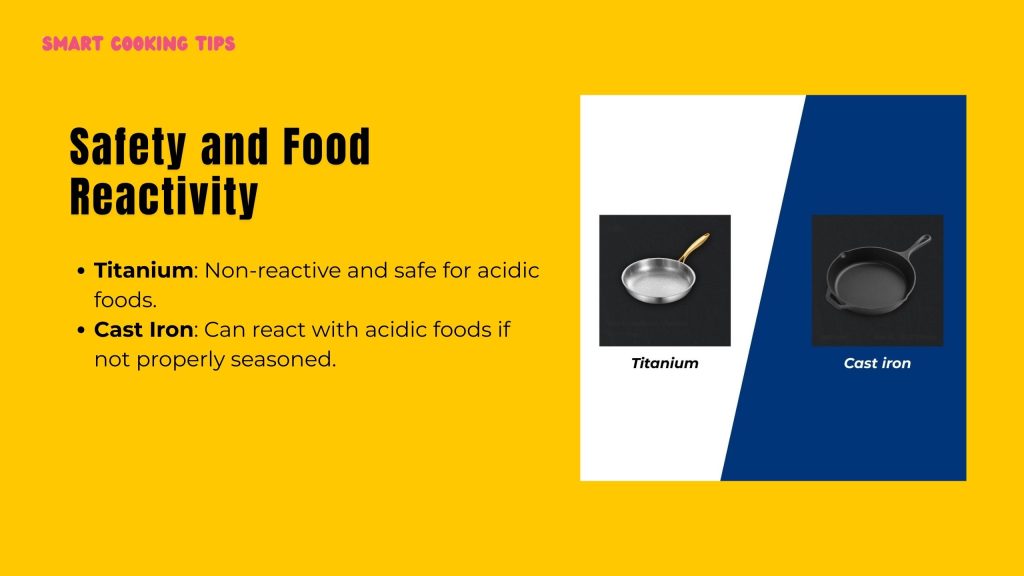
Safety is an important consideration in the titanium vs cast iron discussion.
Titanium Safety
Titanium is chemically stable and non-reactive. It:
- Does not leach metals into food
- Handles acidic ingredients safely
- Remains stable at high cooking temperatures
This makes it a strong option for tomato-based sauces, citrus dishes, and wine reductions.
Cast Iron Safety
Cast iron can release small amounts of iron into food. For many people, this is harmless and may even increase dietary iron intake.
However:
- Acidic foods can weaken seasoning
- Poorly maintained pans may rust
Proper seasoning protects the surface and maintains safety.
Cooking Versatility
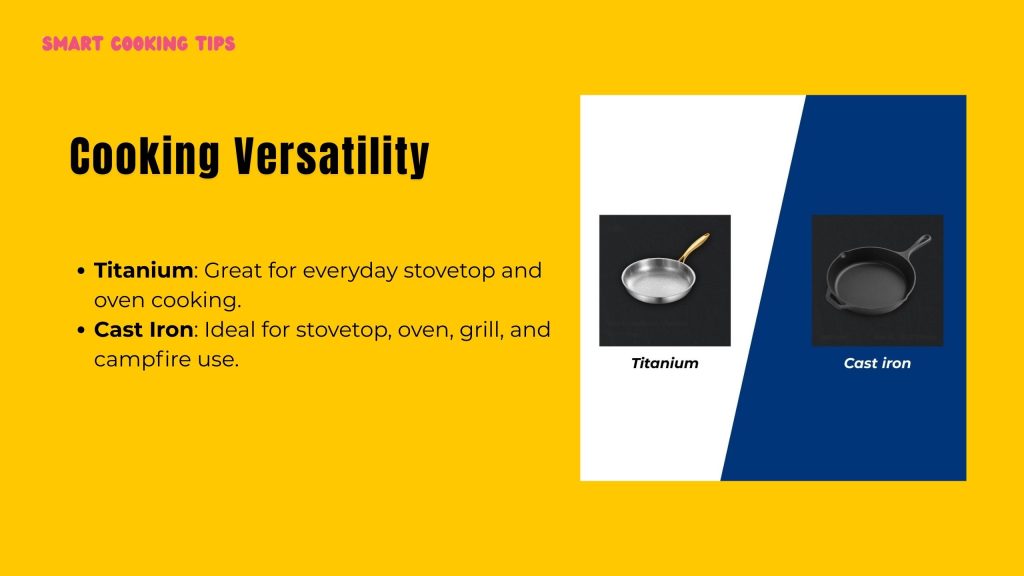
Both materials are versatile, but they shine in different ways.
Titanium Versatility
Titanium cookware works well for:
- Everyday stovetop cooking
- Induction-compatible designs (with magnetic base)
- Oven cooking (depending on construction)
- Quick meals and controlled heat tasks
It adapts well to modern kitchen appliances.
Cast Iron Versatility
Cast iron is famous for:
- Stovetop use
- Oven baking
- Grill cooking
- Outdoor campfire cooking
Its durability and heat retention make it especially versatile for traditional and rustic cooking methods.
Induction Compatibility
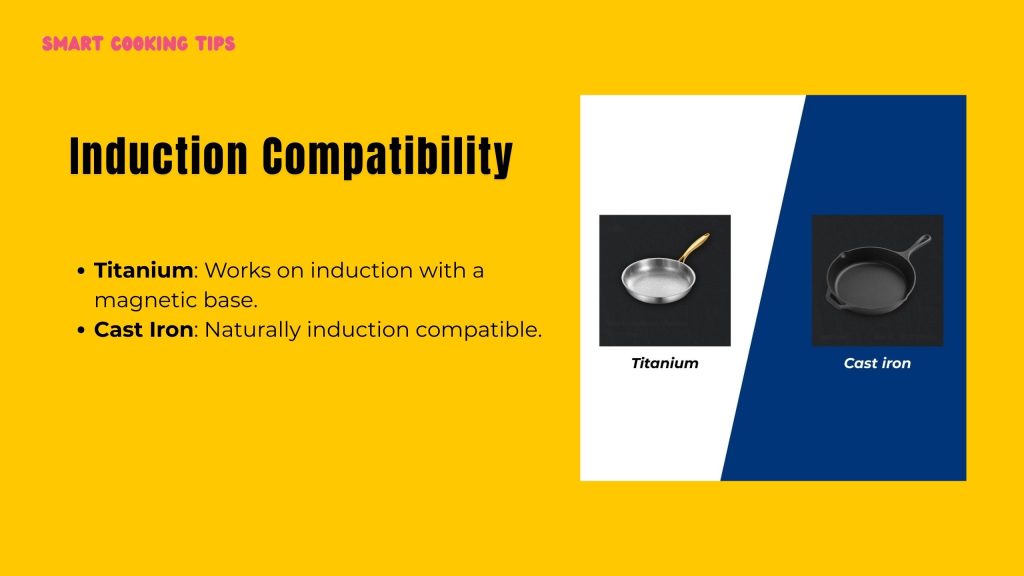
In the titanium vs cast iron comparison, induction compatibility depends on magnetic properties.
- Cast iron naturally works on induction cooktops.
- Titanium requires a magnetic stainless steel base layer to function on induction.
Most high-quality titanium cookware includes this feature, making both materials suitable for modern kitchens.
Cost and Long-Term Value
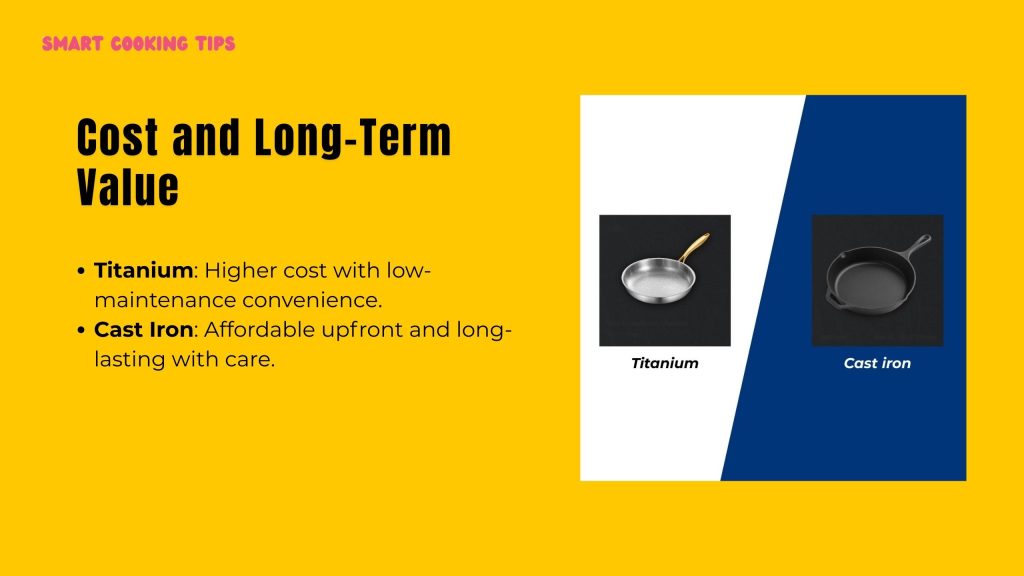
Upfront cost and lifetime value both matter.
Titanium Investment
Titanium cookware often comes at a higher initial price due to advanced construction and materials. However:
- It requires minimal maintenance
- It resists rust and corrosion
- It supports everyday efficiency
For many cooks, convenience and longevity justify the investment.
Cast Iron Investment
Cast iron is typically more affordable upfront. With proper care, it can last decades.
The tradeoff is time investment in seasoning and maintenance.
In the titanium vs cast iron comparison, both offer strong long-term value — one through convenience, the other through heritage durability.
Discover the ChopChop USA Cast Iron Skillet
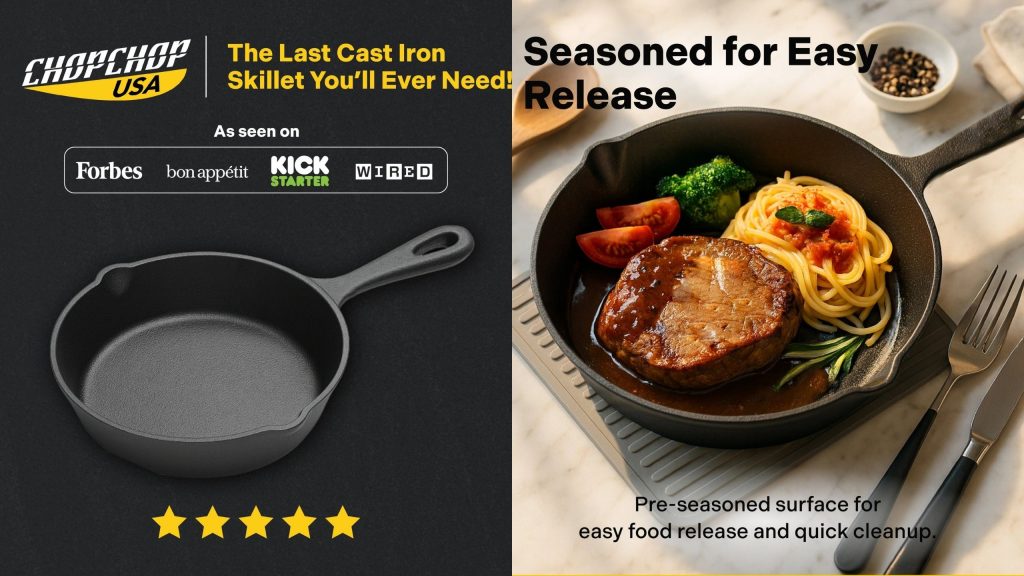
The ChopChop USA Cast Iron Skillet is a timeless essential for cooks who value rich flavor, exceptional heat retention, and lifetime durability. Crafted from premium cast iron, it delivers powerful, even performance across stovetop, oven, grill, and campfire, bringing authentic, hearty cooking into modern kitchens with confidence.
Pre-seasoned with a naturally nonstick surface that improves over time, this skillet supports flawless searing, frying, baking, and roasting. Its chemical-free, food-safe construction ensures pure cooking without synthetic coatings, while simple maintenance keeps it performing beautifully for generations, growing better and more flavorful with every meal.
Discover the ChopChop USA Titanium Pan Pro
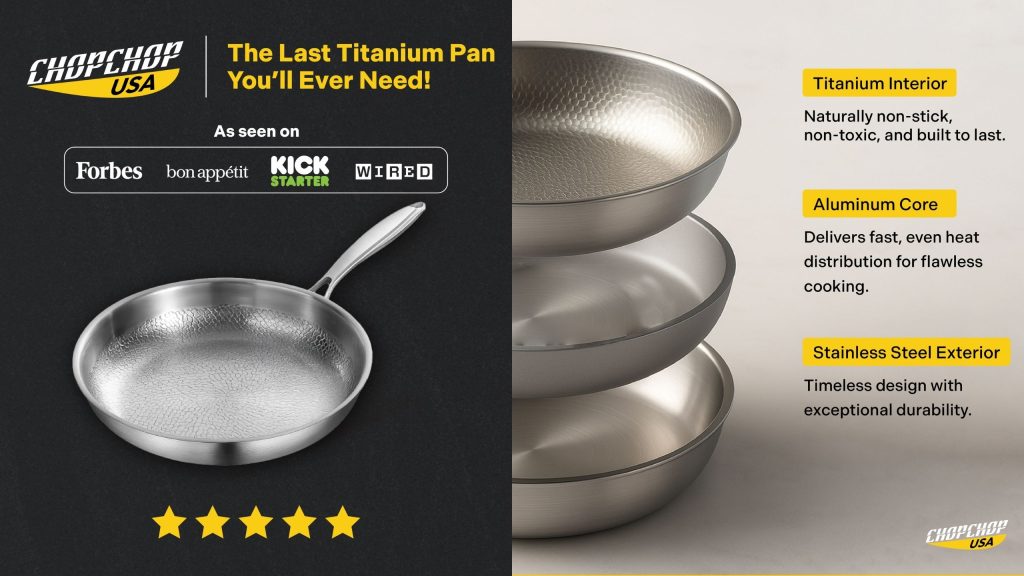
The ChopChop USA Titanium Pan Pro is engineered for cooks who demand uncompromising safety, professional performance, and long-term durability. Built with a pure titanium cooking surface and advanced tri-ply construction, it delivers fast, even heat without harmful coatings—lightweight, powerful, and designed for confident everyday cooking.
Featuring a non-toxic, non-reactive, corrosion-resistant interior, this pan ensures safer meals with zero chemical leaching. Its scratch-resistant surface, aluminum core for precise heat control, and induction-compatible stainless steel base provide consistent results, effortless cleanup, and exceptional durability for years of reliable kitchen performance.
Titanium vs Cast Iron: Final Thoughts
The titanium vs cast iron comparison shows that both materials offer unique strengths. Titanium provides lightweight handling, corrosion resistance, and easy maintenance, while cast iron delivers superior heat retention, powerful searing capability, and long-term durability for traditional cooking methods.
For complete kitchen performance, consider both. The ChopChop USA Titanium Pan Pro supports fast, everyday cooking with modern efficiency, while the ChopChop USA Cast Iron Skillet excels at high-heat searing, baking, and classic recipes, giving you versatility for every meal.
Frequently Asked Questions
1. Is titanium or cast iron better for everyday cooking?
Titanium is lightweight, low maintenance, and ideal for quick daily meals, while cast iron excels at high-heat cooking and delivers steady heat retention for consistent, flavorful results.
2. Which retains heat longer, titanium or cast iron?
Cast iron retains heat much longer due to its dense structure, whereas titanium heats faster and responds more quickly to temperature changes.
3. Can both titanium and cast iron be used on induction cooktops?
Yes, cast iron works naturally on induction cooktops, while titanium cookware requires a magnetic stainless steel base to function properly.
4. Do titanium and cast iron react with acidic foods?
Titanium is non-reactive and safe for acidic ingredients, while cast iron may react if its seasoning layer is weak or not properly maintained.
5. Which cookware lasts longer, titanium or cast iron?
Both are highly durable; cast iron can last generations with proper care, and titanium resists corrosion and warping for reliable long-term performance.