

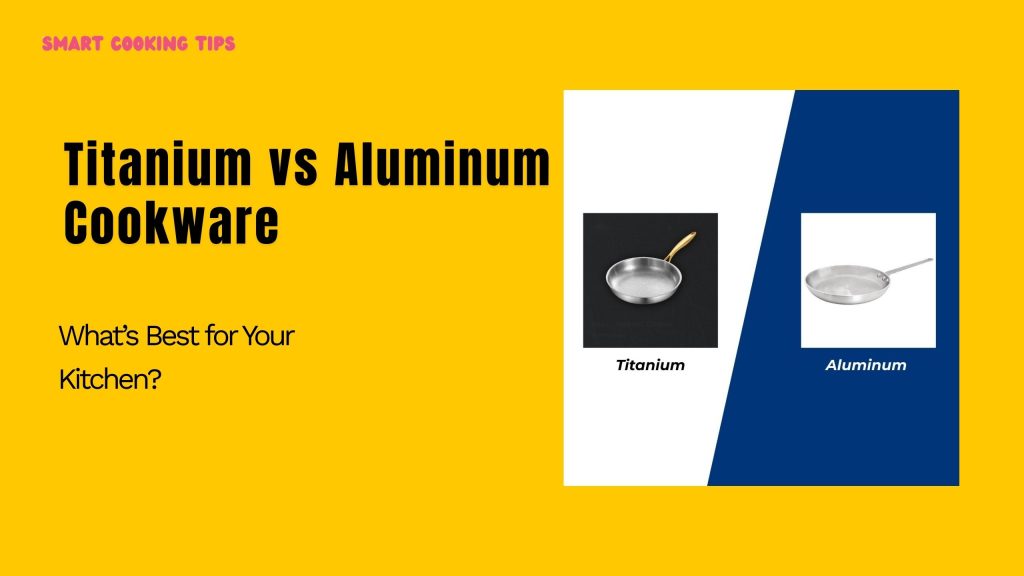
Are you comparing titanium vs aluminum cookware to decide which one truly fits your kitchen needs? The short answer: titanium offers superior durability and safety, while aluminum delivers faster heating at a more affordable price point.
In this guide, Smart Cooking Tips will break down titanium vs aluminum cookware in clear, practical terms so you can confidently choose the right material based on performance, safety, budget, and long-term value.
Table of Contents
What Is Titanium Cookware?
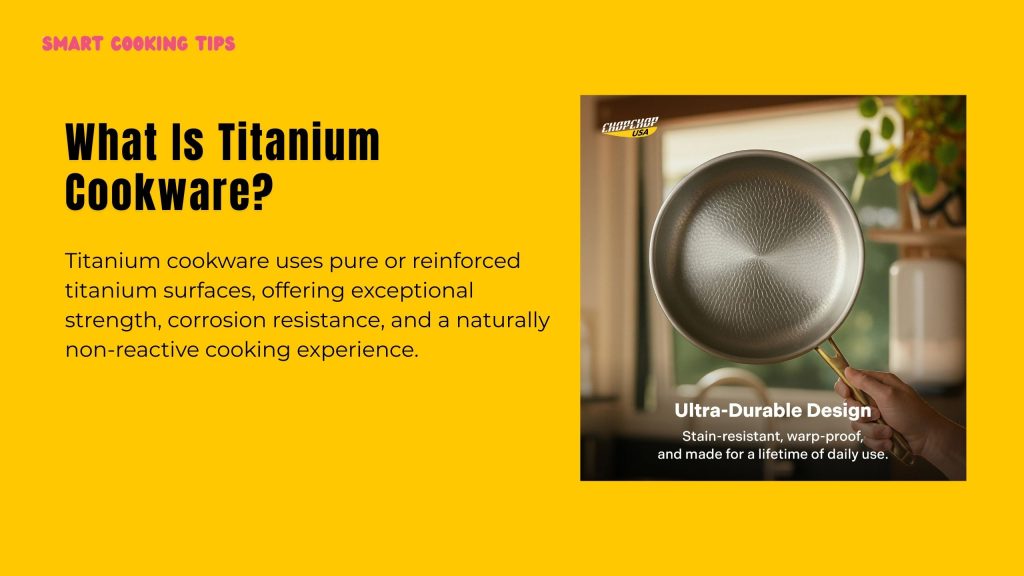
Titanium cookware refers to pots and pans made from either solid titanium or a titanium-reinforced cooking surface. Pure titanium is exceptionally strong, corrosion-resistant, and naturally non-reactive with food. These properties make it highly attractive for cooks who prioritize durability and food safety.
In modern cookware design, titanium is rarely used alone. Instead, it is commonly part of a multi-layer construction known as tri-ply or clad cookware. A typical configuration includes a titanium interior cooking surface, an aluminum core for heat conduction, and a stainless steel exterior for induction compatibility and structural stability. This layered design solves titanium’s natural limitation of lower heat conductivity.
One major reason consumers research titanium vs aluminum cookware is strength. Titanium resists scratching, denting, and warping significantly better than softer metals. Even under high heat, it maintains structural integrity. Despite its strength, titanium cookware remains surprisingly lightweight compared to cast iron or thick stainless steel.
Another key advantage in the titanium vs aluminum cookware discussion is non-reactivity. Titanium does not interact with acidic ingredients like tomatoes, citrus, or vinegar. It also does not rely on chemical coatings that may degrade over time. For health-conscious households, this makes titanium a compelling long-term investment.
What Is Aluminum Cookware?
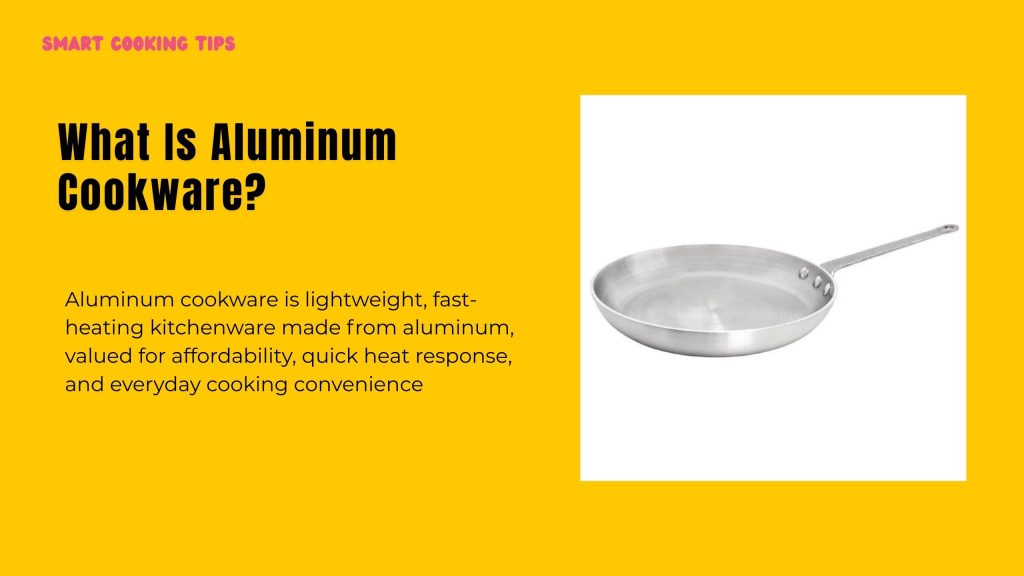
Aluminum cookware is one of the most widely used materials in kitchens worldwide. Aluminum is naturally lightweight and an excellent conductor of heat, which makes it ideal for fast, responsive cooking.
There are three primary types of aluminum cookware:
- Bare (uncoated) aluminum
- Anodized aluminum
- Nonstick-coated aluminum
Bare aluminum heats quickly but can react with acidic foods, sometimes affecting flavor. Anodized aluminum undergoes an electrochemical hardening process, which strengthens the surface and reduces reactivity. Nonstick-coated aluminum adds an additional cooking layer for easier food release and cleaning.
When comparing titanium vs aluminum cookware, aluminum stands out for affordability and immediate heat response. It is often found in budget-friendly cookware sets and is popular among home cooks who prioritize speed and cost-efficiency.
However, aluminum is softer than titanium. It can scratch, dent, or warp more easily, particularly when exposed to high heat or improper maintenance. This durability difference plays a significant role in the long-term value comparison of titanium vs aluminum cookware.
Performance, Safety & Real-World Use: Titanium vs Aluminum
When evaluating titanium vs aluminum cookware, most buyers focus on three major areas: health safety, cooking performance, and everyday practicality.
Health & Food Safety
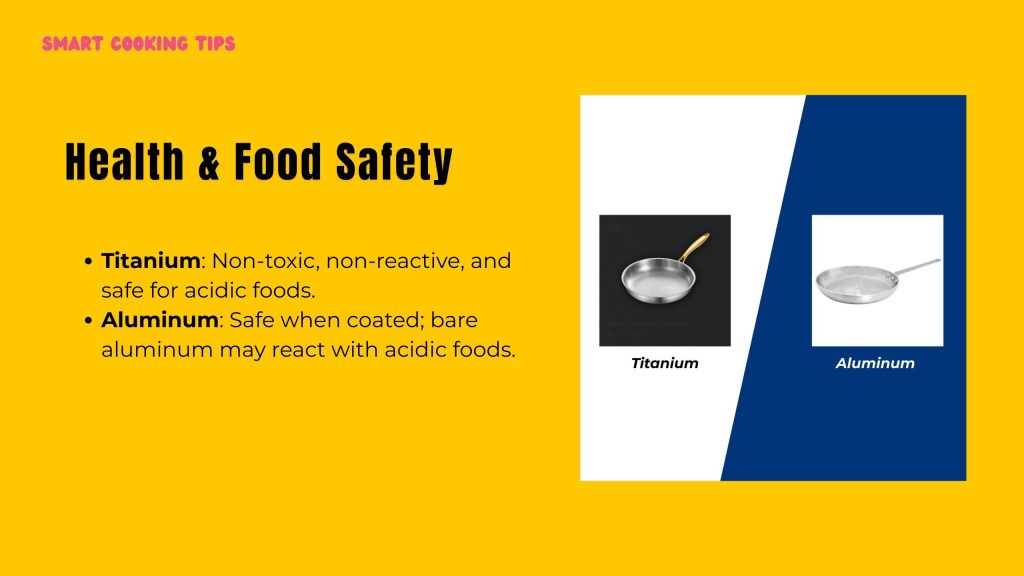
Health concerns are central to the titanium vs aluminum debate.
Titanium is naturally non-toxic and non-reactive. It does not leach chemicals into food, even at high temperatures. It performs exceptionally well with acidic ingredients and does not rely on synthetic coatings that may peel or degrade. This makes titanium highly appealing for families seeking safer cookware options.
Aluminum, on the other hand, can react with acidic foods if it is uncoated. While anodized and coated aluminum are generally safe when intact, damage to the surface may increase exposure. Over time, scratches or worn coatings may reduce the protective barrier.
From a safety perspective, titanium vs aluminum cookware comparisons often favor titanium due to its stable and inert cooking surface.
Cooking Performance & Heat Behavior
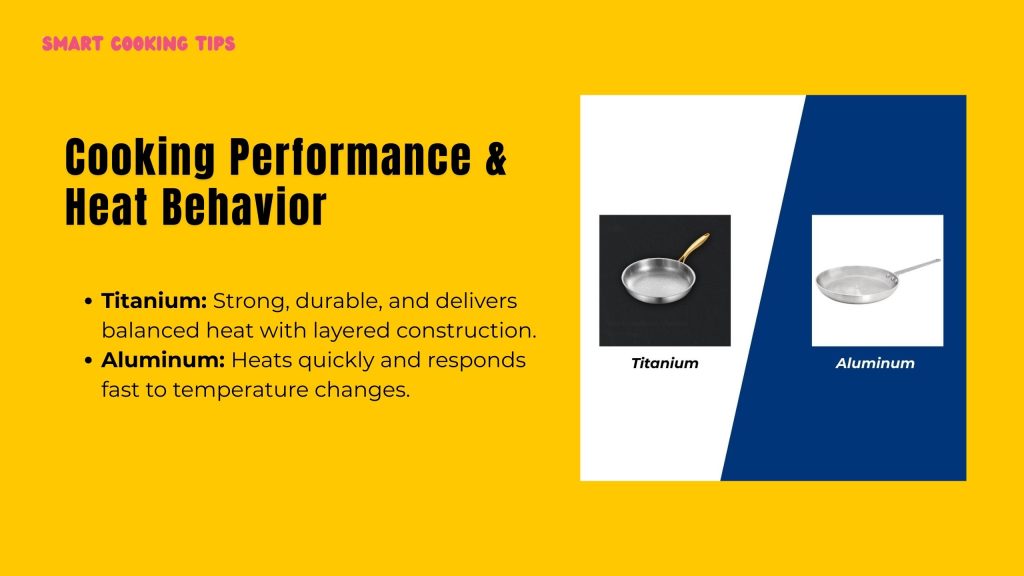
In everyday cooking, titanium vs aluminum cookware performs differently depending on your priorities.
Aluminum heats up rapidly and responds quickly to temperature adjustments. This makes it ideal for sautéing vegetables, scrambling eggs, or preparing quick weeknight meals. Its lightweight design also makes it easy to maneuver.
Titanium cookware alone does not conduct heat as efficiently. However, most modern titanium cookware incorporates an aluminum core to improve heat transfer. As a result, premium titanium pans provide balanced heating with greater structural durability.
For high-heat searing, durability, and consistent results, titanium vs aluminum cookware often leans toward titanium—especially in professional-style tri-ply designs.
Best Uses in the Kitchen
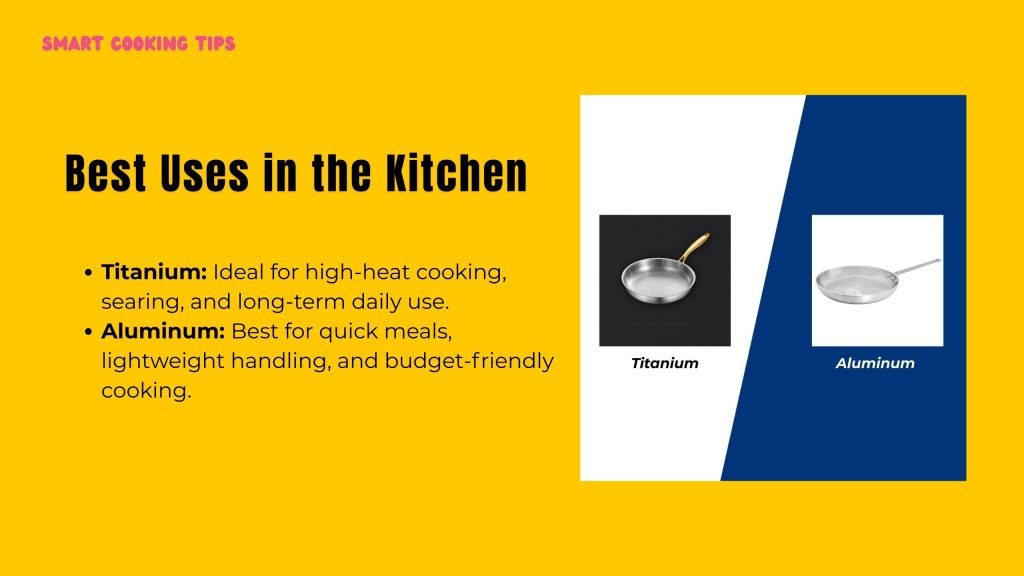
Choosing between titanium vs aluminum cookware depends heavily on your cooking habits.
Titanium Cookware Is Best For:
- High-heat cooking and searing
- Acidic dishes like tomato-based sauces
- Long-term kitchen investment
- Induction cooktops (when paired with stainless steel base)
- Heavy daily use
Aluminum Cookware Is Best For:
- Quick everyday meals
- Budget-conscious kitchens
- Lightweight handling
- Fast temperature adjustments
- Entry-level cookware sets
Understanding your cooking style makes the titanium vs aluminum cookware decision far more practical.
Titanium vs Aluminum Cookware: Side-by-Side Comparison
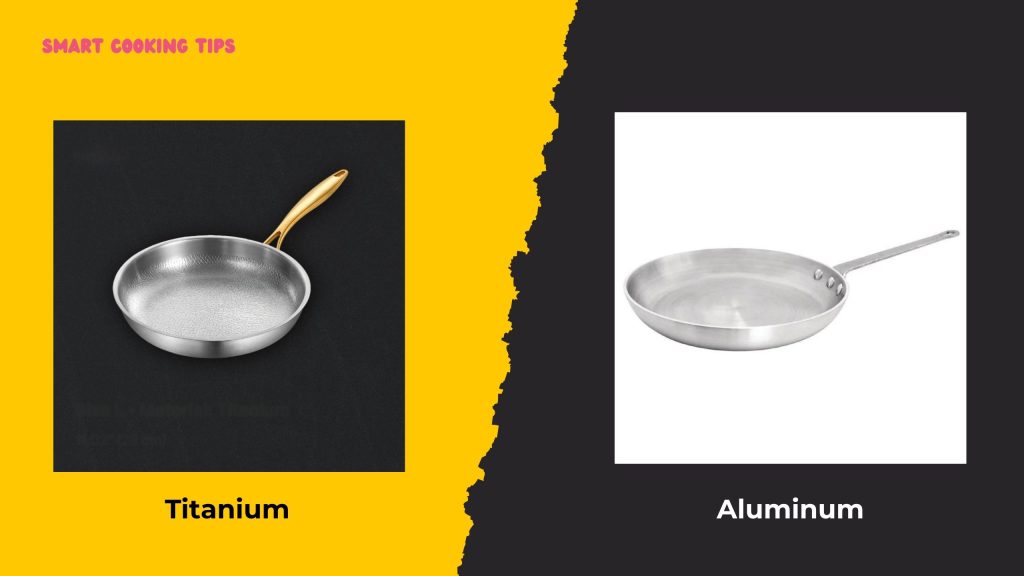
When directly comparing titanium vs aluminum cookware, the biggest differences come down to heat conductivity, durability, scratch resistance, and lifespan.
| Decision Factor | Titanium Cookware | Aluminum Cookware | Best Choice If You Want… |
| Heating Speed | Heats efficiently with aluminum core; slightly slower than pure aluminum | Extremely fast heating and quick temperature response | Fast, budget-friendly cooking → Aluminum |
| Heat Consistency | Even heat with tri-ply construction; fewer hot spots | May develop hot spots if thin | Reliable, professional-level results → Titanium |
| Durability | Highly resistant to warping, dents, and heat damage | Softer metal; can warp over time | Long-term cookware investment → Titanium |
| Scratch Resistance | Very scratch-resistant; often metal utensil safe | Coatings scratch easily; requires careful handling | Low-maintenance, heavy daily use → Titanium |
| Food Safety | Non-toxic and non-reactive; no chemical leaching | Safe when coated or anodized; bare aluminum can react | Maximum peace of mind → Titanium |
| Maintenance Level | Easy to clean; built for daily durability | Coatings may require gentle care | Stress-free maintenance → Titanium |
| Weight & Handling | Lightweight yet strong | Very lightweight | Ultra-light feel → Aluminum |
| Price Point | Higher upfront cost | More affordable | Budget-friendly purchase → Aluminum |
| Lifespan | Long-term performance (years of durability) | Short to medium-term use | Buy once, use for years → Titanium |
| Overall Value | Higher upfront cost, lower long-term replacement cost | Lower upfront cost, may need replacing sooner | Best long-term value → Titanium |
So, What’s Best for Your Kitchen?
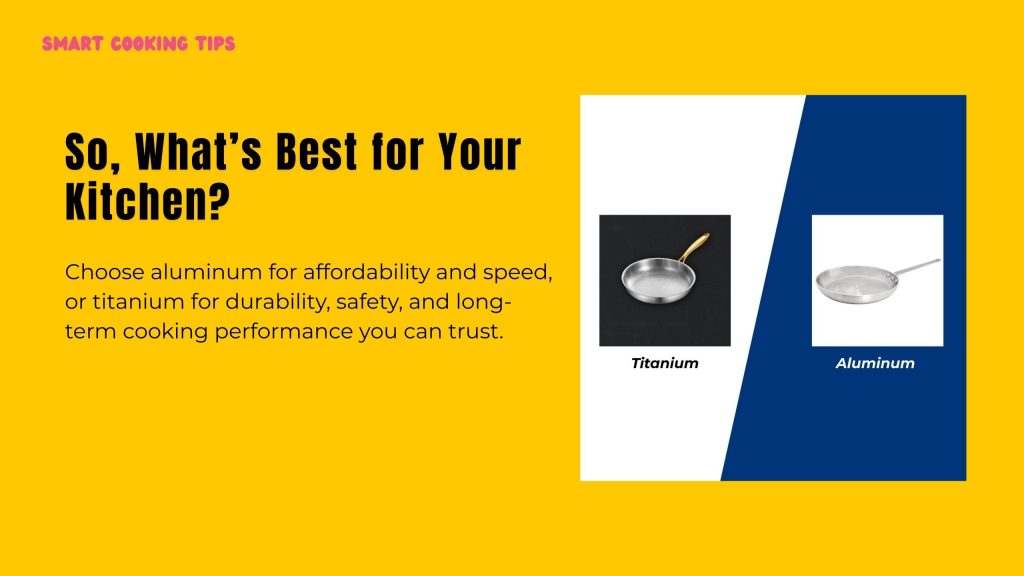
If you prioritize fast heating and affordability, aluminum cookware may be the practical choice for everyday meals and quick cooking tasks. It’s lightweight, accessible, and budget-friendly.
However, if you want long-term durability, scratch resistance, and a non-reactive cooking surface, titanium cookware stands out as the stronger investment. It offers greater structural strength, safer cooking performance, and better longevity — especially for high-heat or daily use.
When comparing titanium vs aluminum cookware, the real decision comes down to short-term savings versus long-term value. Choose aluminum for convenience and cost. Choose titanium for durability, safety, and lasting kitchen confidence.
ChopChop USA Titanium Pan Pro: A Smart Upgrade
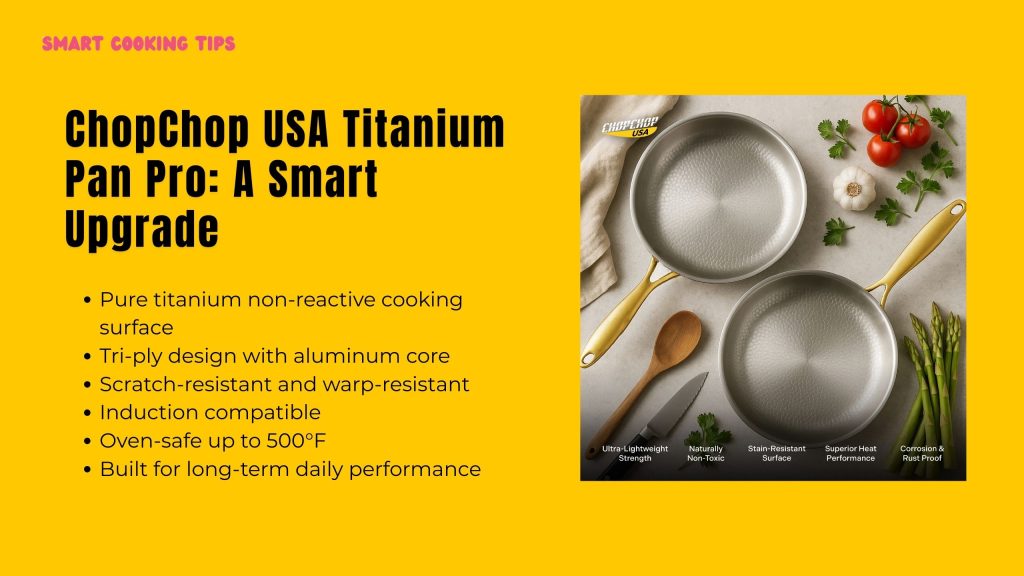
If you’re seriously comparing titanium vs aluminum cookware, the ChopChop USA Titanium Pan Pro isn’t just another option — it’s the smart decision for cooks who want performance without compromise.
This pan is engineered to eliminate the common frustrations of traditional cookware: uneven heating, scratched coatings, warping under high heat, and concerns about chemical exposure. With a pure titanium cooking surface and advanced tri-ply construction, it delivers the best of both materials in one professional-grade pan.
Why Customers Choose It
- Pure Titanium Cooking Surface – Naturally non-reactive and non-toxic, so you never worry about chemical leaching or coating breakdown.
- Aluminum Core Technology – Heats quickly and evenly, giving you precise control for searing, sautéing, and everyday cooking.
- Stainless Steel Exterior – Fully compatible with all stovetops, including induction.
- Scratch-Resistant Durability – Built to handle daily use, even with metal utensils.
- Oven-Safe Up to 500°F – Move from stovetop to oven without switching pans.
- Lightweight Yet Ultra-Strong – Easy to handle without sacrificing structural integrity.
When evaluating titanium vs aluminum, most pans force you to choose between fast heating and long-lasting strength. The ChopChop USA Titanium Pan Pro gives you both. It combines aluminum’s heat efficiency with titanium’s superior durability and safety, making it a premium investment that pays off in performance and longevity.
If you want cookware you can rely on for years — not months — this is the upgrade your kitchen deserves.
Conclusion
When comparing titanium vs aluminum cookware, the right choice depends on your priorities. Aluminum delivers affordability and fast heating, while titanium provides superior durability, scratch resistance, and long-term cooking safety.
For cooks seeking reliability, safety, and modern engineering, the ChopChop USA Titanium Pan Pro is a smart investment. Understanding titanium vs aluminum cookware helps you choose lasting performance and kitchen confidence.
Frequently Asked Questions
1. Is titanium cookware better than aluminum cookware?
Titanium cookware is stronger, more durable, and non-reactive, while aluminum heats faster and costs less. The better option depends on budget, durability needs, and cooking style.
2. Is titanium cookware safe for everyday cooking?
Yes. Titanium is non-toxic, corrosion-resistant, and does not leach chemicals into food, even during high-heat cooking.
3. Does aluminum cookware react with food?
Uncoated aluminum can react with acidic ingredients. Anodized or coated aluminum reduces this risk but may become vulnerable if scratched.
4. Which lasts longer: titanium or aluminum cookware?
Titanium cookware typically lasts significantly longer due to superior strength and resistance to warping and scratching.
5. Can both be used on induction cooktops?
Titanium cookware with a stainless steel base works on induction. Aluminum cookware must have an induction-compatible bottom to function properly.