

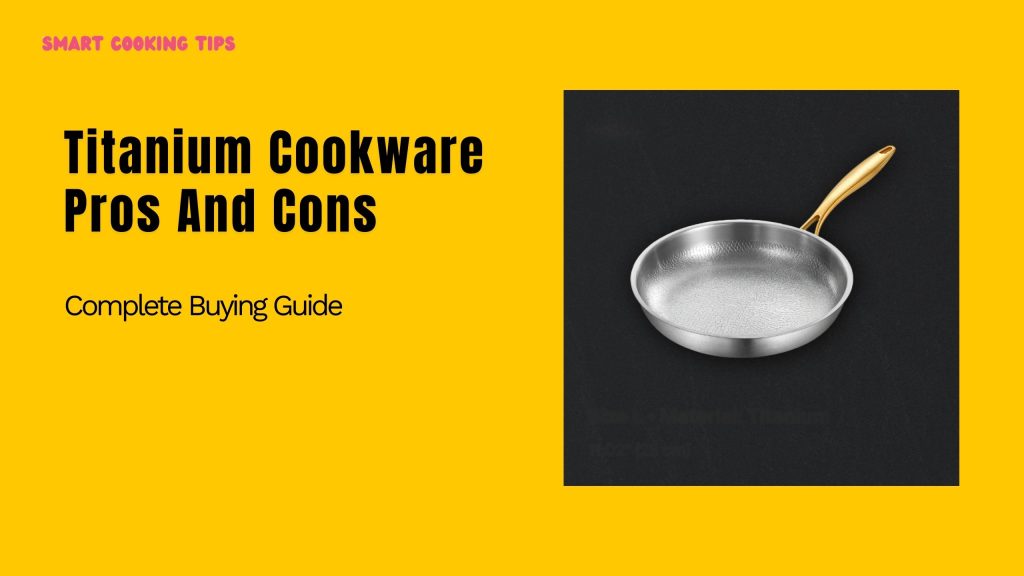
Are you trying to understand titanium cookware pros and cons before upgrading your kitchen? The short answer is that titanium offers durability, safety, and lightweight convenience, though it typically comes at a higher price.
In this guide, Smart Cooking Tips will explore this cookware material in detail, helping you understand features, benefits, limitations, comparisons, and whether it suits your cooking style.
Table of Contents
What Is Titanium Cookware?
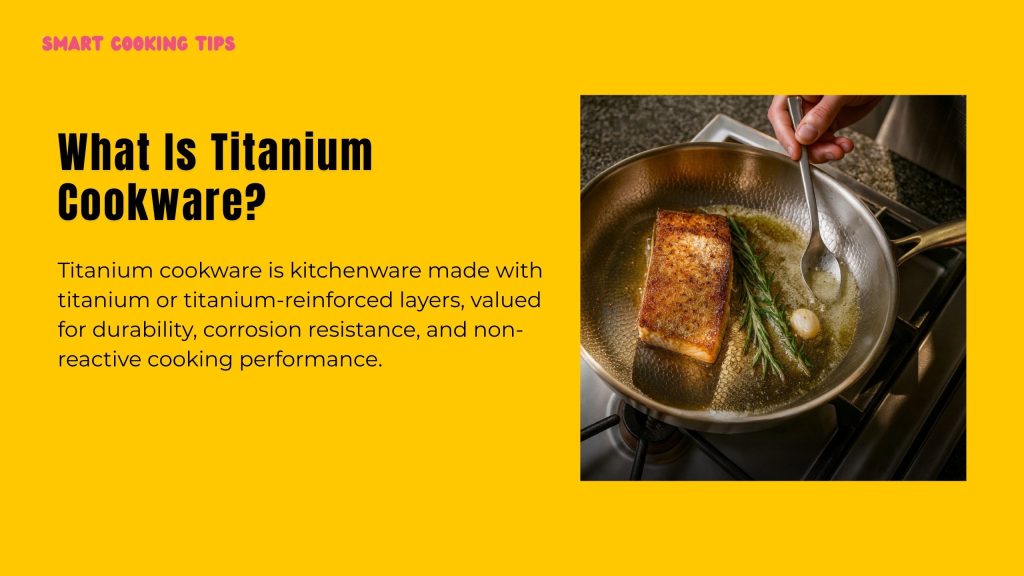
Titanium cookware refers to pots and pans that use titanium either as the primary cooking surface or as part of a multi-layer construction. When analyzing titanium cookware pros and cons, it’s essential to know exactly what type of titanium cookware you are buying.
Pure Titanium Interior
Some premium cookware features a true titanium cooking surface bonded to other metals. Titanium alone does not conduct heat efficiently, so it is usually paired with an aluminum core for even heating and a stainless steel exterior for structural strength and induction compatibility.
Pure titanium interiors are highly durable, corrosion-resistant, and non-reactive. This construction represents some of the strongest advantages of this cookware material when compared to other options.
Titanium-Reinforced Coating
Other products labeled “titanium cookware” may use titanium particles to strengthen a nonstick coating. While this can improve scratch resistance, it is different from a solid titanium cooking surface.
Understanding this distinction helps avoid confusion when evaluating this material for long-term investment.
Key Features of Titanium Cookware
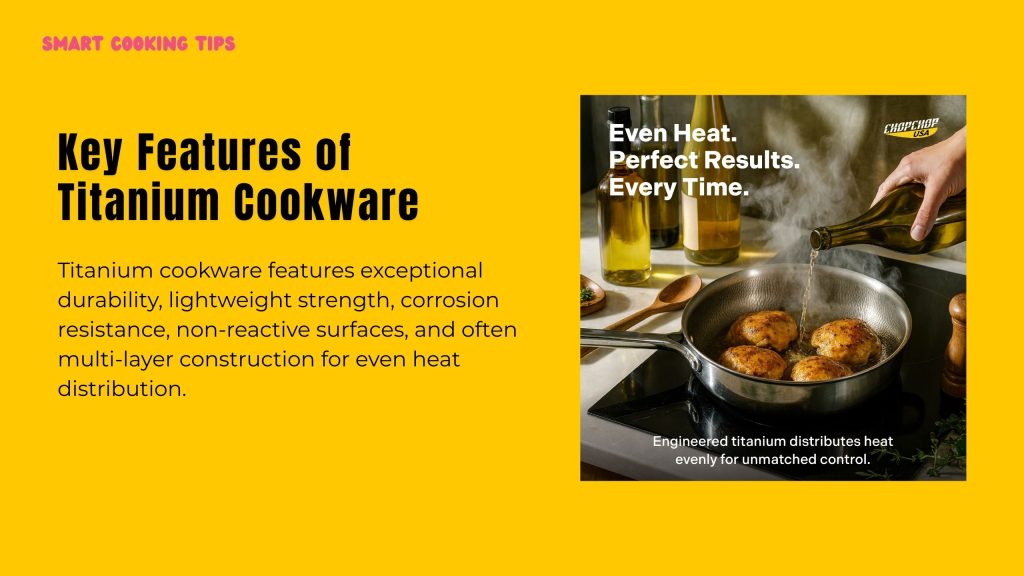
To better understand titanium cookware pros and cons, it’s helpful to break down its defining characteristics.
Lightweight Construction
Titanium has an exceptional strength-to-weight ratio. Compared to cast iron or heavy stainless steel pans, titanium cookware is easier to lift, flip, and maneuver. This makes it ideal for daily use and reduces strain during cooking.
Corrosion Resistance
Titanium does not rust or corrode easily. Unlike carbon steel or cast iron, it does not require seasoning for protection. This low-maintenance quality is frequently highlighted when comparing different cookware materials.
Non-Reactive Surface
Titanium does not react with acidic foods such as tomatoes, vinegar, or citrus. This ensures that flavors remain pure and the surface remains stable over time.
Multi-Layer Heating Design
Most high-quality titanium cookware includes an aluminum core for fast and even heat distribution. A stainless steel exterior often provides durability and compatibility with all stovetops, including induction.
These features shape the overall evaluation of this cookware material for modern kitchens.
Pros Of Titanium Cookware
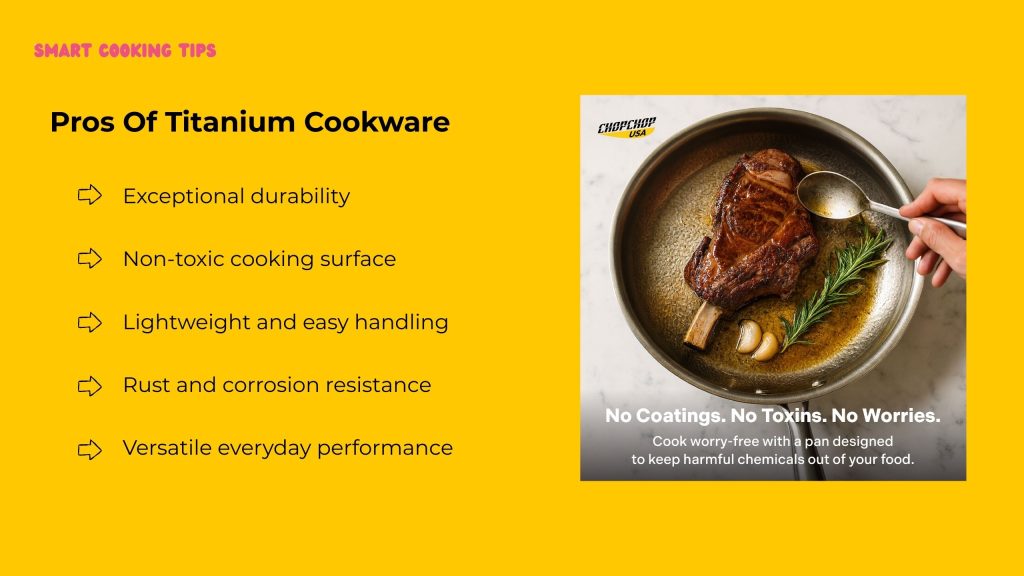
When discussing titanium cookware pros and cons, the advantages often stand out clearly for many home cooks.
Exceptional Durability
Titanium is extremely strong and resistant to warping, denting, and scratching. Unlike traditional nonstick coatings that degrade over time, pure titanium surfaces are designed for long-term daily use.
Durability is one of the most significant advantages often highlighted when comparing cookware materials.
Non-Toxic Cooking Surface
Pure titanium contains no synthetic coatings such as PFOA or PFAS. It is naturally inert and stable at high temperatures, making it a safe option for health-conscious households.
Safety is a major reason why many buyers prefer titanium cookware over other materials.
Lightweight And Easy Handling
Compared to cast iron, titanium cookware is much lighter. This improves comfort and control, especially when transferring pans from stovetop to oven.
Rust And Corrosion Resistance
Titanium does not rust, even in humid environments. It requires minimal maintenance, which simplifies cleaning and storage.
Versatile Everyday Performance
Titanium cookware performs well for sautéing vegetables, cooking proteins, and simmering sauces. With proper preheating and oil use, food release is consistent and reliable.
For many cooks, these benefits outweigh the potential disadvantages when choosing cookware for everyday use.
Cons Of Titanium Cookware
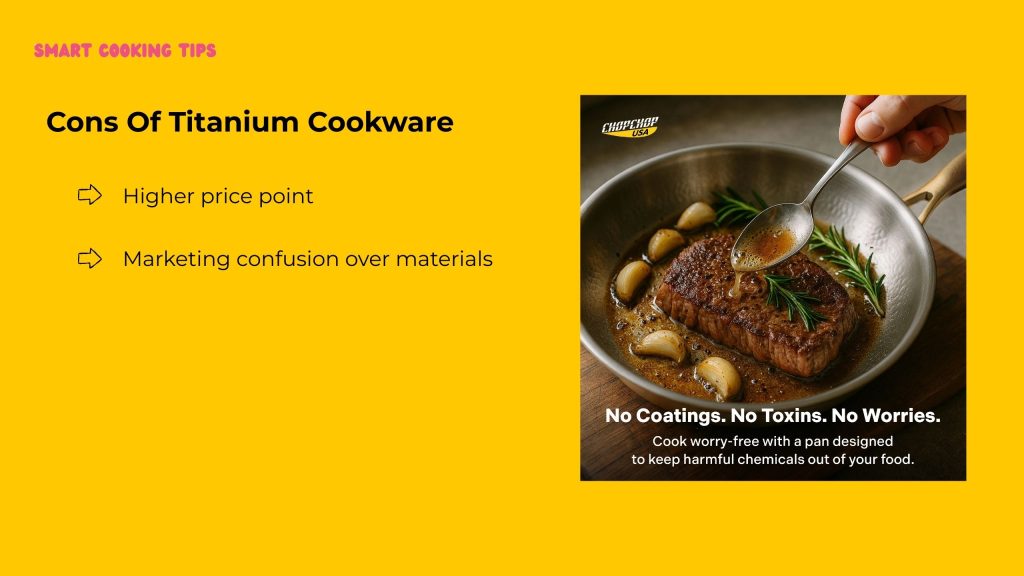
A balanced understanding of titanium cookware pros and cons requires acknowledging potential limitations.
Higher Initial Cost
Titanium cookware typically costs more than aluminum or basic stainless steel. The advanced materials and manufacturing processes contribute to the higher price.
For budget-conscious buyers, this factor weighs heavily in titanium cookware pros and cons decisions.
Market Confusion
Some cookware labeled as titanium may only contain titanium-reinforced coatings. Without careful research, consumers may misunderstand what they are purchasing. This confusion often complicates titanium cookware pros and cons comparisons.
Best Uses For Titanium Cookware
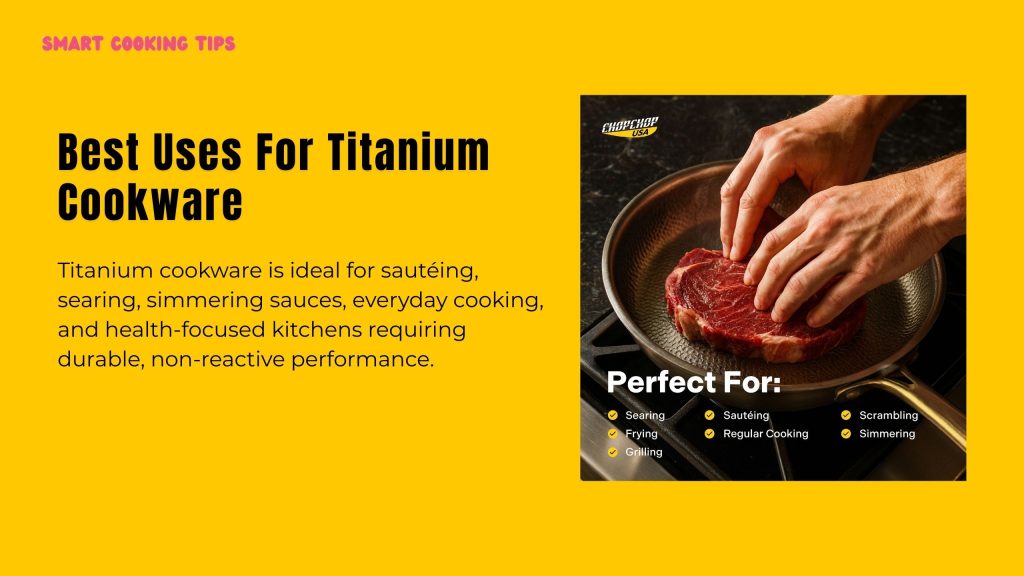
Understanding where titanium performs best helps clarify titanium cookware pros and cons in practical terms.
Everyday Sautéing And Stir-Frying
Lightweight handling makes titanium pans ideal for quick meals and fast movements in the kitchen.
Cooking Acidic Dishes
Tomato-based sauces, citrus reductions, and wine deglazing will not damage a titanium surface. Its non-reactive nature preserves food flavor.
Healthy Cooking
Because pure titanium contains no synthetic coatings, it supports clean cooking practices. This aligns with the safety advantages often emphasized in titanium cookware pros and cons discussions.
Low To Medium Heat Cooking
Eggs, vegetables, fish, and delicate proteins cook evenly when proper oil and temperature control are used.
If your cooking style prioritizes safety, durability, and ease of maintenance, titanium may be an excellent choice after reviewing titanium cookware pros and cons carefully.
Titanium Cookware Compared To Other Materials
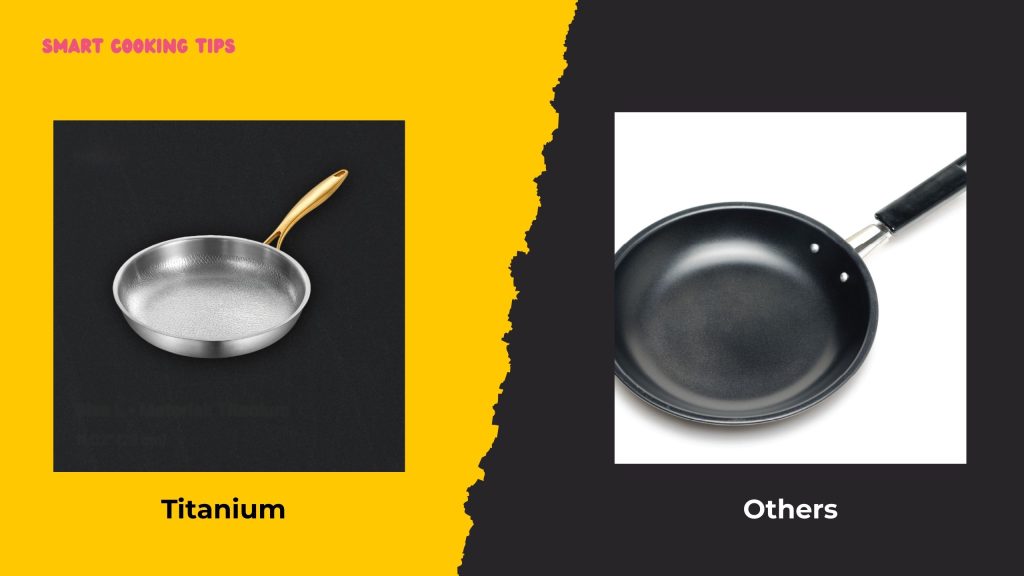
Understanding titanium cookware pros and cons becomes clearer when comparing it directly with other common cookware materials like aluminum, Teflon, and copper. Each material offers unique strengths and trade-offs in durability, safety, maintenance, and performance.
Titanium Vs Aluminum
Aluminum cookware is popular because it is lightweight, affordable, and heats quickly. It distributes heat well, helping reduce hot spots. However, raw aluminum is relatively soft and may warp or dent over time. It can also react with acidic foods unless it is anodized or coated.
Compared to aluminum, titanium offers greater durability and corrosion resistance. While aluminum is budget-friendly and highly responsive, titanium provides stronger structural integrity and better long-term performance. It is less prone to surface wear and maintains its stability over years of use. In short, aluminum prioritizes affordability and fast heating, while titanium focuses on strength and chemical stability.
Titanium Vs Teflon (Nonstick Coating)
Teflon-coated cookware is valued for its smooth nonstick surface. Food releases easily, and cleanup is quick, making it ideal for eggs and delicate dishes. However, nonstick coatings can scratch, chip, or degrade, particularly when exposed to high heat or metal utensils.
Titanium surfaces offer greater longevity because they do not depend on synthetic coatings. They are naturally non-reactive and heat-stable. Although proper preheating and oil use may be needed for best results, titanium avoids the long-term wear concerns associated with traditional nonstick pans.
Titanium Vs Copper
Copper cookware is known for superior heat conductivity and precise temperature control. It heats rapidly and responds instantly to adjustments. However, copper is expensive, requires regular polishing, and can react with acidic foods if not properly lined.
Titanium offers easier maintenance, strong corrosion resistance, and dependable everyday durability. While copper excels in responsiveness, titanium delivers a balanced mix of strength, safety, and practicality.
ChopChop USA Titanium Pan Pro
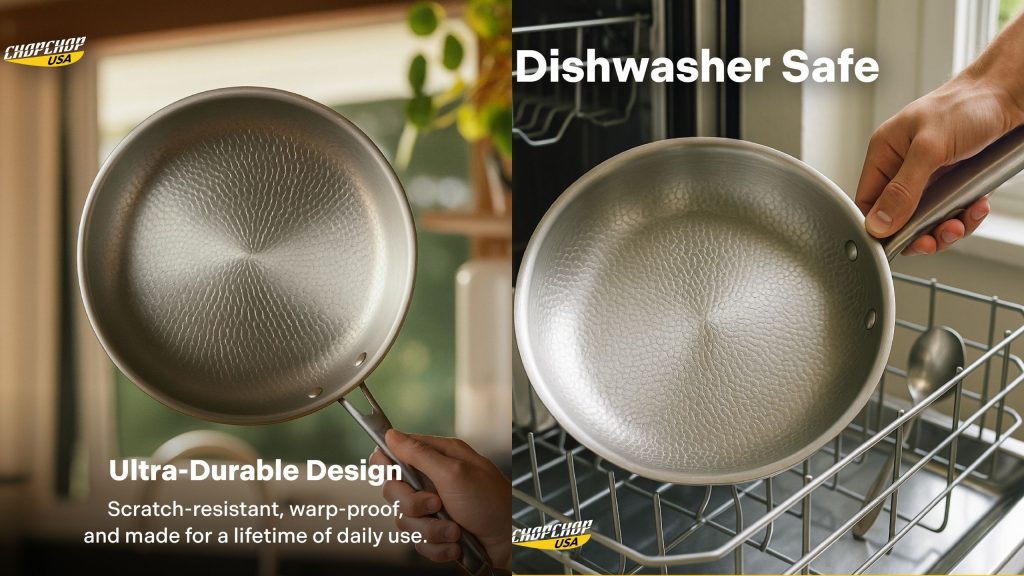
The ChopChop USA Titanium Pan Pro is built for cooks who want uncompromising safety, performance, and durability in everyday cooking. Featuring a premium tri-ply construction with a pure titanium interior, it delivers professional results without harmful coatings—lightweight, powerful, and made to last.
Key Features
- Pure titanium cooking surface that is non-toxic, non-reactive, and corrosion-resistant
- Advanced tri-ply design with aluminum core and stainless steel exterior
- Even heat distribution for consistent results and reduced hot spots
- Scratch-resistant titanium surface for long-term daily use
- Lightweight yet ultra-strong construction for easy handling
- Compatible with all stovetops, including induction, and oven-safe up to 500°F
For buyers reviewing titanium cookware pros and cons, this pan addresses common concerns directly. The pure titanium surface enhances durability and safety, while the aluminum core ensures even heating. Its lightweight yet strong construction reflects the key strengths found in titanium cookware pros and cons comparisons.
Conclusion
Titanium cookware pros and cons reveal a strong balance between durability, safety, and lightweight convenience, making it an excellent option for modern kitchens. While the price may be higher, the long-term value, corrosion resistance, and non-toxic surface often justify the investment for serious home cooks.
By carefully reviewing these factors, you can decide whether this material aligns with your cooking style and priorities. ChopChop USA delivers premium titanium performance designed for dependable, everyday results that combine strength, safety, and lasting kitchen confidence.
Frequently Asked Questions
1. Is Titanium Cookware Safe For Everyday Cooking?
Yes, pure titanium cookware provides a stable, non-toxic, and non-reactive surface that remains safe under normal home cooking temperatures.
2. Does Titanium Cookware Require Special Maintenance?
Titanium cookware does not require seasoning like cast iron, and its corrosion resistance makes cleaning and storage simple.
3. Is Titanium Cookware Worth The Higher Price?
Many cooks believe the durability, safety, and lightweight handling justify the investment after carefully reviewing titanium cookware pros and cons.
4. Can Titanium Cookware Be Used On Induction Stovetops?
Most tri-ply titanium cookware with stainless steel exteriors is compatible with induction, but checking product specifications is recommended.
5. How Long Does Titanium Cookware Typically Last?
High-quality titanium cookware can last many years due to its structural strength, scratch resistance, and corrosion-resistant properties.