

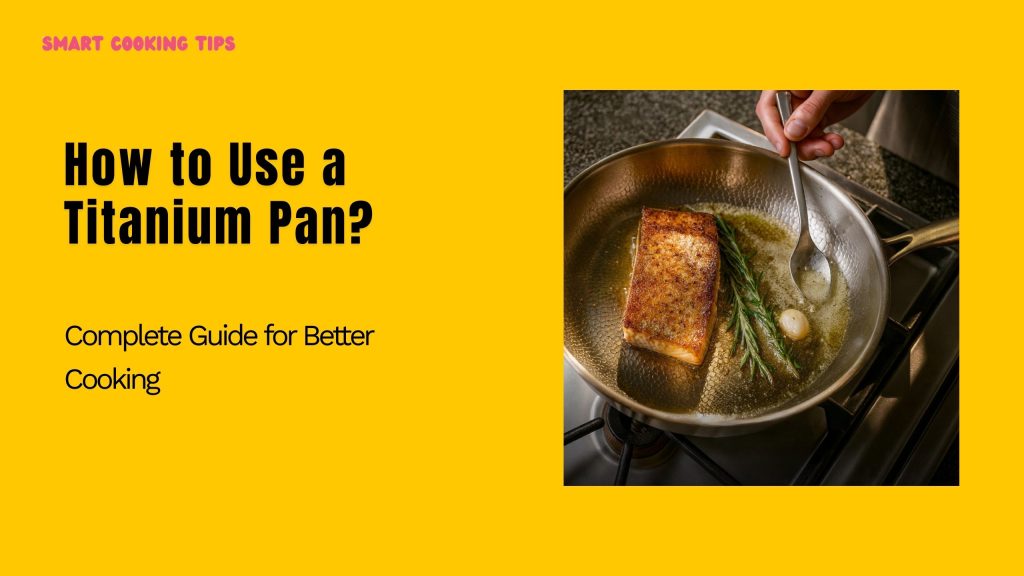
How do you get the best results from titanium cookware? Learning how to use a titanium pan correctly helps you achieve even cooking, prevent sticking, and extend the life of your cookware.
In this guide, Smart Cooking Tips explains how to use a titanium pan step by step. You’ll learn practical cooking techniques, temperature control tips, cleaning methods, and maintenance habits that keep titanium cookware performing at its best.
Table of Contents
What Is a Titanium Pan?
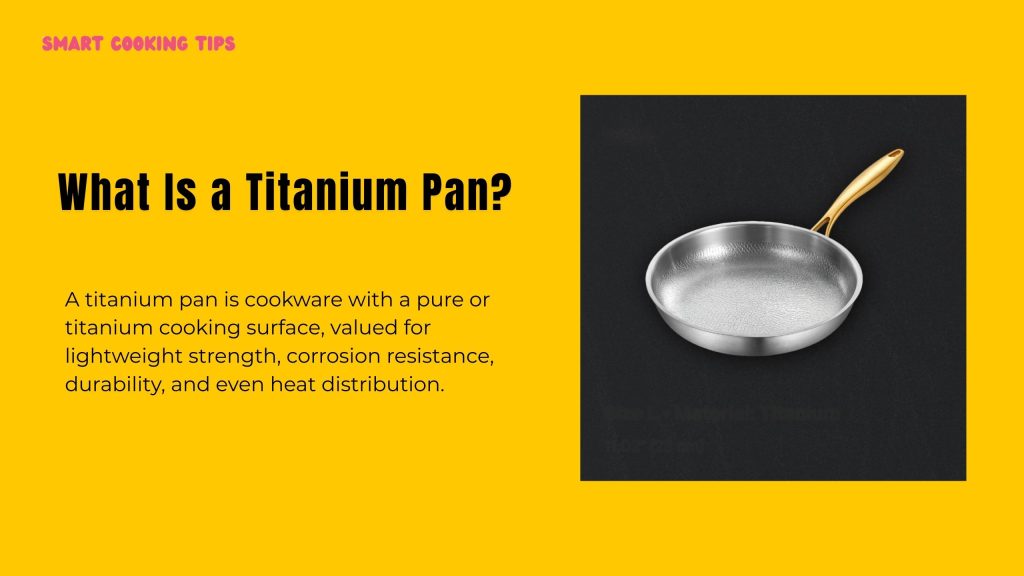
Before learning how to use a titanium pan, it helps to understand what makes this cookware unique.
A titanium pan is cookware that uses titanium as part of its cooking surface or structure. Titanium is widely known for being lightweight, corrosion-resistant, and extremely durable.
Most modern titanium cookware uses multi-layer construction, which typically includes:
- A titanium cooking surface
- An aluminum core for fast heat distribution
- A stainless steel exterior for strength and compatibility with various stovetops
This combination creates cookware that heats quickly, cooks evenly, and resists damage from daily use.
Another advantage is safety. Titanium is naturally non-reactive, meaning it does not interact with acidic foods such as tomatoes, citrus, or vinegar.
Why is Titanium Cookware Popular?
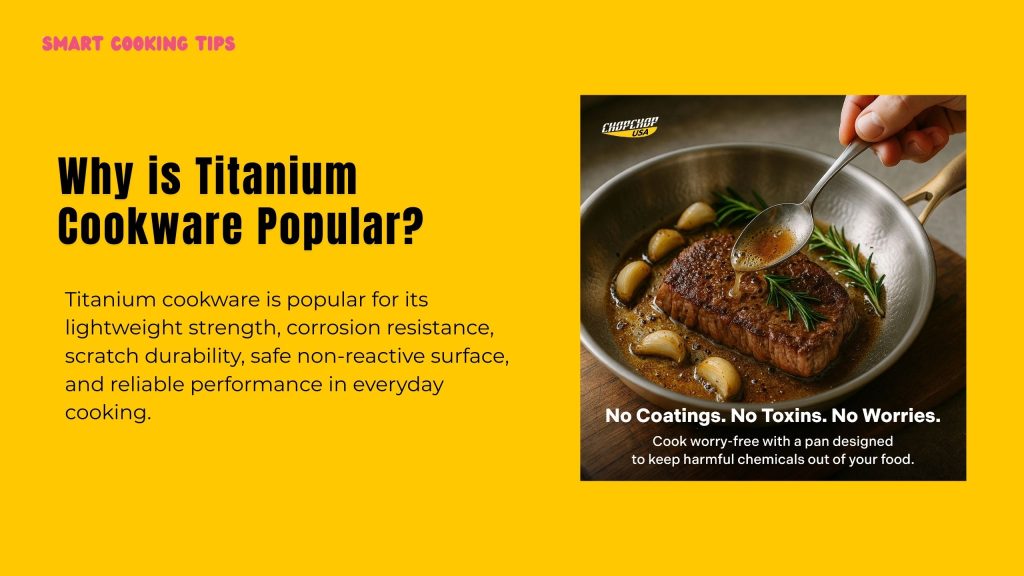
Many home cooks are choosing titanium cookware because it combines durability, safety, and convenience. These practical advantages make it a strong option for modern kitchens and explain why many people want to learn how to use a titanium pan properly.
Lightweight but Strong
Titanium pans are significantly lighter than traditional cast iron cookware while still maintaining impressive strength. This balance makes them easier to lift, move, and control during daily cooking without sacrificing durability.
Corrosion Resistance
Titanium cookware is naturally resistant to corrosion. Unlike some metals, it does not rust or degrade easily, allowing the pan to maintain its performance and appearance even after years of regular use.
Scratch Resistance and Long Lifespan
Titanium surfaces are known for their durability and resistance to scratching. This toughness helps the cookware withstand frequent use in busy kitchens while maintaining a reliable cooking surface over time.
How to Use a Titanium Pan Correctly?
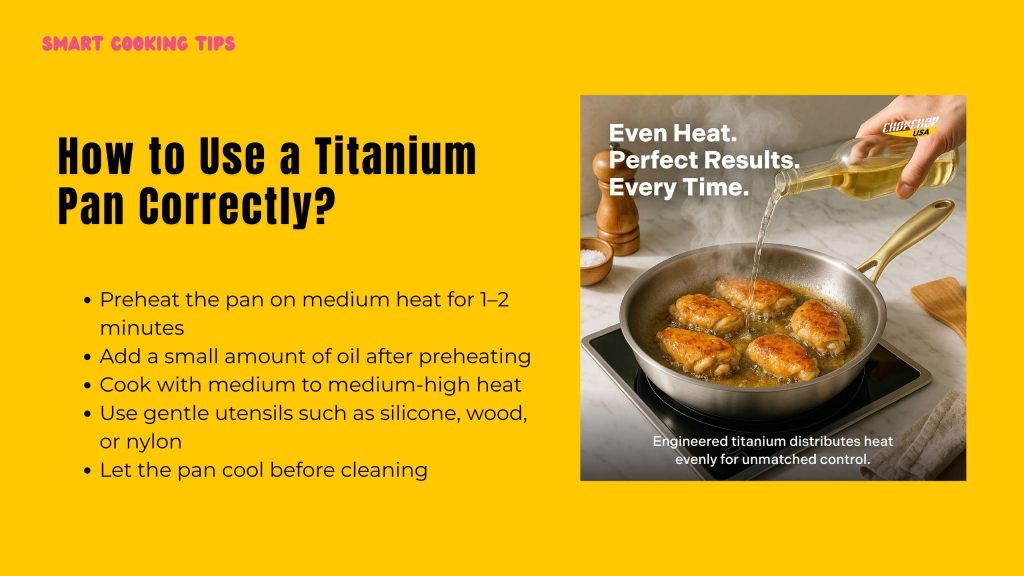
Learning how to use a titanium pan does not require complicated techniques. However, following a few simple steps can dramatically improve cooking performance.
Step 1: Preheat the Pan Properly
Proper preheating is the first step in mastering how to use a titanium pan.
Place the pan on the stovetop and heat it on medium heat for about one to two minutes before adding oil or ingredients.
This step allows the internal layers of the pan to distribute heat evenly across the cooking surface. When the pan is evenly heated, food cooks more consistently and sticking is reduced.
Avoid heating an empty pan on very high heat, as titanium cookware heats efficiently and rarely requires maximum temperatures.
Step 2: Add a Small Amount of Oil
Although titanium surfaces resist sticking, adding a small amount of oil improves cooking results. When learning how to use a titanium pan, it is helpful to add oil after the pan has finished preheating.
A thin layer of oil helps:
- Improve food release
- Enhance flavor
- Prevent delicate foods from sticking
This step is especially important when cooking eggs, fish, or lean proteins.
Step 3: Cook With Moderate Heat
One common mistake people make when learning how to use a titanium pan is using excessive heat. Titanium cookware distributes heat very efficiently, meaning medium or medium-high heat is usually enough for most recipes.
Cooking at controlled temperatures helps:
- Prevent food from burning
- Maintain moisture inside proteins
- Improve overall cooking consistency
Using lower heat also protects the cookware and helps maintain long-term performance.
Step 4: Use the Right Utensils
Titanium pans are extremely durable, but choosing appropriate utensils can help keep the surface in excellent condition.
Recommended utensils include:
- Silicone spatulas
- Wooden spoons
- Nylon cooking tools
While titanium cookware can often tolerate occasional metal utensils, softer tools help prevent minor surface scratches.
This small habit can extend the life of your cookware and maintain optimal performance.
Step 5: Allow the Pan to Cool Before Cleaning
Another important part of learning how to use a titanium pan is understanding proper cleaning practices.
After cooking, allow the pan to cool slightly before washing it. Placing a hot pan under cold water can create thermal stress that may weaken cookware over time.
Once the pan has cooled, it becomes much easier to remove food residue and grease.
Best Cooking Techniques for Titanium Pans
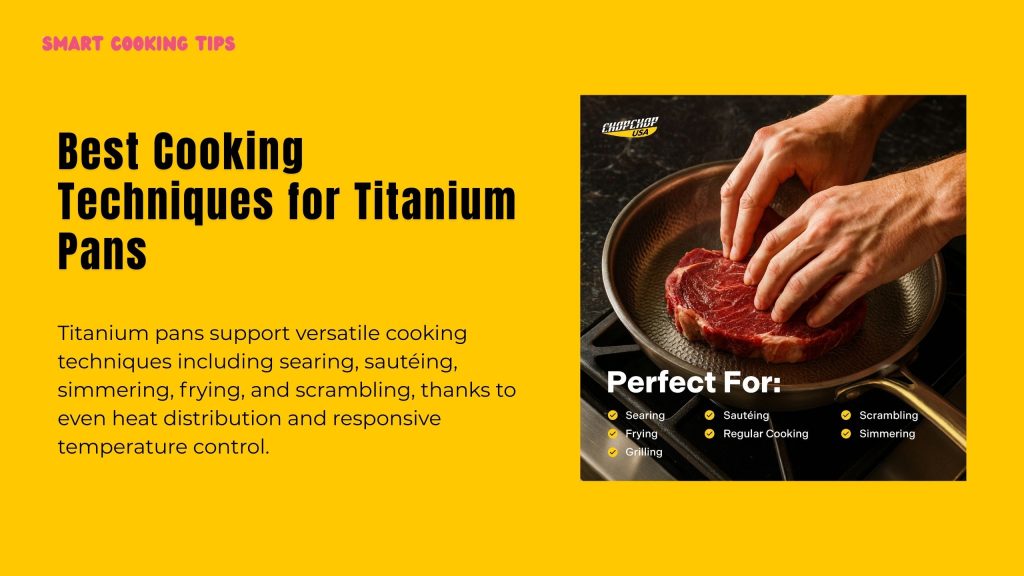
Once you understand how to use a titanium pan, you can apply it to a variety of cooking techniques. Titanium cookware distributes heat efficiently and responds quickly to temperature adjustments, making it suitable for many everyday recipes.
Searing Meat
Titanium pans are excellent for searing because they heat evenly across the cooking surface. After proper preheating, the pan creates a consistent, high-temperature surface that helps develop a flavorful crust on meats.
This technique works well for steak, chicken breast, pork chops, and plant-based proteins. A strong sear locks in natural juices while creating rich flavor and texture.
Sautéing Vegetables
Sautéing is another technique where titanium cookware performs well. The pan heats quickly and maintains steady temperature control, allowing vegetables to cook evenly without burning.
Ingredients like onions, mushrooms, peppers, zucchini, and leafy greens cook quickly while preserving their natural color and texture.
Simmering Sauces
Titanium pans are also effective for simmering sauces and reductions. Because the heat spreads evenly across the pan, liquids cook gently without scorching at the bottom.
This makes titanium cookware suitable for tomato sauces, cream-based sauces, and delicate reductions. Controlled simmering helps flavors develop while maintaining smooth texture.
Frying Foods
Frying works well in a titanium pan when moderate heat and the right amount of oil are used. The even heat distribution helps foods cook uniformly, producing crisp exteriors without uneven browning.
This technique is ideal for frying eggs, crispy potatoes, tofu, or lightly breaded foods. The smooth surface also makes flipping and turning ingredients easier.
Scrambling Eggs
Titanium pans can handle delicate foods like scrambled eggs when used correctly. Start with a preheated pan and add a small amount of butter or oil before pouring in the eggs.
Cook on low to medium heat and stir gently. The consistent heat helps eggs cook evenly, creating soft and creamy scrambled eggs while minimizing sticking.
Common Mistakes to Avoid
Even though titanium cookware is known for its strength and durability, a few habits can still affect its long-term performance. When learning how to use a titanium pan, avoiding several common mistakes helps preserve cooking results and extend the lifespan of the cookware.
Some cooking habits can reduce efficiency or cause unnecessary wear over time. Keep these points in mind:
- Overheating an empty pan – Titanium pans heat quickly, so leaving them empty on high heat can reduce temperature control and may stress the pan.
- Using extremely high heat – Most recipes cook better at medium or medium-high heat because titanium distributes heat efficiently.
- Cleaning with abrasive scrubbers – Harsh metal pads or aggressive cleaners can gradually dull the surface and affect appearance.
- Rapidly cooling a hot pan – Placing a hot pan under cold water can cause thermal shock and strain cookware materials.
By avoiding these mistakes and using proper cooking techniques, you can maintain both the performance and durability of your titanium pan for years of reliable daily cooking.
Introduce ChopChop USA Titanium Pan Pro
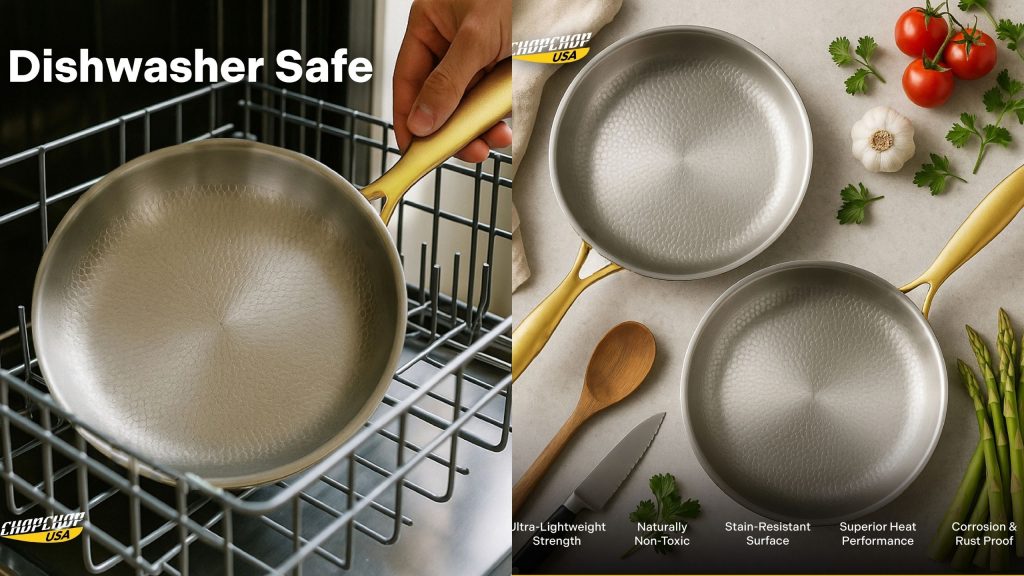
The ChopChop USA Titanium Pan Pro is designed for home cooks who want reliable performance, durability, and safety in everyday cooking. Built with premium materials and thoughtful engineering, this cookware delivers professional-level results while remaining easy to use in any kitchen.
At the core of the design is a pure titanium cooking surface that is naturally non-toxic, non-reactive, and highly resistant to corrosion. Unlike traditional nonstick pans that rely on fragile coatings, the Titanium Pan Pro focuses on long-term durability and food-safe cooking performance.
Key Features
- Pure titanium cooking surface – Non-toxic, non-reactive, and corrosion-resistant for safer cooking
- Advanced tri-ply construction – Titanium interior, aluminum core, and stainless steel exterior
- Even heat distribution – Reduces hot spots and ensures consistent cooking results
- Scratch-resistant surface – Built to withstand regular daily cooking use
- Lightweight but strong design – Easy to handle without sacrificing durability
- Universal stovetop compatibility – Works with gas, electric, ceramic, and induction cooktops
- Oven-safe up to 500°F – Allows smooth transition from stovetop to oven cooking
With its combination of strength, safety, and efficient heat performance, the ChopChop USA Titanium Pan Pro offers a dependable solution for cooks who want durable cookware that supports confident everyday cooking.
Conclusion
Learning how to use a titanium pan improves everyday cooking by promoting even heating, better food release, and long-term durability. With proper preheating, moderate heat, and simple care, titanium cookware can deliver reliable performance for many years.
Cookware like the ChopChop USA Titanium Pan Pro highlights these advantages. Its durable titanium surface, efficient heat distribution, and strong tri-ply construction make it a dependable option for home cooks seeking safe, versatile, and long-lasting kitchen tools.
Frequently Asked Questions
1. Do you need oil in a titanium pan?
Yes, a small amount of oil is recommended. While titanium resists sticking, oil improves food release and flavor.
2. What heat level should I use with a titanium pan?
Medium to medium-high heat works best because titanium cookware distributes heat efficiently.
3. Can food stick to a titanium pan?
Food rarely sticks if the pan is properly preheated and lightly oiled.
4. Are titanium pans safe for cooking?
Yes. Titanium is non-reactive and does not leach harmful chemicals into food.
5. How long do titanium pans last?
With proper care, high-quality titanium cookware can last many years due to its durability and corrosion resistance.