

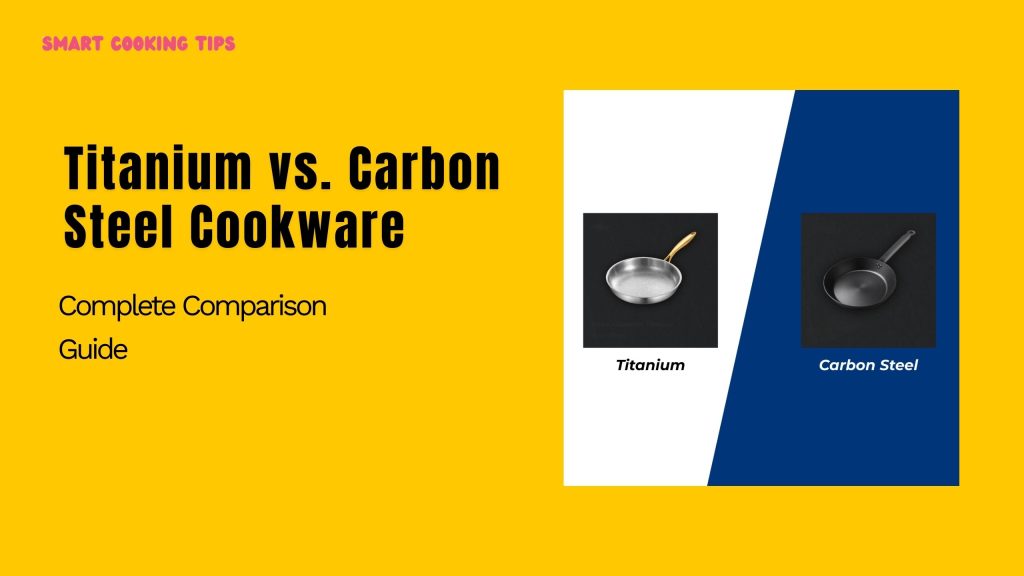
Titanium vs. carbon steel: which pan performs better in modern kitchens? The answer depends on your cooking style—titanium offers easy maintenance and safety, while carbon steel delivers high-heat precision and traditional control.
In this guide, Smart Cooking Tips will compare performance, durability, safety, and maintenance to help you choose between titanium and carbon steel cookware confidently.
Table of Contents
What Is a Titanium Pan?
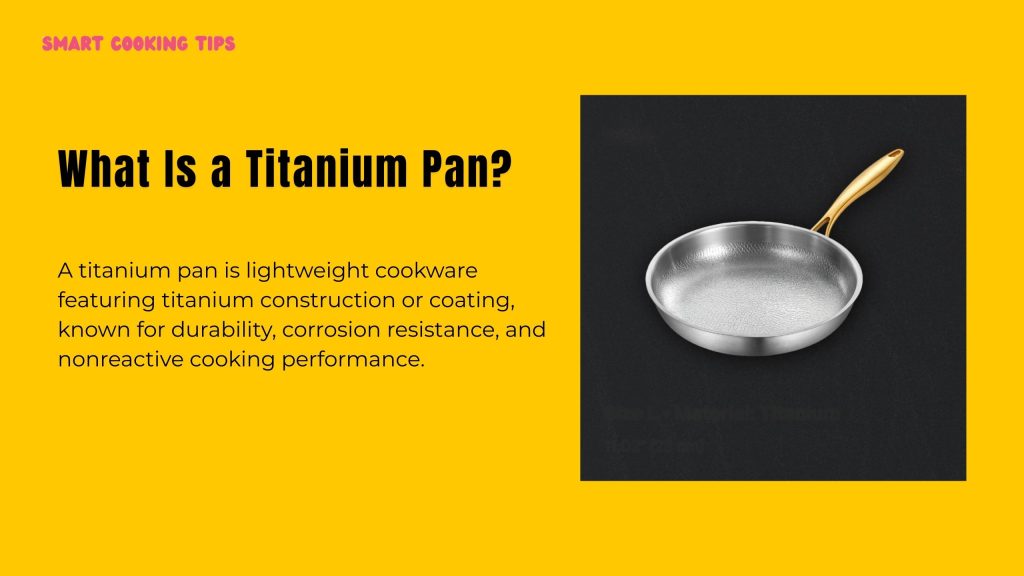
A titanium pan uses titanium as either the primary cooking surface or as a reinforced layer in multi-clad construction. Unlike traditional nonstick cookware, quality titanium pans do not rely on chemical coatings like PTFE or PFOA.
Most premium designs feature:
- A titanium interior cooking surface
- An aluminum core for even heat distribution
- A stainless steel exterior for strength and induction compatibility
When comparing titanium vs. carbon steel, titanium represents modern engineering. It is corrosion-resistant, non-reactive, and designed for long-term durability with minimal maintenance.
Key Benefits of Titanium Cookware
- Naturally non-toxic and chemically inert, ensuring no reaction with food
- Resistant to rust, corrosion, and moisture damage
- Lightweight yet exceptionally strong for easy handling
- No seasoning required before or after cooking
- Simple daily cleaning with mild soap and water
- Compatible with all stovetops, including induction
- Oven-safe at high temperatures for versatile cooking
Titanium cookware is especially appealing for busy households that want consistent results, safer cooking surfaces, and reliable performance without extra upkeep or complicated care routines.
What Is a Carbon Steel Pan?
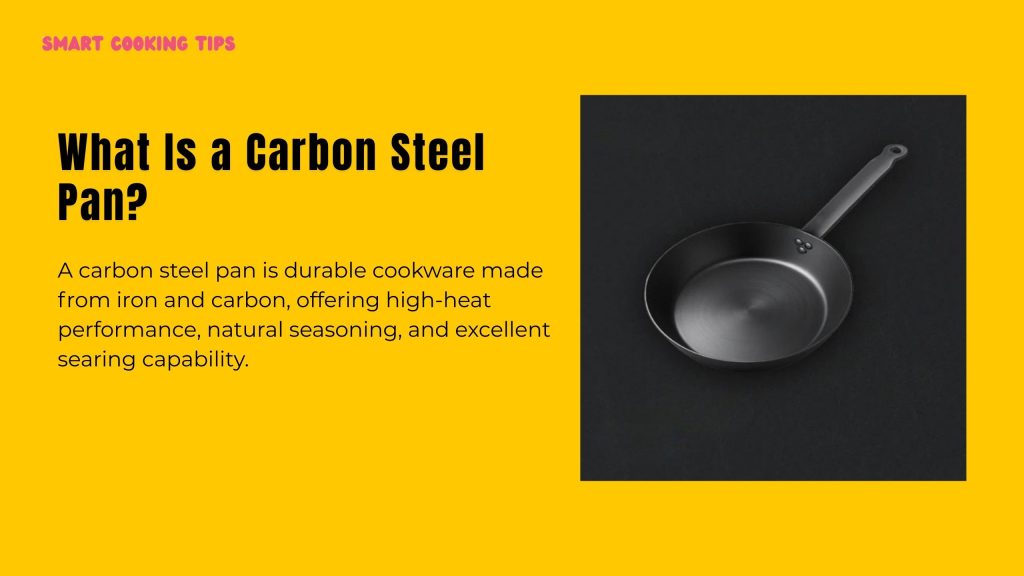
Carbon steel is made from iron and carbon alloy. It has been used for centuries in professional kitchens and is often considered a lighter, more responsive alternative to cast iron.
Carbon steel pans are thinner than cast iron but still extremely durable. They heat quickly and respond fast to temperature changes — a feature many chefs value.
In the titanium vs. carbon steel comparison, carbon steel represents traditional, technique-driven cooking. It requires seasoning to build a natural nonstick patina that improves over time.
Key Benefits of Carbon Steel
- Excellent heat responsiveness
- Superior high-heat searing
- Naturally nonstick when seasoned
- Durable and long-lasting
- More affordable upfront cost
Carbon steel rewards cooks who enjoy maintaining their cookware and mastering heat control.
Safety and Food Reactivity
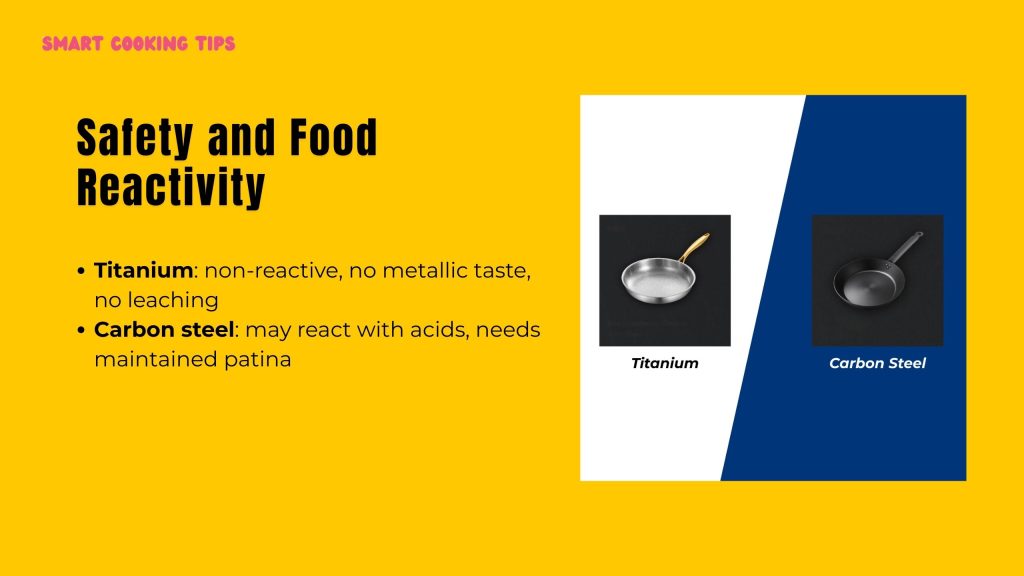
Safety is one of the biggest deciding factors in the titanium vs. carbon steel comparison.
Titanium
Titanium is chemically inert and non-reactive. It does not interact with acidic foods such as tomatoes, citrus, or vinegar. This means no metallic taste and no leaching of materials into food.
Because it contains no chemical nonstick coatings, titanium is considered a clean and health-conscious option.
Carbon Steel
Carbon steel can react with acidic ingredients, especially when newly seasoned. Once a strong patina develops, reactivity decreases significantly. However, maintaining that patina requires consistent care.
For cooks focused primarily on non-reactivity and minimal monitoring, titanium may feel more reassuring.
Heat Distribution and Responsiveness
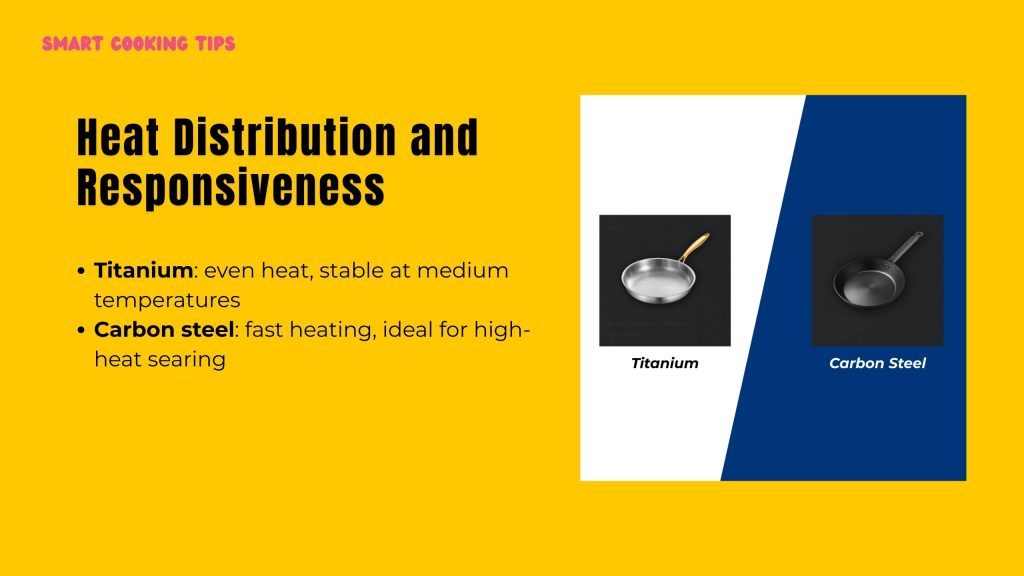
Heat performance is where the titanium vs. carbon steel conversation becomes more nuanced.
Titanium Heat Performance
Titanium pans with aluminum cores distribute heat evenly across the cooking surface. This reduces hot spots and supports consistent cooking results.
They perform well at medium and moderately high heat, making them suitable for:
- Eggs
- Fish
- Vegetables
- Sauces
- Everyday sautéing
Carbon Steel Heat Performance
Carbon steel heats extremely quickly and responds instantly to temperature adjustments. It excels at:
- High-heat searing
- Stir-frying
- Crisping skin
- Browning meat
In the titanium vs. carbon steel performance discussion, carbon steel often edges ahead for aggressive searing, while titanium offers better heat stability and evenness.
Weight and Handling Comfort
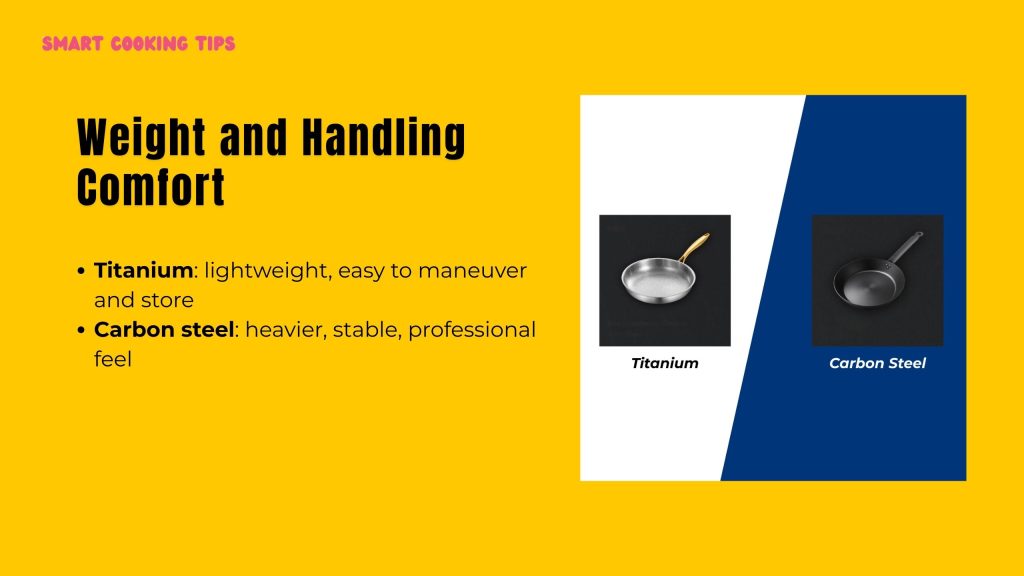
Another major difference in titanium vs. carbon steel is how the pan feels in your hand.
Titanium
Titanium cookware is noticeably lighter. This makes it:
- Easier to flip food
- More comfortable during long cooking sessions
- Simpler to store
- Suitable for cooks with limited wrist strength
Carbon Steel
Carbon steel is heavier and denser. While not as heavy as cast iron, it still requires more strength to maneuver.
Some cooks prefer this weight because it feels stable and professional. Others prefer the comfort of lighter cookware.
Maintenance and Daily Care
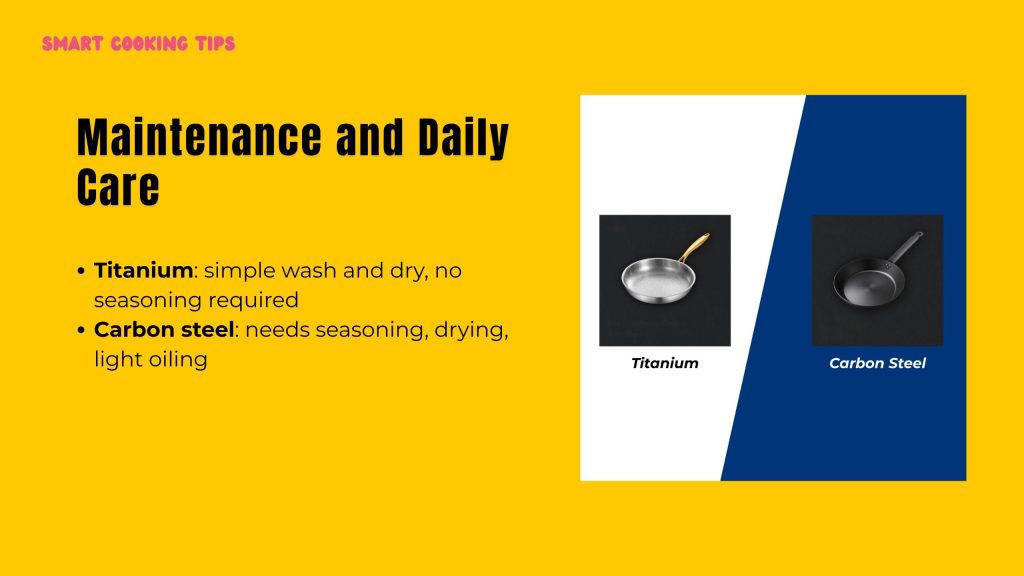
Maintenance may be the clearest dividing line in the titanium vs. carbon steel debate.
Titanium Care
Cleaning titanium cookware is straightforward:
- Allow it to cool slightly
- Rinse with warm water
- Wash with mild soap and soft sponge
- Dry thoroughly
No seasoning. No oil coating. No rust prevention routine.
Carbon Steel Care
Carbon steel requires:
- Initial seasoning
- Periodic re-seasoning
- Immediate drying after washing
- Light oil coating for storage
If neglected, carbon steel can rust.
For busy kitchens, titanium offers a lower-effort solution.
Durability and Longevity
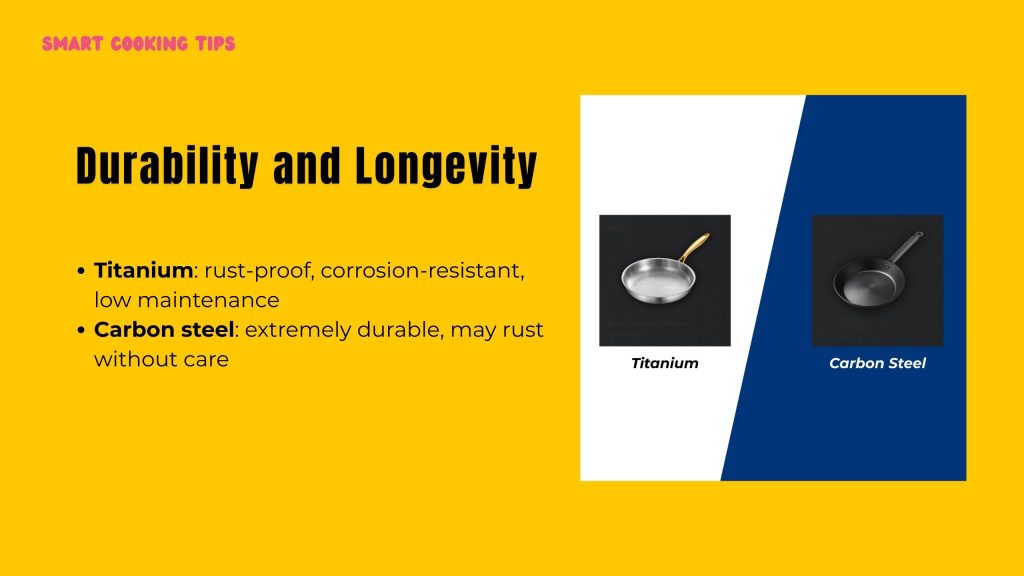
Both materials are highly durable, but they age differently.
Titanium
- Scratch-resistant
- Rust-proof
- Corrosion-resistant
- Maintains surface appearance
Titanium does not degrade easily and resists environmental damage.
Carbon Steel
- Extremely strong
- Can last decades with care
- May rust if exposed to moisture
In the long-term titanium vs. carbon steel durability comparison, both can last many years — but titanium demands less effort to stay in optimal condition.
Cooking Philosophy
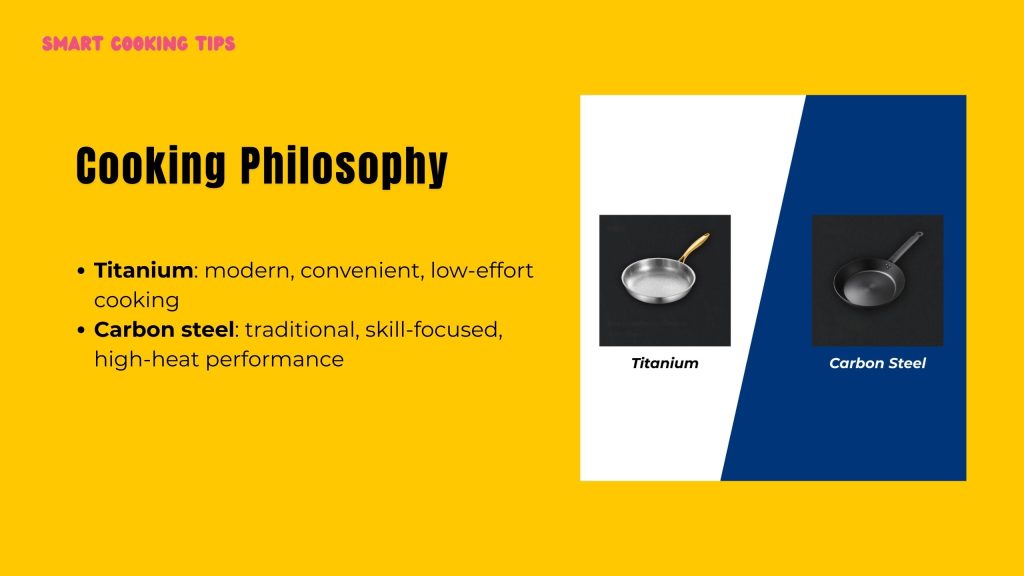
The real difference in titanium vs. carbon steel is the type of cook each material serves.
Titanium: Modern Convenience
Titanium supports:
- Quick weekday meals
- Low-maintenance cooking
- Health-conscious households
- Simple cleanup
It prioritizes efficiency and reliability.
Carbon Steel: Culinary Craft
Carbon steel supports:
- High-heat cooking
- Skill development
- Traditional seasoning
- Chef-style techniques
It appeals to cooks who enjoy the process as much as the results.
Who Should Choose Titanium?
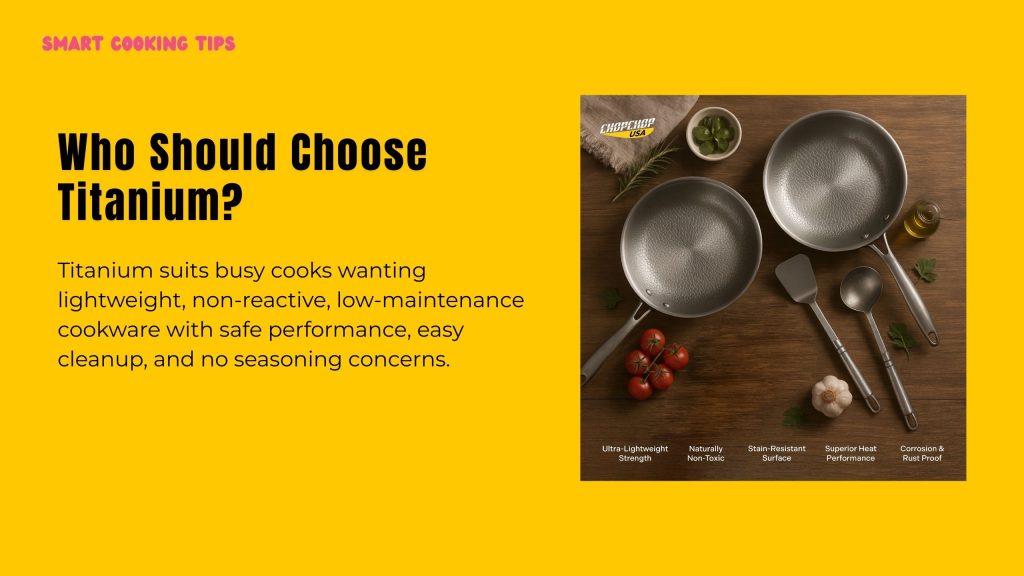
Titanium cookware is ideal for cooks who want dependable performance without extra effort. It’s designed for modern kitchens where convenience, safety, and durability matter just as much as great results. If you prefer cooking without worrying about rust, seasoning, or chemical coatings, titanium offers a stress-free experience that fits seamlessly into busy lifestyles.
- Busy home cooks preparing meals daily
- Families wanting safe, non-reactive cookware
- Anyone who prefers lightweight, easy handling
- People who cook acidic dishes frequently
- Users who want fast, simple cleanup
- Those who don’t want to manage seasoning
Who Should Choose Carbon Steel?
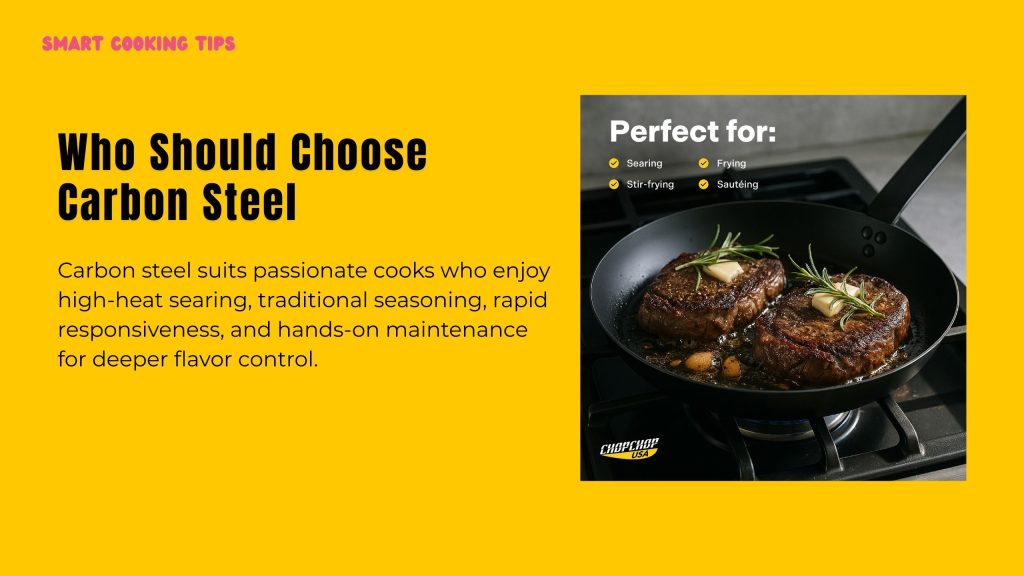
Carbon steel is perfect for passionate cooks who enjoy mastering heat and technique. It delivers powerful searing, rapid responsiveness, and a natural non-stick surface that improves over time. If you appreciate traditional cookware and don’t mind a little maintenance in exchange for bold flavor and control, carbon steel offers a rewarding, hands-on cooking experience.
- Food lovers who enjoy high-heat searing
- Cooks comfortable with seasoning routines
- Fans of traditional chef-style cookware
- Anyone wanting rapid heat responsiveness
- Users willing to oil and maintain regularly
- Home chefs focused on deep browning and flavor
ChopChop USA Carbon Steel Pan: Master Heat Like a Chef
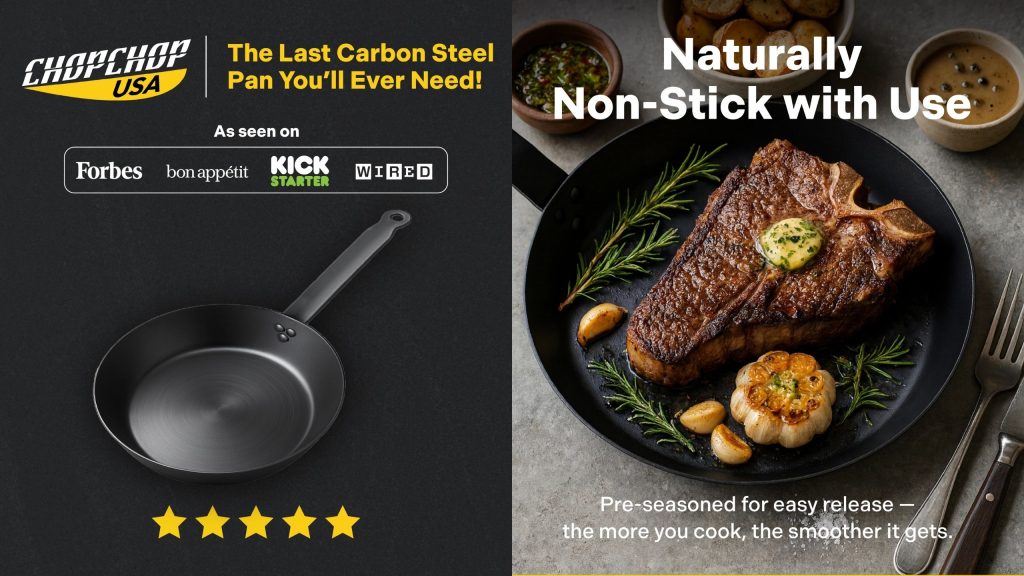
If you love the thrill of a perfect sear, the ChopChop USA Carbon Steel Pan is built for you. Crafted from premium-grade carbon steel, it delivers lightning-fast heat response and precise temperature control — so every steak, stir-fry, or crispy-skinned salmon comes out exactly how you imagined.
This pan combines the rugged durability of cast iron with the faster responsiveness of stainless steel. It heats quickly, distributes temperature evenly, and develops a naturally non-stick surface through seasoning. The more you cook, the better it performs — creating richer flavor and deeper browning over time.
Lightweight yet incredibly strong, it moves effortlessly from stovetop to oven and works on gas, induction, and electric cooktops. Whether you’re making a quick breakfast or achieving steakhouse-quality crust, this pan gives you the power and control professionals rely on.
Why You’ll Love It
- Pro-grade carbon steel for unmatched heat precision
- Naturally non-stick surface that improves with every use
- Fast, even heating for consistent results
- High heat tolerance for bold searing
- Durable construction built to last for years
This isn’t just cookware — it’s a pan that grows with your skill, delivering deeper flavor and better performance every time you step into the kitchen.
ChopChop USA Titanium Pan Pro: Safe, Strong, and Effortlessly Reliable
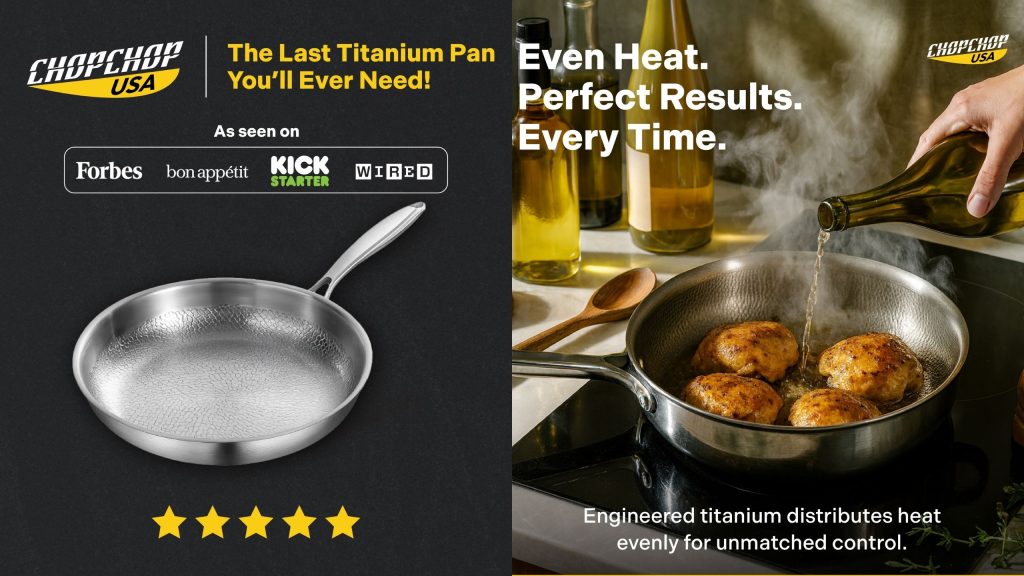
For cooks who want modern performance without maintenance stress, the ChopChop USA Titanium Pan Pro delivers confidence in every meal. Built with a premium tri-ply design and a pure titanium cooking surface, it offers professional results without chemical coatings or complicated care routines.
The non-toxic, non-reactive titanium interior ensures your food stays clean and safe — even when cooking acidic ingredients. An aluminum core spreads heat evenly to eliminate hot spots, while the stainless steel exterior provides strength and full stovetop compatibility.
Lightweight yet ultra-durable, this pan resists scratches, corrosion, and warping. Food releases easily. Cleanup is quick. And performance stays consistent day after day.
Why You’ll Love It
- Pure titanium surface — safe, non-reactive, and corrosion-resistant
- Even heat distribution for reliable cooking
- Scratch-resistant and built for daily use
- Compatible with all stovetops, oven-safe up to 500°F
- Minimal maintenance with long-term durability
This is the pan for cooks who want powerful performance, effortless cleanup, and total peace of mind — all in one long-lasting investment.
Final Verdict: Titanium vs. Carbon Steel
When comparing titanium vs. carbon steel, neither material is universally better. Titanium offers safety, low maintenance, and everyday convenience, while carbon steel delivers high-heat precision and traditional cooking performance.
With ChopChop USA, you can confidently choose either option. Their Titanium Pan Pro supports modern, worry-free cooking, while the Carbon Steel Pan rewards skill and delivers powerful, professional results.
Frequently Asked Questions
1. Is titanium cookware better for beginners?
Yes. Titanium cookware is ideal for beginners because it requires no seasoning, resists rust, and offers easy cleanup with minimal maintenance.
2. Is carbon steel cookware good for beginners?
It can be, but it requires learning proper seasoning and care. Carbon steel rewards practice with excellent performance.
3. Does titanium handle high heat well?
Titanium performs reliably at high temperatures, maintaining even heat distribution without reacting with food.
4. Is carbon steel better for high-heat searing?
Yes. Carbon steel excels at intense heat and develops a powerful searing surface over time.
5. Does carbon steel last a long time?
Absolutely. With proper seasoning and maintenance, carbon steel can last for decades and improve with