

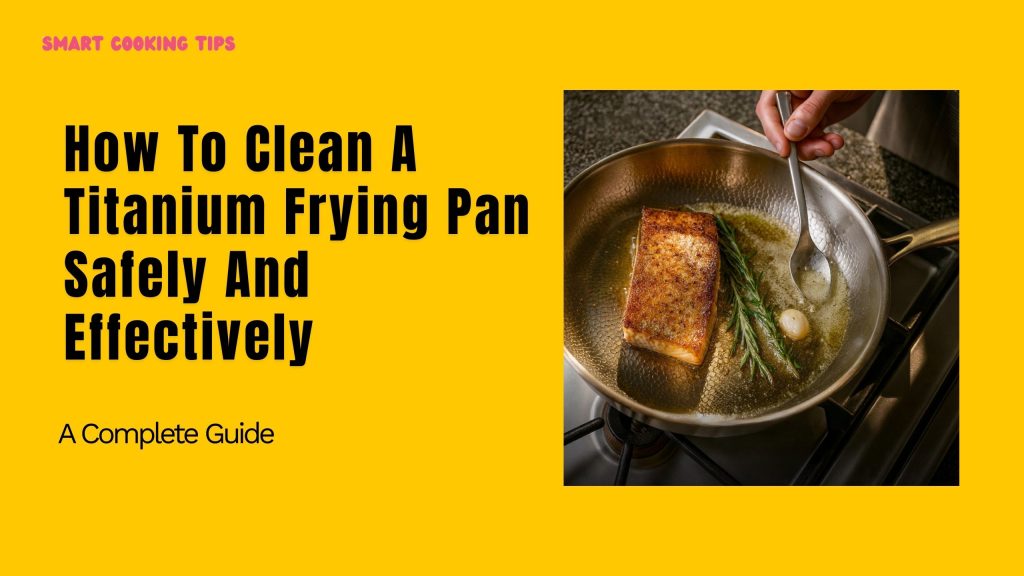
How to clean a titanium frying pan? The answer is straightforward: use proper timing, gentle tools, and simple cleaning techniques designed specifically to protect titanium cookware without scratching, dulling, or damaging performance.
In this guide, Smart Cooking Tips will walk you through how to clean a titanium frying pan cookware step by step, covering daily care, stain removal, discoloration fixes, and long-term maintenance for consistently great cooking results.
Table of Contents
What Is a Titanium Frying Pan?
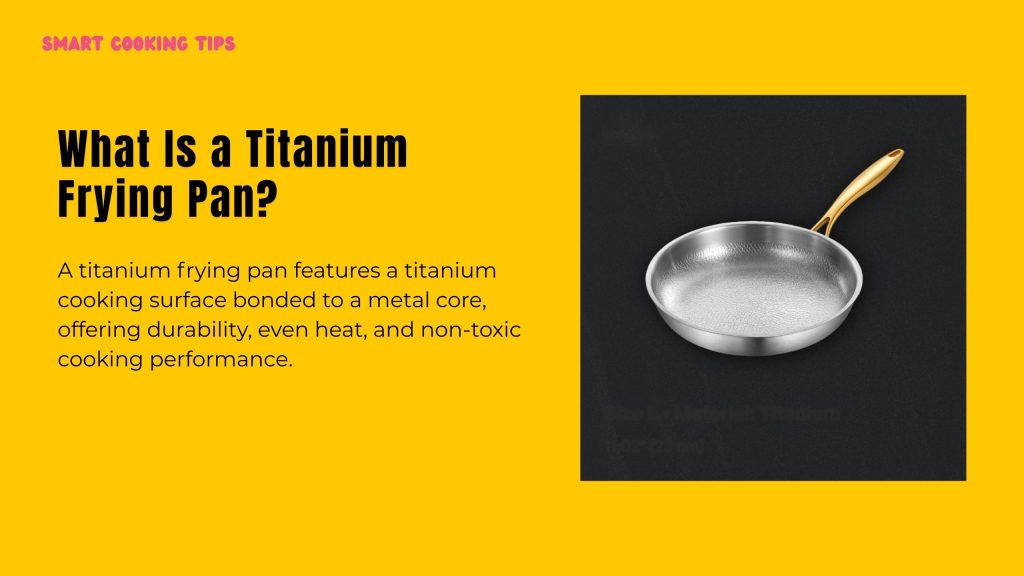
A titanium frying pan is cookware that features a cooking surface made from titanium or reinforced with a titanium layer bonded to a conductive metal core, typically aluminum or stainless steel. This design combines durability with efficient heat distribution.
Unlike traditional nonstick pans that rely on chemical coatings, titanium frying pans use the metal’s natural strength and non-reactive properties. This means they resist corrosion, tolerate high heat, and do not release toxins during cooking.
Understanding how to clean a titanium frying pan starts with recognizing that titanium is naturally smooth but not indestructible. While it resists scratches better than many materials, improper cleaning habits can still affect its appearance and performance over time.
Titanium pans are popular among home cooks and professionals because they handle searing, sautéing, and everyday frying without relying on fragile coatings. With the right care, they maintain consistent heat response and food release for years.
Why Cleaning A Titanium Frying Pan Matters?
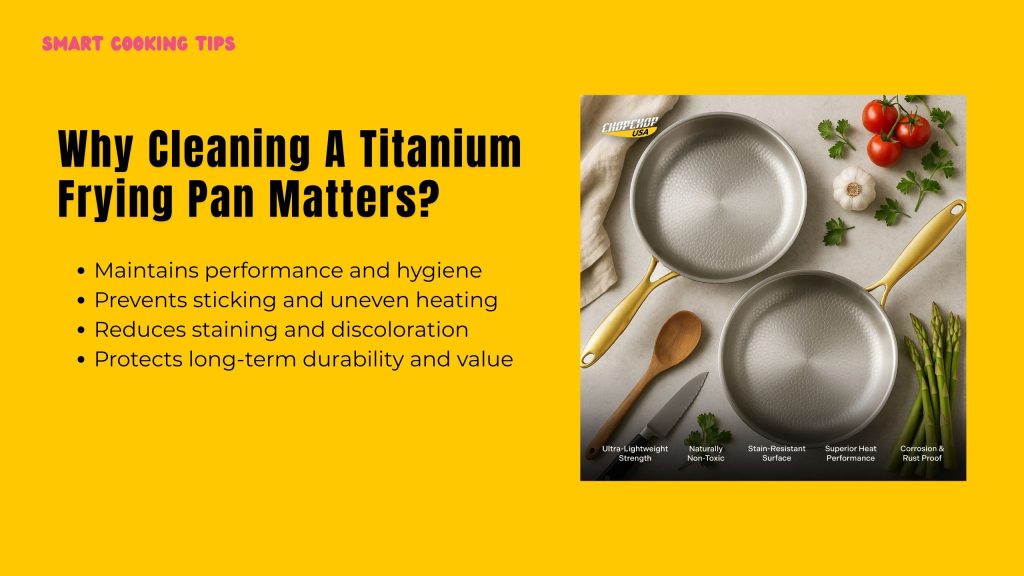
Knowing how to clean a titanium frying pan cookware properly is essential for maintaining both performance and hygiene. Even though titanium is non-porous and naturally resistant to bacteria, leftover oils and food particles can still build up.
When residue accumulates, it interferes with heat transfer and can cause food to stick more easily. Over time, this leads to uneven browning, scorched flavors, and the false impression that the pan has lost its quality.
Regular cleaning also prevents cosmetic issues such as staining, dullness, and heat discoloration. While these issues do not always affect safety, they can impact how evenly the pan cooks and how easy it is to use.
Most importantly, proper cleaning protects your investment. Titanium pans are designed for long-term use, but only if they are cleaned correctly and consistently after each cooking session.
How To Clean A Titanium Frying Pan?
Knowing how to clean a titanium frying pan properly helps preserve its surface, cooking performance, and appearance. Using the right techniques prevents scratching, staining, and buildup while ensuring your pan remains safe, efficient, and reliable for everyday cooking.
Daily Cleaning
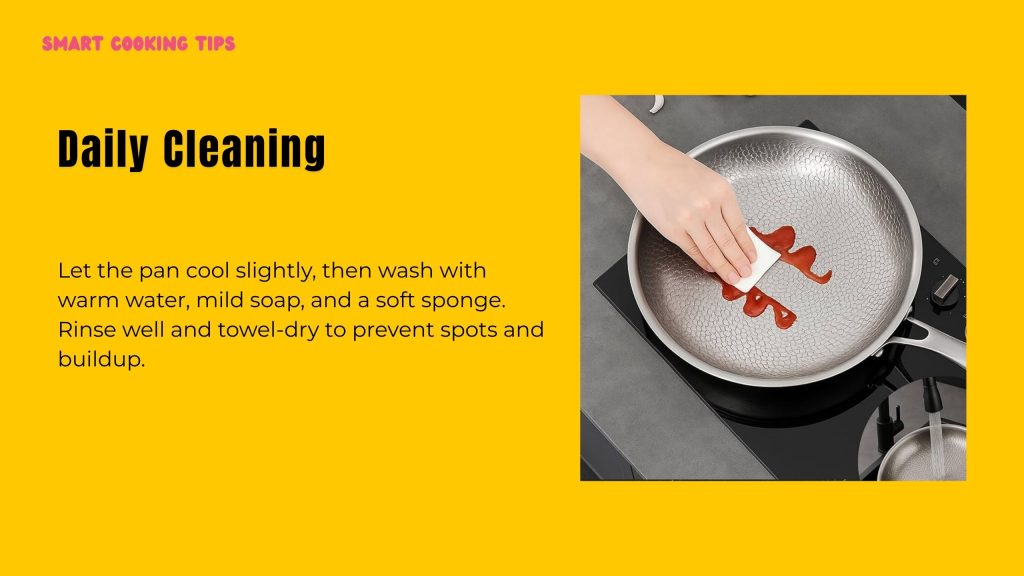
Daily cleaning is the foundation of how to clean a titanium frying pan cookware correctly. After cooking, allow the pan to cool slightly before washing to avoid thermal shock that can stress the metal.
Use warm water, mild dish soap, and a soft sponge or cloth. Gently wipe away oils and food residue without applying excessive pressure. Titanium does not require aggressive scrubbing for everyday messes.
Rinse thoroughly to remove soap residue, then dry immediately with a clean towel. Air-drying can leave mineral spots that dull the surface over time, especially in hard-water areas.
This simple routine keeps the pan ready for its next use and prevents buildup that can lead to sticking or discoloration later.
Spots & Stains Cleaning
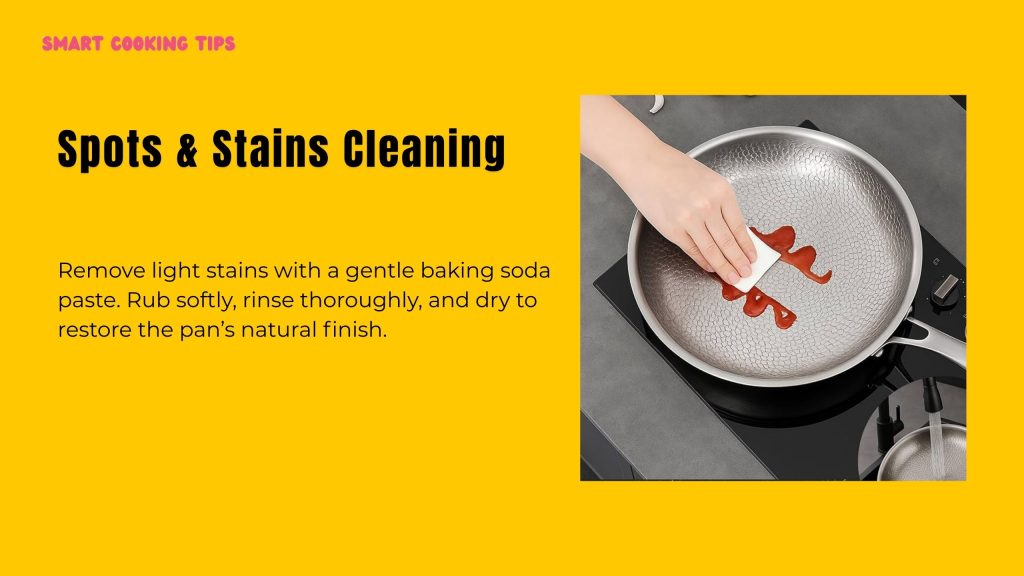
Occasional stains can appear even when you understand how to clean a titanium frying pan cookware well. These stains often come from cooking oils, spices, or minerals in water.
For light stains, mix baking soda with a small amount of water to create a soft paste. Apply it to the stained area using a sponge or cloth, rubbing gently in circular motions.
Baking soda is mildly alkaline, which helps lift stains without scratching titanium. After cleaning, rinse thoroughly and dry the pan completely to restore its natural finish.
Avoid abrasive powders or stiff brushes, as these can leave micro-scratches that make future cleaning more difficult.
Burnt-On Food Cleaning
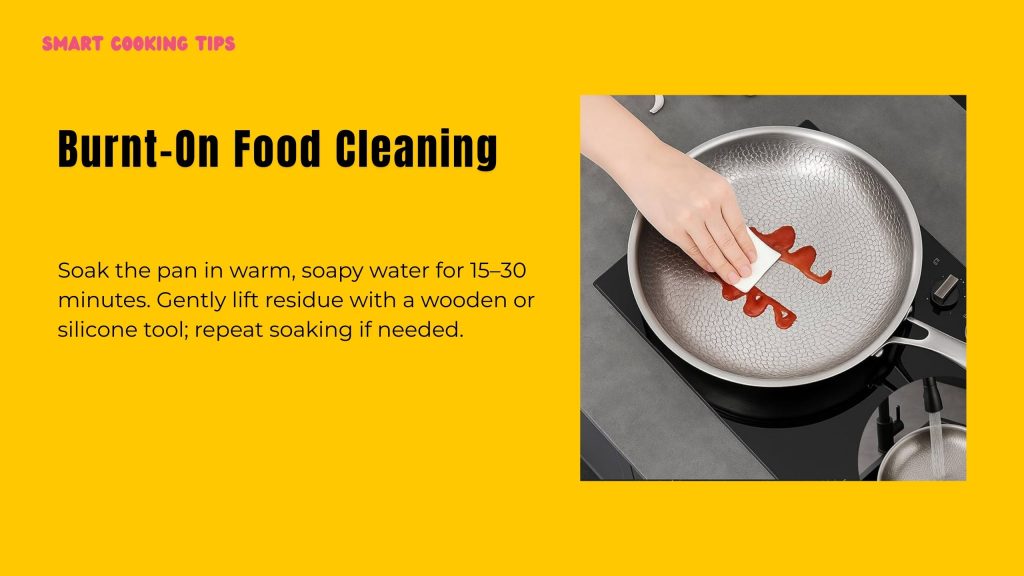
Burnt-on food is one of the most common challenges when learning how to clean a titanium frying pan. The key is patience, not force.
Fill the pan with warm water and a small amount of dish soap, then let it soak for 15 to 30 minutes. This naturally loosens stuck-on residue.
After soaking, use a wooden, silicone, or nylon spatula to gently lift the softened food. If needed, repeat the soaking process rather than scraping aggressively.
For stubborn areas, a baking soda paste can be used after soaking. This method protects the surface while restoring smoothness and cooking performance.
Bluing & Discoloration
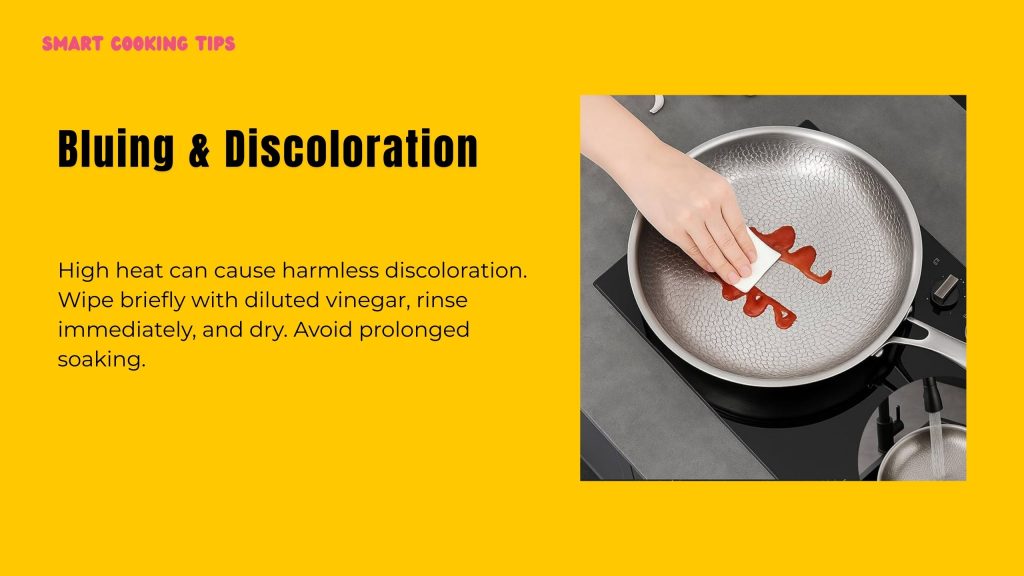
Bluing or rainbow discoloration occurs when titanium is exposed to very high heat. Even when you know how to clean a titanium frying pan, this can still happen during intense searing.
This discoloration is harmless and does not affect food safety or structural integrity. It is purely cosmetic and easy to manage.
To reduce bluing, dampen a soft cloth with diluted white vinegar and gently wipe the affected area. Rinse immediately and dry thoroughly.
Avoid soaking the pan in vinegar, as prolonged exposure can dull the finish over time. Short, controlled contact is all that is needed.
Dishwasher Cleaning
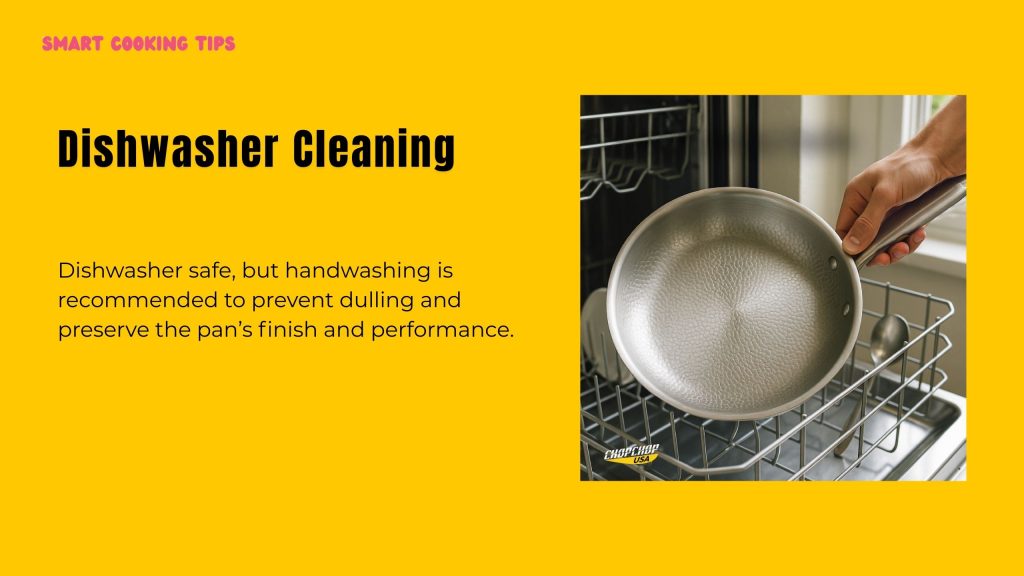
Many people wonder whether dishwashers fit into how to clean a titanium frying pan routines. While some manufacturers allow dishwasher use, handwashing is strongly recommended.
Dishwashers use harsh detergents, high water pressure, and prolonged heat exposure. Over time, these factors can dull the surface and reduce the pan’s visual appeal.
Handwashing takes only a few minutes and significantly extends the life of your titanium cookware. For premium pans, it is the safest and most effective option.
How To Maintain a Titanium Pan
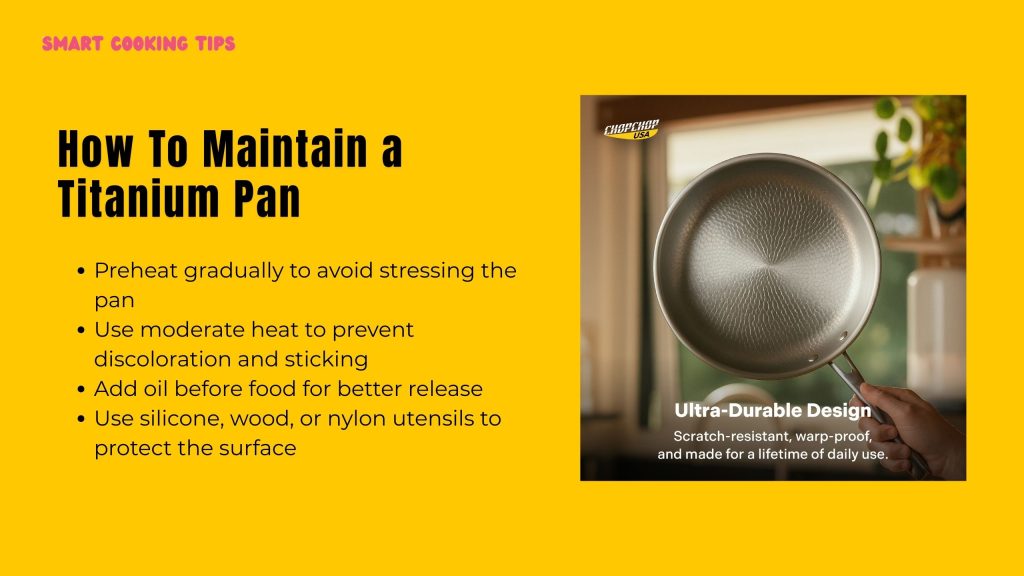
Maintenance plays a major role alongside knowing how to clean a titanium frying pan. Always preheat the pan gradually instead of placing it over high heat immediately.
Use moderate heat for most cooking tasks. Titanium handles high temperatures well, but excessive heat can cause unnecessary discoloration and sticking.
Add oil before food, not after. This helps create a natural barrier between food and the cooking surface, improving release and reducing cleanup.
Using the right utensils matters as well. Stick to silicone, wood, or nylon tools to preserve the pan’s smooth surface over time.
How To Store a Titanium Pan
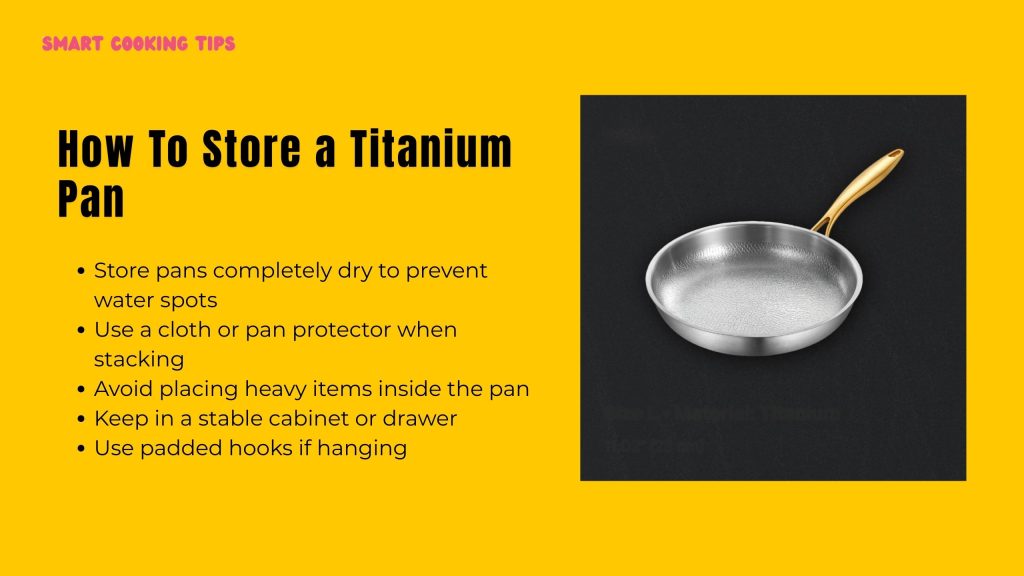
Proper storage supports everything you do when learning how to clean a titanium frying pan, and helps preserve its appearance and performance over time. Even durable titanium benefits from thoughtful storage habits.
To store your titanium pan correctly, follow these best practices:
- Store pans completely dry: Moisture left on the surface can cause water spots or mineral residue, especially in areas with hard water. Always towel-dry before storing.
- Use protection when stacking: If you stack multiple pans, place a soft cloth, paper towel, or pan protector between them. This prevents metal-on-metal contact that could lead to scratches or surface marks.
- Avoid placing heavy items inside: Do not store heavy cookware, lids, or appliances inside your titanium pan. While titanium is strong, constant pressure can affect the surface finish over time.
- Choose a stable storage location: Store pans in a cabinet or drawer where they will not slide or rub against other cookware during movement.
- Hang carefully if using hooks: If hanging your pan, use padded or coated hooks to avoid direct metal contact that could damage the rim.
Proper storage keeps your titanium pan clean, protected, and ready for consistent cooking performance every time.
Introduce ChopChop USA Titanium Pan Pro
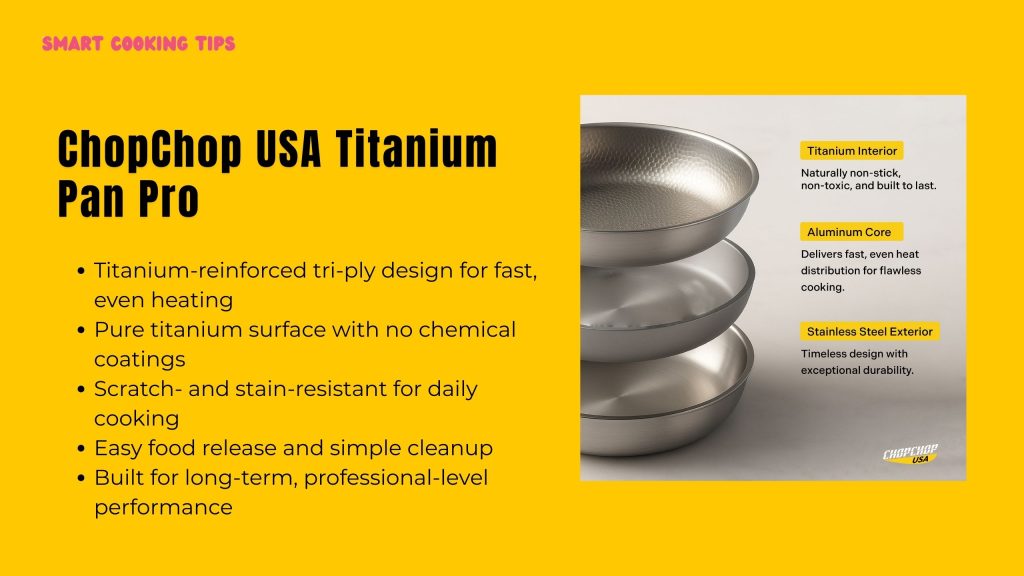
The ChopChop USA Titanium Pan Pro is built for cooks who demand durability, safety, and professional performance without sacrificing everyday convenience. Its titanium-reinforced, tri-ply construction combines a pure titanium cooking surface, an aluminum core, and a stainless steel exterior for fast, even heat and lasting stability.
Designed for daily use, the pan resists scratches, staining, and performance loss—without relying on chemical nonstick coatings. The naturally smooth titanium surface promotes easy food release and effortless cleanup, supporting simple routines for how to clean a titanium frying pan cookware.
From quick weeknight meals to refined home cooking, ChopChop USA Titanium Pan Pro delivers consistent results, minimal maintenance, and long-term reliability trusted by serious home cooks and professionals alike.
Conclusion
Learning how to clean a titanium frying pan ensures better cooking results and a longer lifespan. With smart habits and premium design like ChopChop USA Titanium Pan Pro, clean and reliable cooking becomes effortless.
Frequently Asked Questions
1. How Do You Clean A Titanium Frying Pan?
You clean a titanium frying pan using warm water, mild dish soap, and a soft sponge. Gentle handwashing prevents buildup and preserves surface performance.
2. How To Remove Burn Marks From Titanium?
Burn marks are removed by soaking the pan in warm soapy water, then gently lifting the residue. Baking soda paste helps without damaging titanium.
3. Why Is My Titanium Always Pan Sticking?
Sticking usually happens due to insufficient preheating or oil. Proper heat control and light oiling improve food release on titanium surfaces.
4. What Not To Clean Titanium With?
Do not use steel wool, abrasive powders, bleach, or harsh chemicals. These materials can dull, scratch, or damage titanium cookware.
5. Does Titanium React With Vinegar?
Titanium does not chemically react with vinegar. Short, diluted use safely removes discoloration, but prolonged soaking should be avoided.